Editorial note, draft prepared April 22, 2026: This draft uses a founder lens: budget, speed, switching cost, and team adoption. Before publishing, add current screenshots or pricing checks for any named tool.
Startup founders do not need the most impressive AI demo. They need an operating stack that helps a small team ship, sell, support customers, and learn faster without creating tool sprawl.
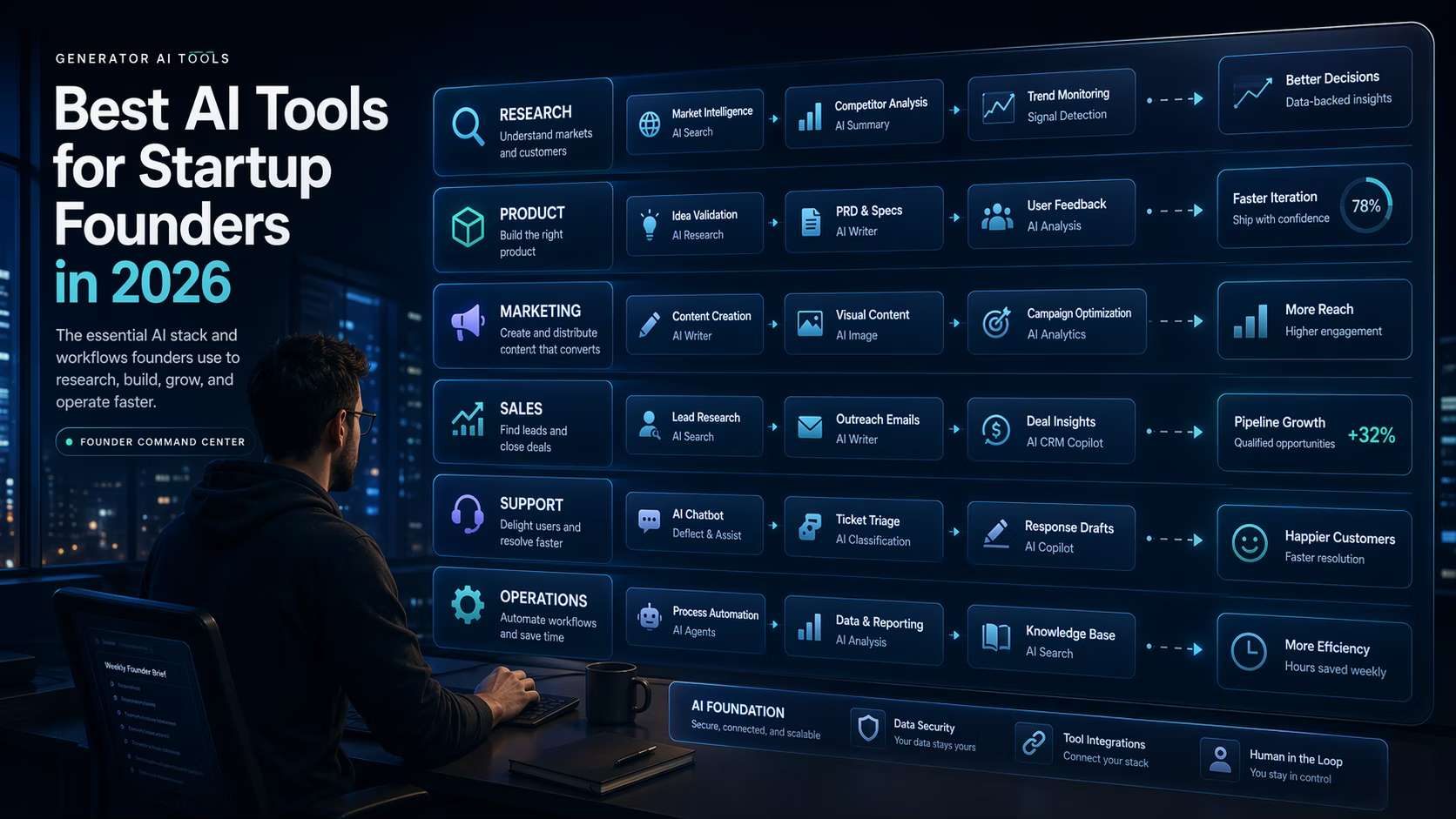
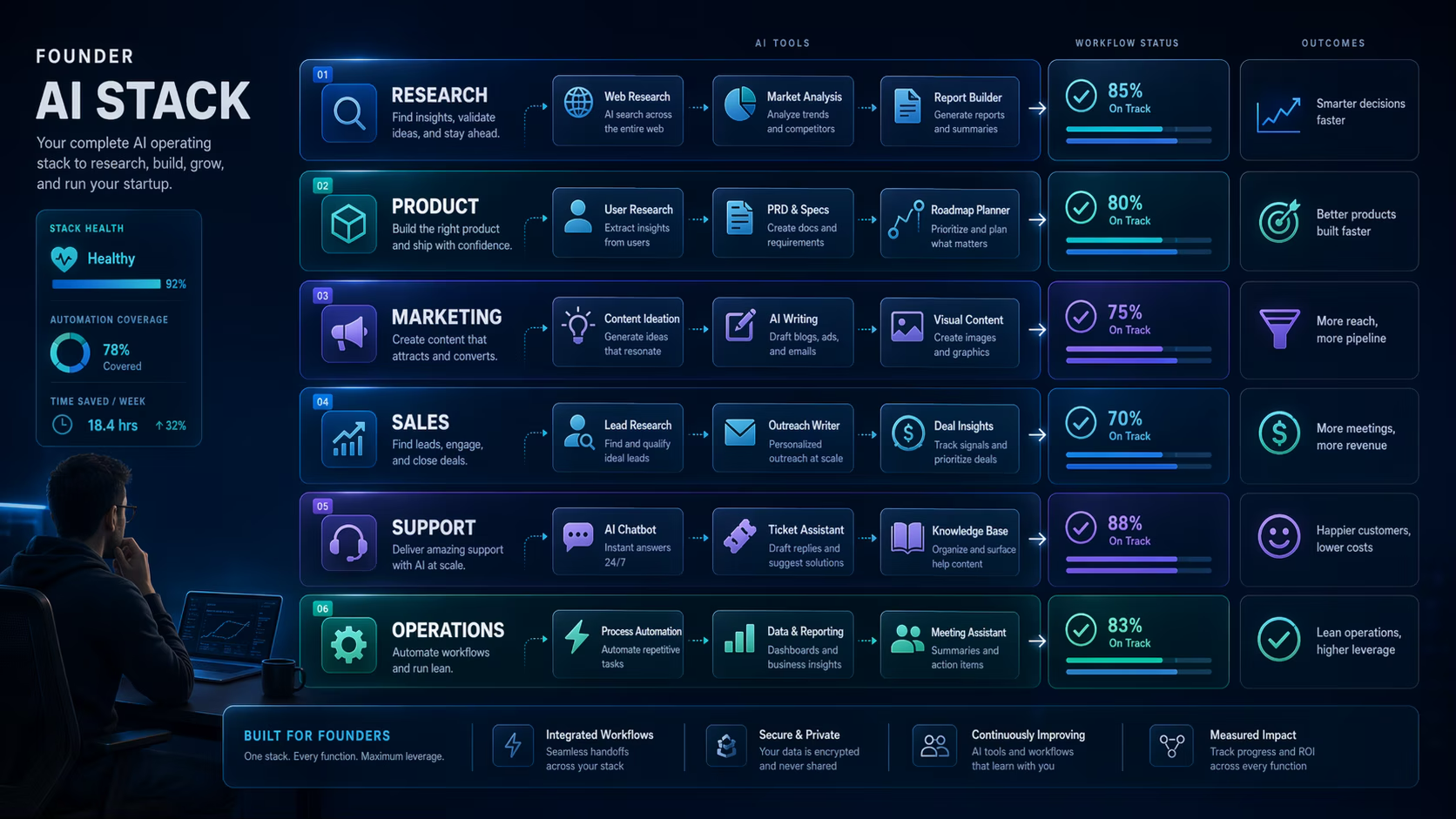
The best AI tools for startup founders usually fall into six jobs: research, product building, content, sales, support, and operations. If a tool does not clearly improve one of those jobs, it probably belongs on the maybe-later list.
TL;DR: Start with one general assistant, one coding assistant, one research workflow, one content workflow, and one customer-support workflow. Add specialized AI tools only after a repeated bottleneck appears.
Who this guide is for
This guide is for founders, indie hackers, and early operators comparing tools inside the AI tools directory before paying for another subscription.
- Solo founders building the first version of a product.
- Small teams trying to choose between broad assistants and specialized AI apps.
- Operators who want a shortlist before reading deeper AI tool reviews.
The practical framework
Think in jobs, not categories. A startup AI stack should map directly to a weekly workflow.
| Founder job | Useful AI capability | Good first test |
|---|---|---|
| Research | Summaries, source discovery, synthesis | Can it produce a source-backed market brief? |
| Product | Specs, prototypes, code support | Can it move an idea into a testable artifact? |
| Marketing | Drafts, repurposing, landing page feedback | Can it improve a page without inventing claims? |
| Sales | Lead research, outbound drafts, call notes | Can it save time without sounding generic? |
| Support | Answer drafts, tagging, knowledge base updates | Can it reduce repeat tickets safely? |
Begin with the recurring bottleneck
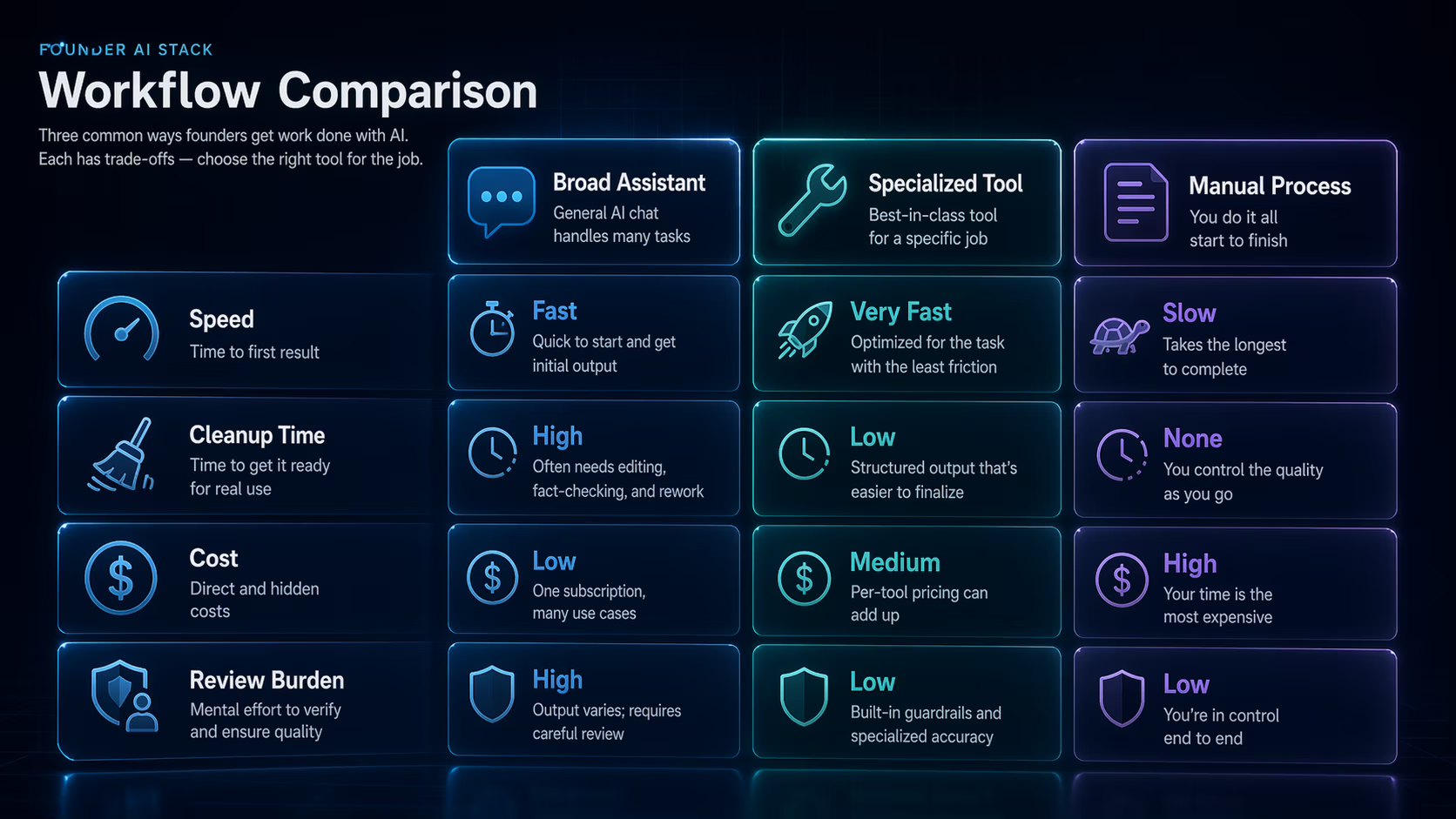
Founders often buy AI tools because they feel behind. That is backwards. Start with the bottleneck that appears every week: writing specs, editing posts, researching competitors, reviewing code, or answering support questions.
Once the bottleneck is clear, compare tools by time saved, output quality, and review effort. A tool that saves 30 minutes but adds 45 minutes of cleanup is not leverage.
Use a simple stack before buying niche tools
Most startups can begin with a broad assistant such as Claude or ChatGPT, a coding assistant such as Cursor or GitHub Copilot, and a lightweight research or content workflow.
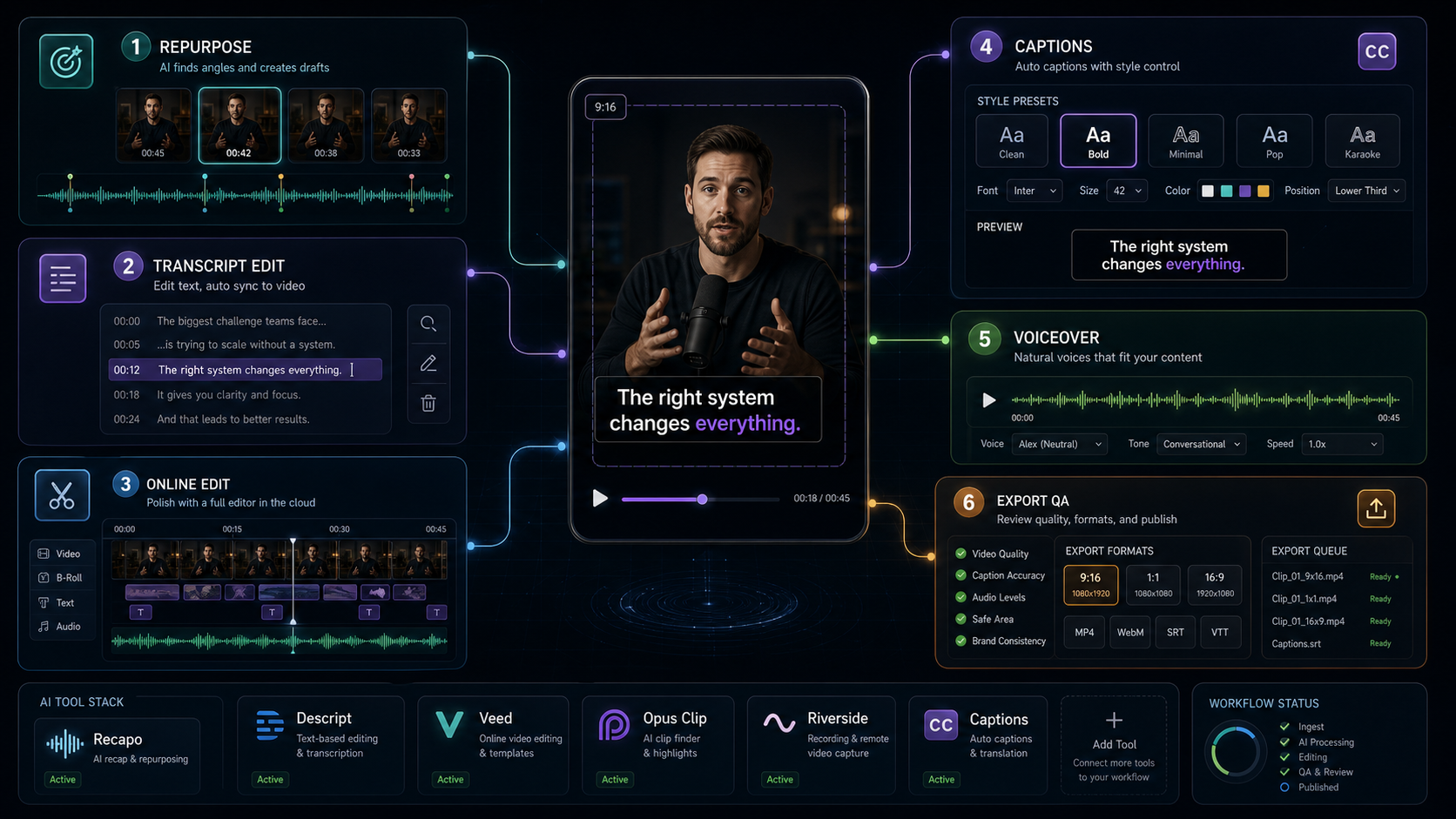
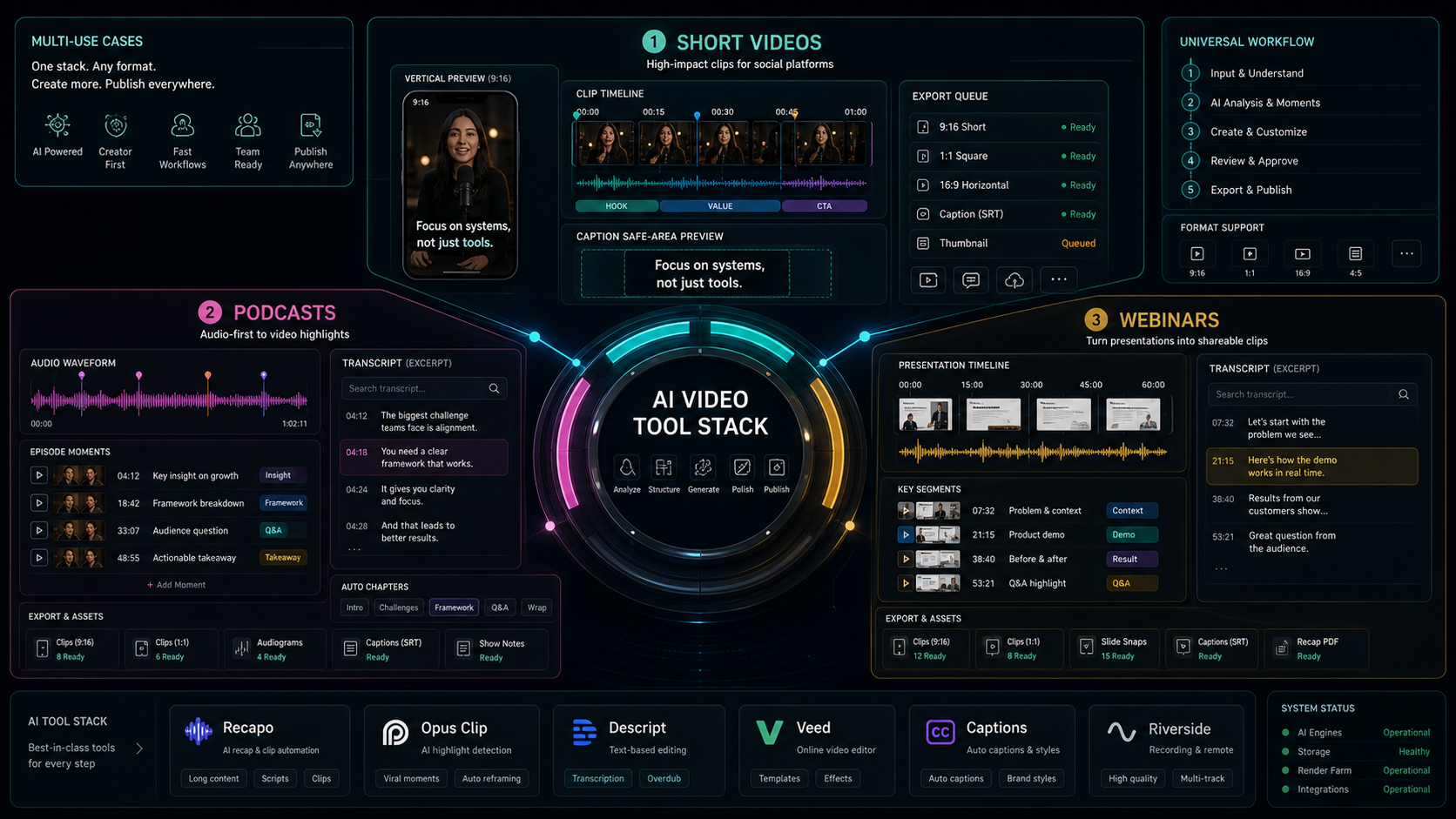
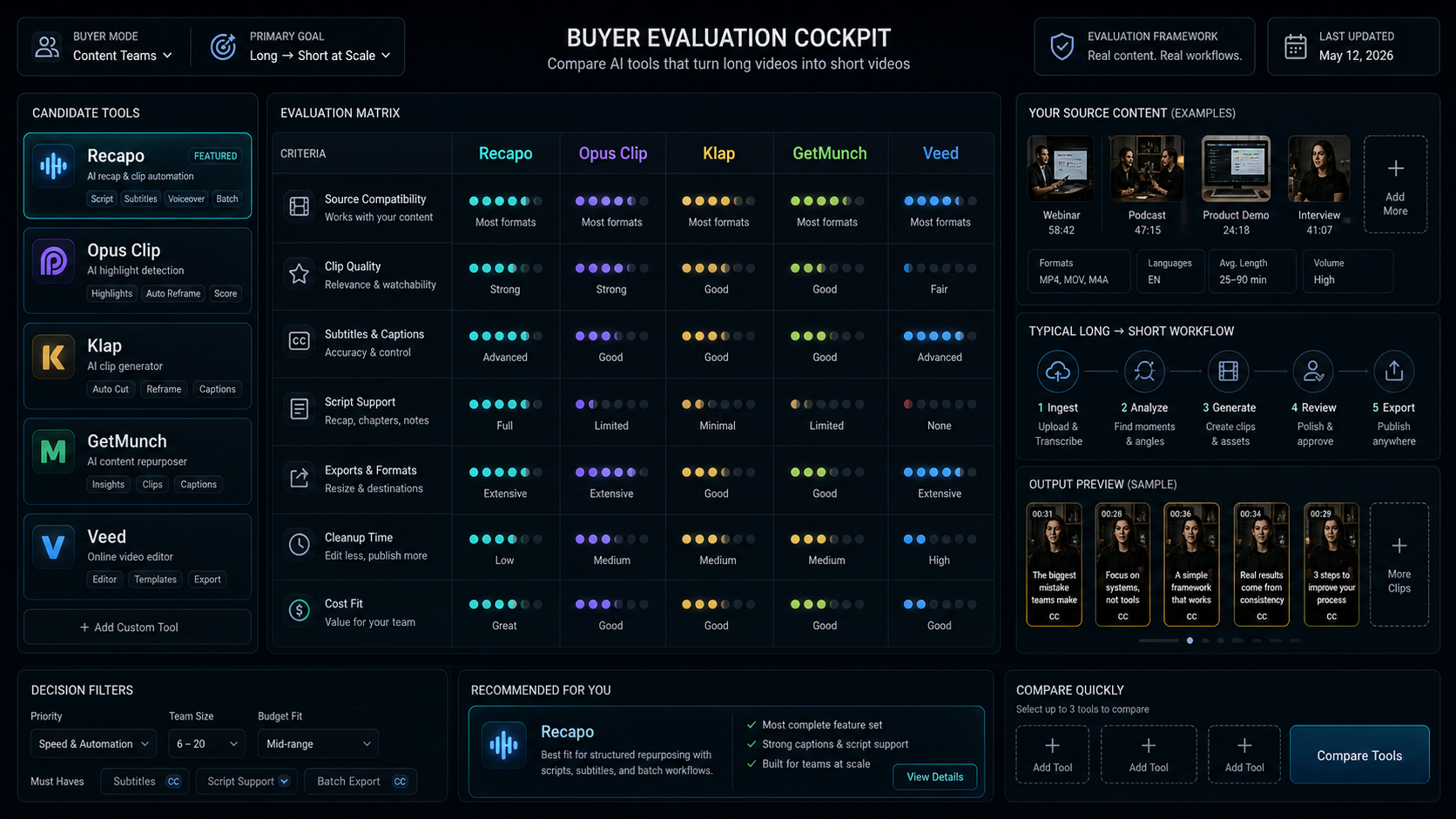
Specialized tools become worth it when they reduce a specific handoff. For example, a video workflow tool can matter when your marketing depends on demos, tutorials, or ads every week.
- Choose broad assistants for uncertain work.
- Choose specialized tools for repeated, high-volume workflows.
- Avoid adding tools that only create another place to manage work.
Evaluate switching cost before feature depth
A founder stack fails when nobody has time to maintain it. The best tool on paper may be the wrong choice if it requires new approvals, migrations, training, or data cleanup before anyone gets value.
This is why founder reviews should include onboarding time, export options, pricing ceilings, and whether the tool still works when the founder is not the only user.
| Signal | Why founders should care | Question to ask |
|---|---|---|
| Setup time | Early teams move fast | Can we get value in one afternoon? |
| Review burden | AI output still needs judgment | Who checks the result? |
| Pricing ceiling | Usage can grow quickly | What happens at 5x volume? |
| Data portability | Tools change | Can we export work cleanly? |
Implementation checklist
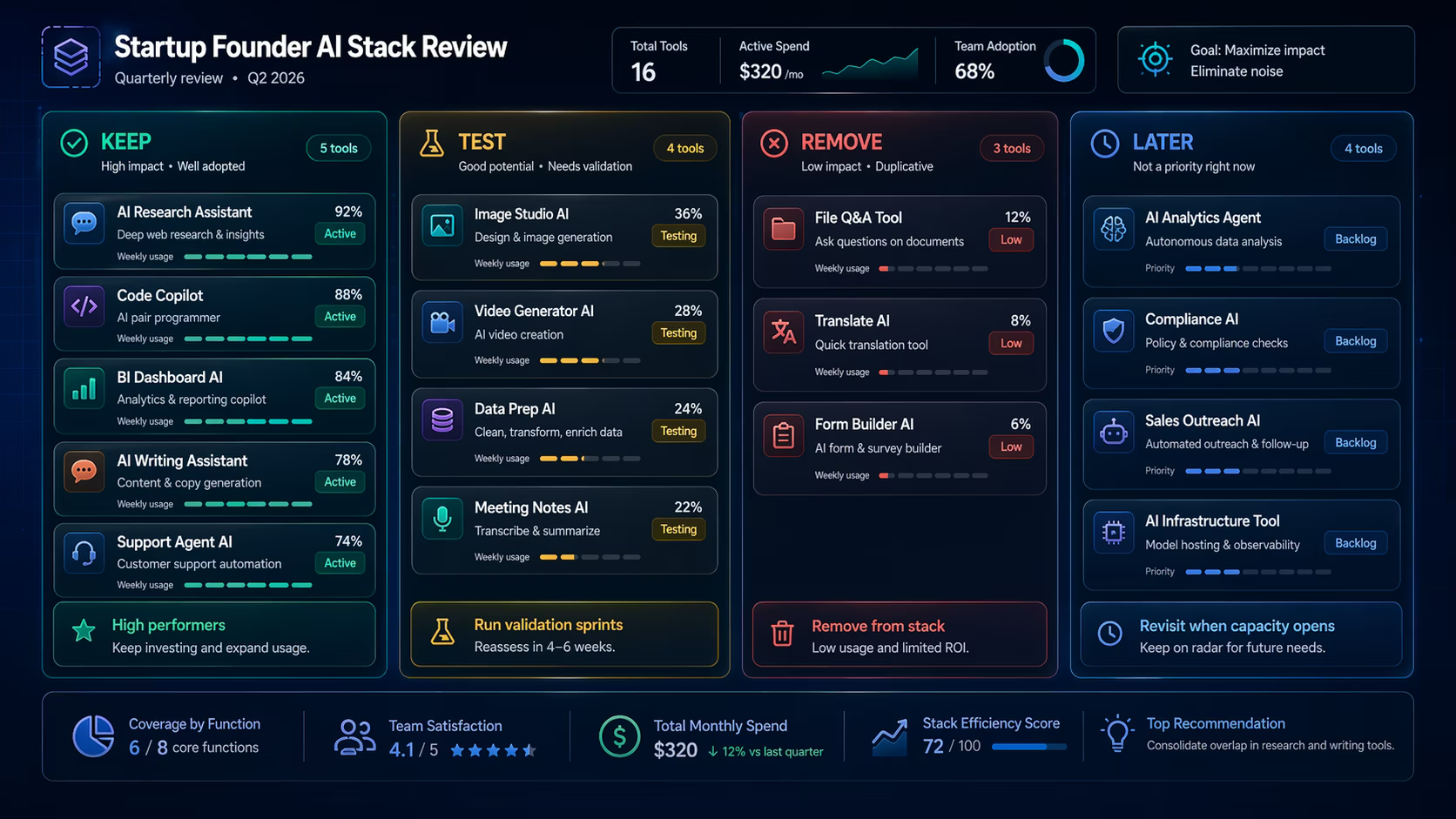
- Name the weekly job before choosing a tool.
- Run the same input through two tools and compare cleanup time.
- Check pricing, usage caps, data policy, and export options.
- Assign one owner for each AI workflow.
- Review the stack monthly and remove tools that are not used.
E-E-A-T notes for editors
Lucas should add founder-tested examples before publishing: one prompt, one workflow screenshot, and one decision table. This makes the article feel grounded in startup operations rather than generic tool hype.
References and further reading
- Generator AI Tools directory - site directory for comparing AI tools by category
- Generator AI Tools leaderboard - monthly ranking context for tool discovery
Where to go next
Use these related pages to move from research into tool selection, comparison, and implementation.
- Top AI tools this month - use ranking momentum as a secondary discovery signal
- AI tool reviews - read practical reviews before committing
- AI news - track launches and pricing changes that affect your stack
Final recommendation
The right founder AI stack is not the biggest stack. It is the smallest set of tools that repeatedly helps the team make better decisions, ship faster, and learn from customers with less friction.