Last updated June 9, 2026: This draft was expanded for search intent, FAQ coverage, and clearer product context around Recapo. Review one real source video before publishing.
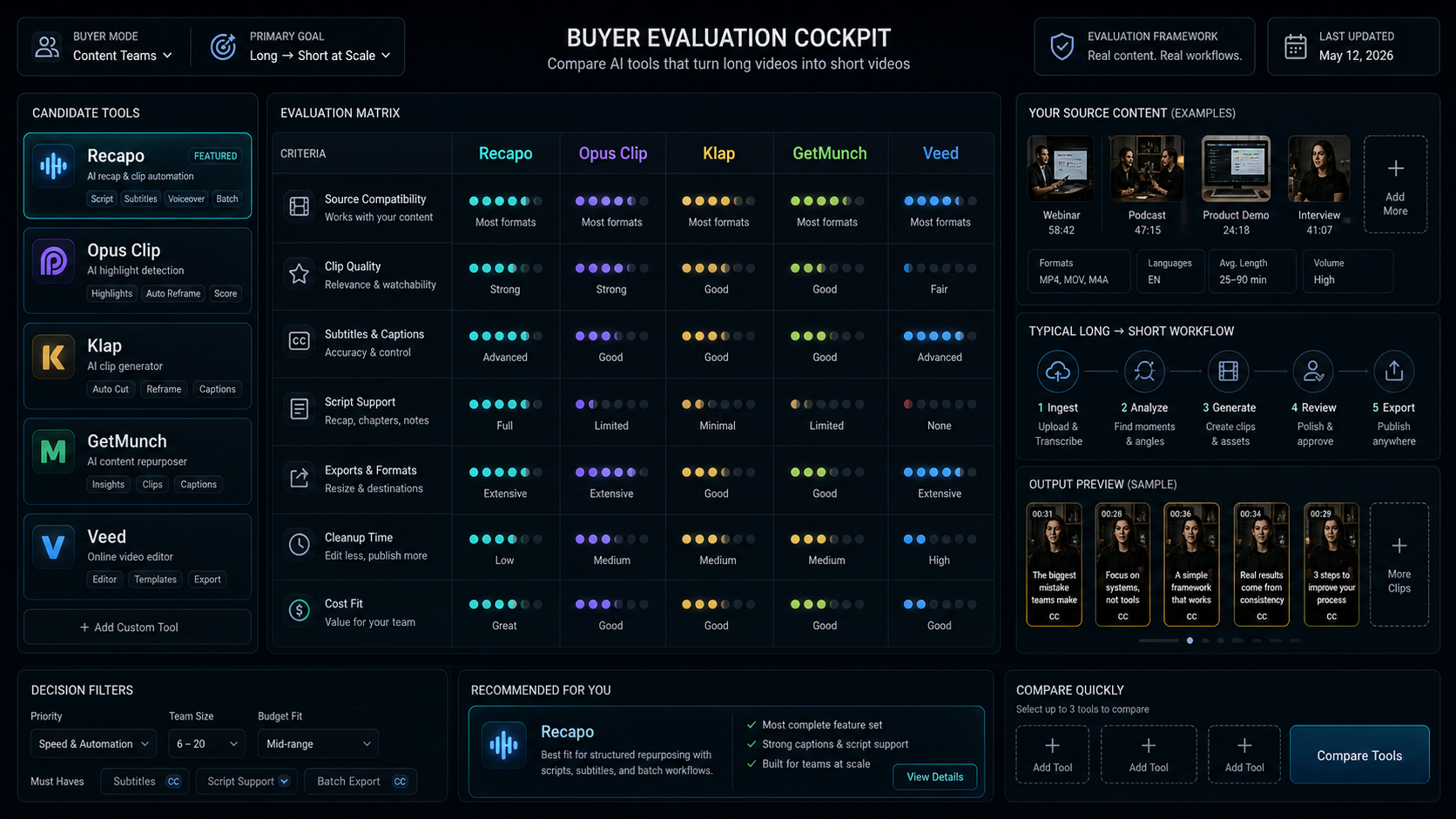
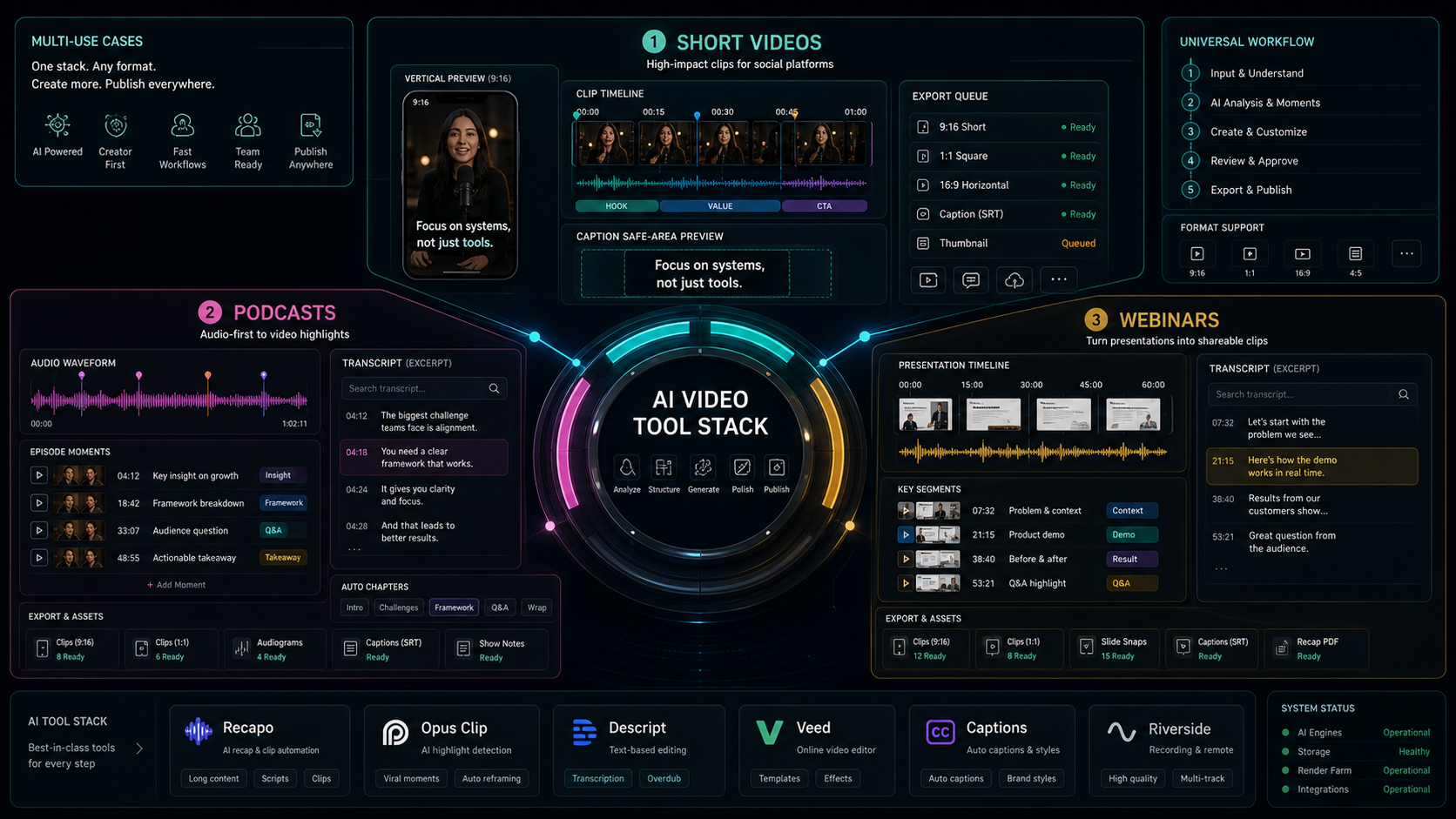
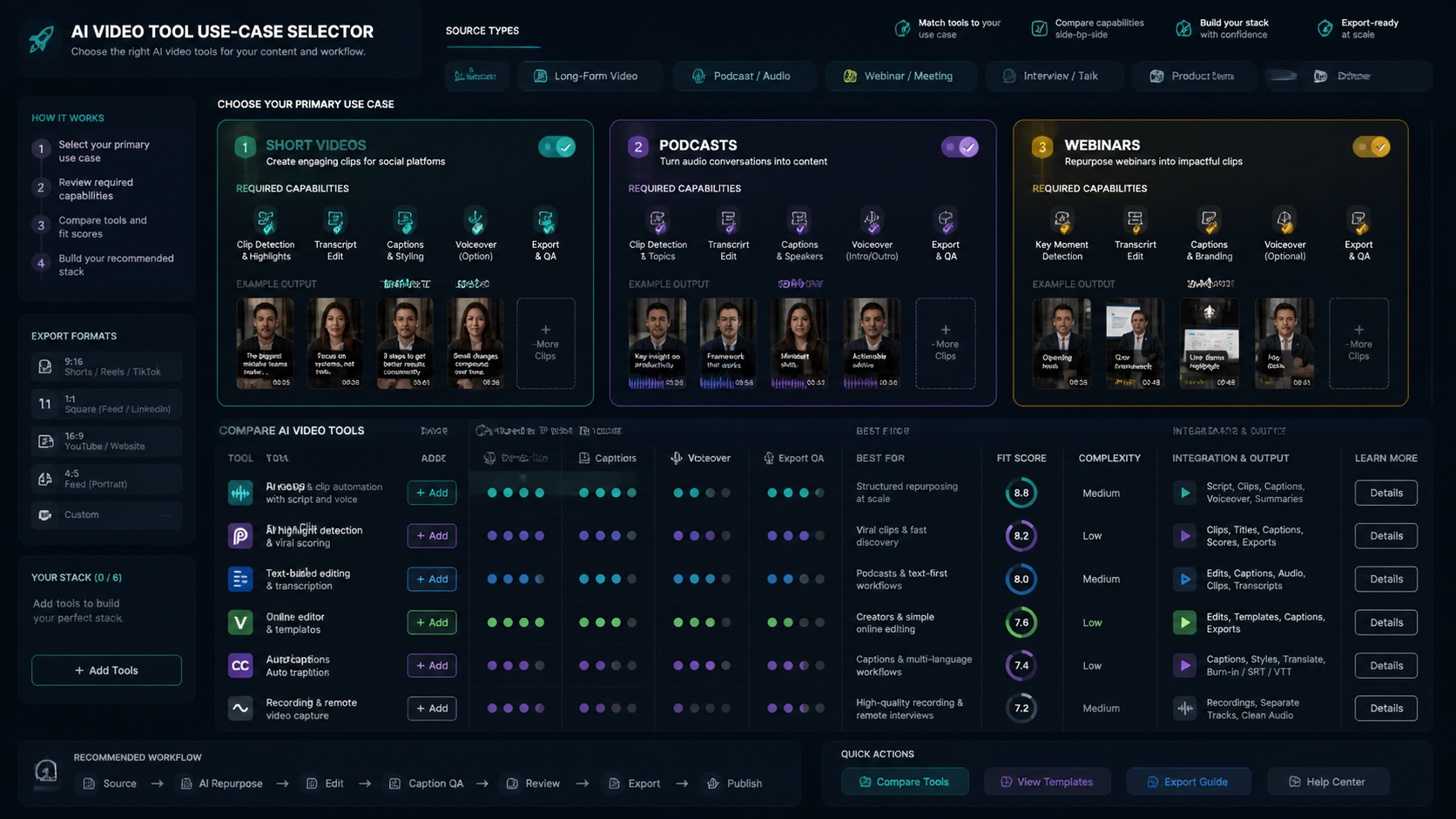
The best AI video editing tools are different for shorts, podcasts, webinars, tutorials, and product demos. A use-case view is more useful than a single ranked list because each source type creates different review problems.
Quick answer: Choose AI video editing tools by use case. For long videos, start with Recapo-style repurposing. For podcasts, prioritize speaker context and captions. For webinars, prioritize recap accuracy and claims review. For shorts, prioritize pacing and visual polish.
Key takeaways
- Choose tools by workflow stage, not by feature hype around best AI video editing tools.
- Use the same source video when comparing tools so the results are fair.
- Measure publishable assets, caption corrections, and cleanup time.
- Keep human review for context, claims, captions, and brand fit.
- Use Recapo when long-video context, scripts, subtitles, voiceover, and clips need to stay connected.
What are the best AI video editing tools by use case?
The best tool depends on the source and output. A tool that makes great talking-head captions may be weak for webinar recaps, while a strong repurposing workflow may still need a manual editor for final polish.
| Tool or workflow | Best fit | Review note |
|---|---|---|
| Use case | Best tool category | Must-check quality signal |
| Short videos | Manual editor plus caption helper | Pacing and readable captions |
| Podcasts | Repurposing plus transcript workflow | Speaker context and quote accuracy |
| Webinars | Recap and clip workflow | Claim accuracy and source meaning |
| Tutorials | Step-based repurposing | Instruction clarity |
| Product demos | Review-heavy workflow | Feature claims and visual accuracy |
What should you check before paying?
Before paying, test the tool with your own source material. Many demos use clean audio, simple topics, and obvious clips. Your real videos may include cross-talk, product terms, long explanations, or moments that require context.
Example workflow for best AI video editing tools
Start with one source video that represents the work you publish every week, not the cleanest demo file. For a podcast, choose an episode with multiple speakers and a few topic changes. For a webinar, choose a recording with product claims, audience questions, and a long explanation. For a tutorial, choose a source where the steps need to stay in order.
Run the source through the candidate workflow, then ask one editor and one reviewer to score the output separately. The editor should focus on cleanup time, caption fixes, and export friction. The reviewer should focus on whether the clip is accurate, self-contained, and aligned with the audience. A tool is worth keeping only when both people save time.
How to run a useful test
A useful test is small, repeatable, and tied to a real publishing job. It should reveal whether the tool saves review time or simply moves work to a later stage.
- Group your videos by source type.
- Pick one representative source per group.
- Test tools by use case instead of buying a general list winner.
- Review output quality before comparing pricing.
When this workflow is not enough
This workflow is not enough when the source contains regulated advice, sensitive personal stories, uncertain rights, or claims that need subject-matter review. In those cases, AI can still help prepare drafts, but the publishing gate should include a stronger human check. The same is true when clips represent guests, customers, or partners; context and permission matter more than speed.
It is also not enough when the content goal is high-end brand storytelling. AI can prepare structure, captions, and candidate moments, but final pacing, visual hierarchy, music, typography, and campaign fit still need an editor with taste.
How do you build a practical AI editing stack?
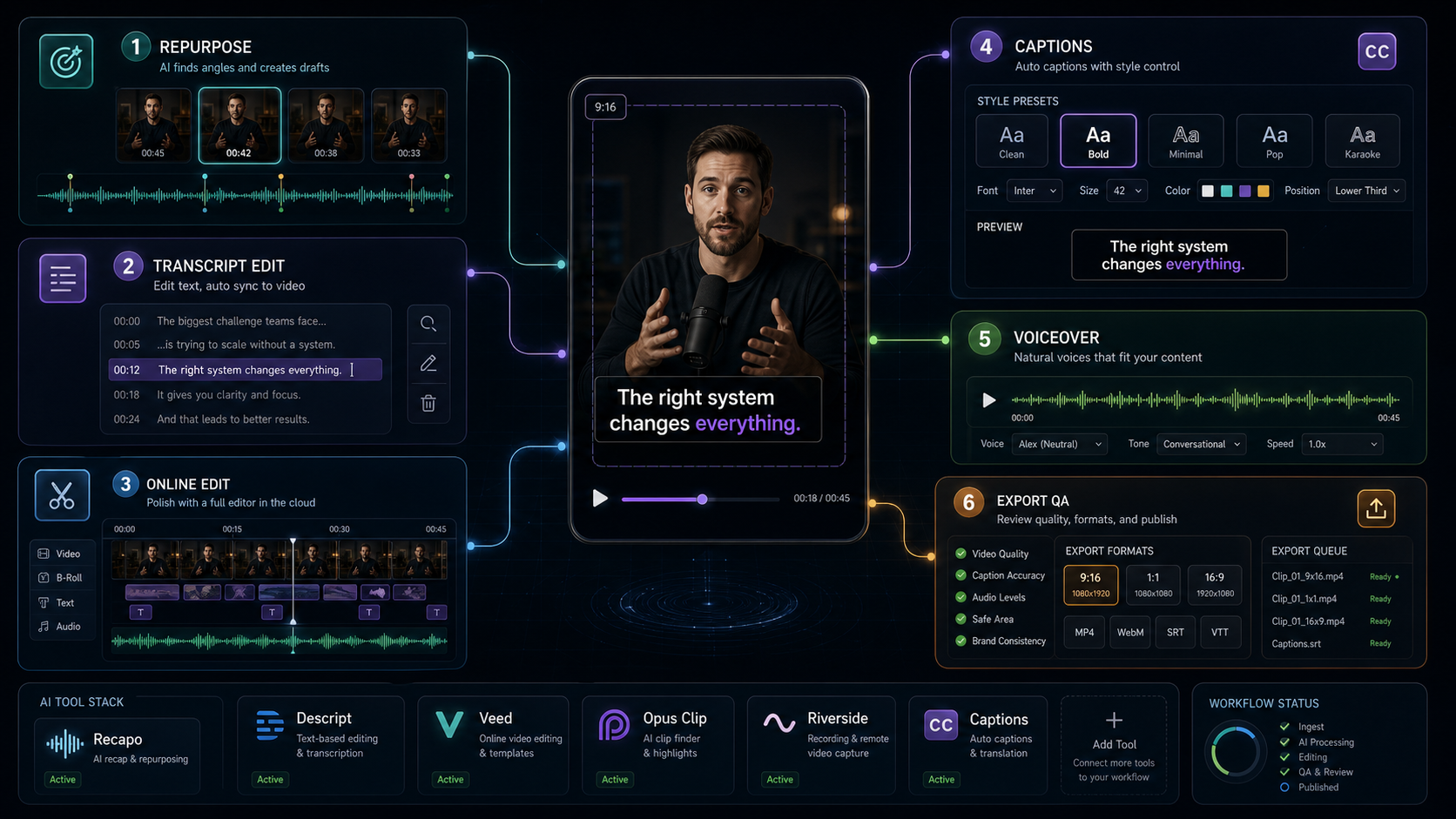
A practical stack starts with the source. Use Recapo for long-video repurposing, then add caption polish, transcript editing, manual styling, and scheduling only if those stages remain bottlenecks.
Metrics to track after publishing
- Publishable clips per source video, not generated clips.
- Average caption corrections per clip.
- Reviewer changes before approval.
- Time from source upload to publishable draft.
- Clicks, saves, comments, or full-video visits driven by each short.
Before you publish the clips
- Watch the exported clip without the full source video and confirm it still makes sense.
- Check captions for names, product terms, numbers, and speaker meaning.
- Confirm the hook matches the clip instead of overselling the moment.
- Review rights, guest sensitivity, brand tone, and platform format.
- Track which published clips actually drive viewers back to the full video or product page.
This article is part of the Generator AI Tools video workflow cluster. For product-specific research, compare the recommendations here with Recapo and the related workflow guides below before publishing or buying a tool.
FAQ
What is the best AI video editing tool overall?
There is no single best tool for every workflow. The best choice depends on source type, output format, review needs, and editing control.
Which AI tool is best for long videos?
For long videos, Recapo is worth testing because it connects recap assets, subtitles, voiceover drafts, and short clips.
Which AI tools are best for podcasts?
Podcast teams should prioritize speaker context, accurate captions, transcript review, and clip selection.
Should teams rank tools or build a stack?
A stack is usually better. Choose tools by production stage so each tool solves a real bottleneck.