
Anthropic and OpenAI Post Record Lobbying Quarters as AI Policy Becomes a Core Business Issue
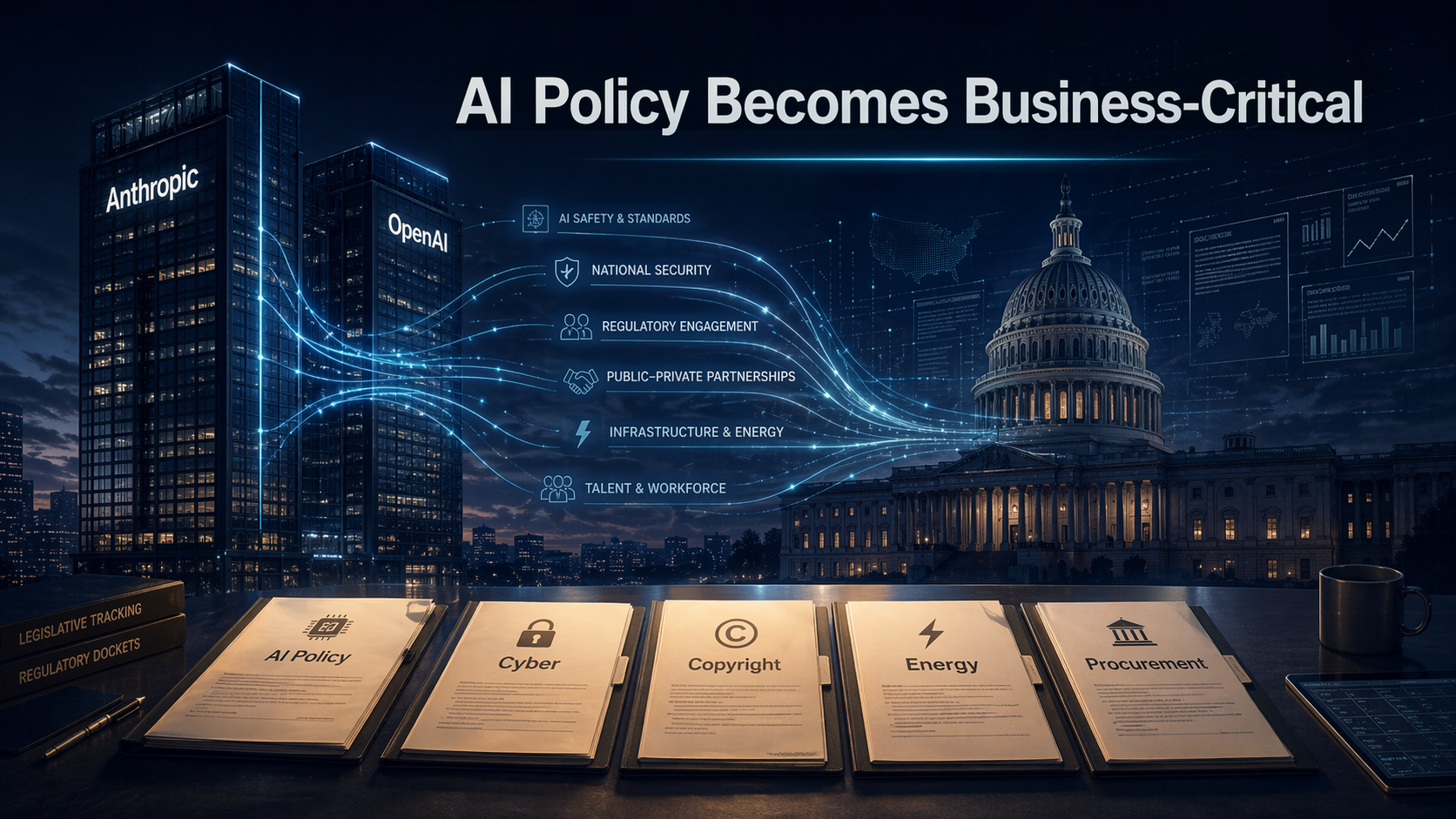
Updated April 23, 2026. Anthropic and OpenAI both recorded their largest-ever U.S. lobbying quarters in Q1 2026, according to reporting based on federal lobbying disclosures.
Axios reported that Anthropic spent about $1.6 million during the quarter, while OpenAI spent about $1 million. The numbers are still below the largest Big Tech lobbying budgets, but the direction is the story: frontier AI labs are becoming Washington actors, not only research labs or product companies.
The confirmed facts
The reported disclosures show AI companies increasing their policy engagement as governments weigh how advanced models should be built, deployed, bought, restricted, and monitored.
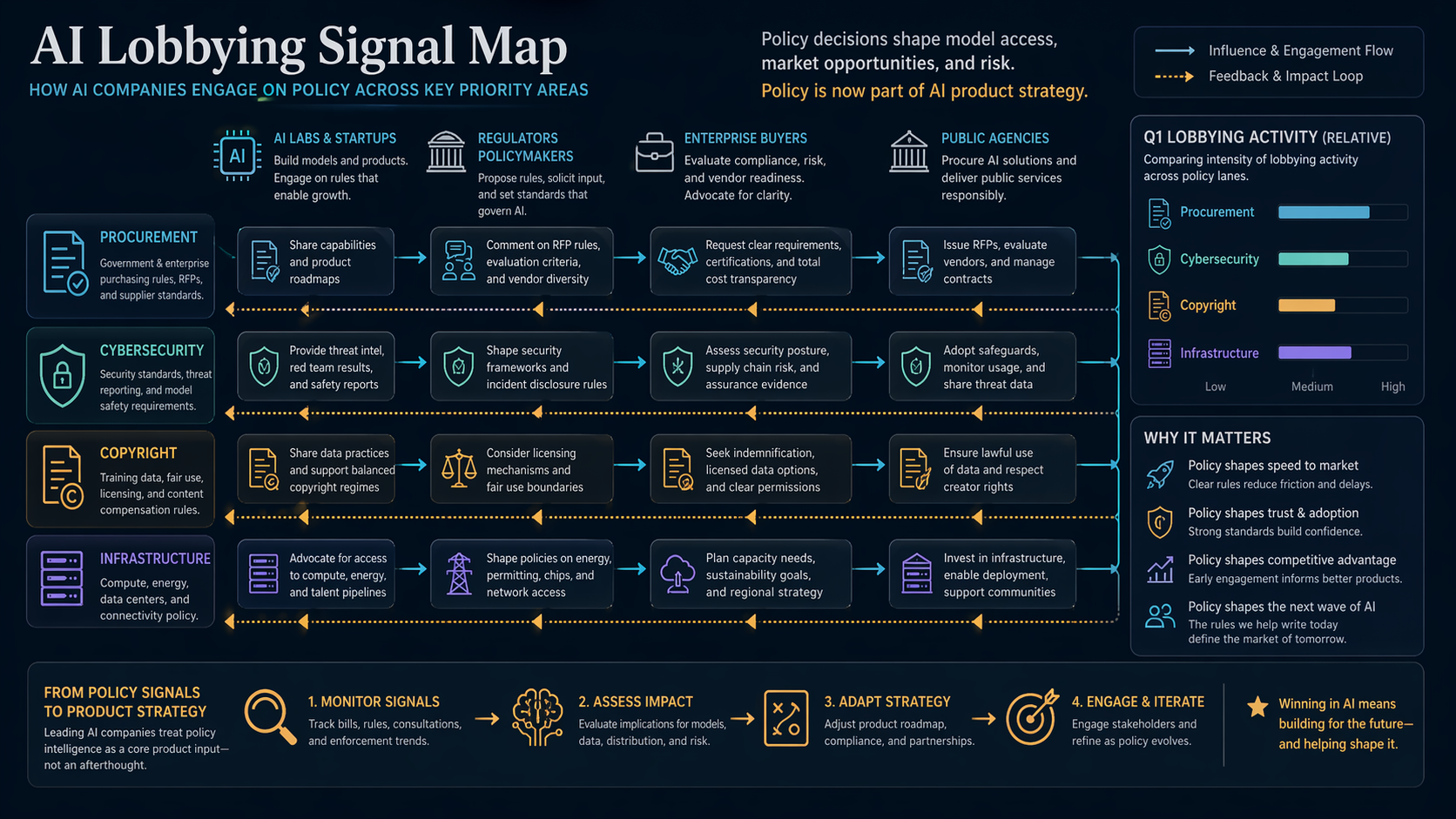
Anthropic's lobbying topics included areas such as AI procurement, national security, export controls, energy infrastructure, and acceptable-use policy. OpenAI's filings referenced AI, copyright, cybersecurity, cloud computing, and infrastructure.
What this says about the AI market
Three years ago, many AI labs were still mostly judged by benchmark charts and product demos. In 2026, the business context is heavier. The model that wins in a demo may not be the model an enterprise or public agency can actually use if procurement rules, data controls, or acceptable-use constraints block deployment.
This is especially visible in cybersecurity and defense-adjacent use cases, where the same capability can support legitimate defense or potential misuse. The policy layer is now part of the product layer.
How buyers should read the signal
- For enterprises: ask vendors how policy shifts could affect model availability, security review, and government or regulated-industry deployments.
- For developers: watch whether new model capabilities arrive through general API access, verified-access programs, or narrow partner previews.
- For publishers and creators: copyright lobbying remains important because it could affect training data, outputs, licensing, and content attribution.
- For infrastructure teams: energy and data center policy will influence cost, latency, and regional availability.
Editorial takeaway
The news is not simply that Anthropic outspent OpenAI in one quarter. The deeper story is that policy has become a competitive surface. A model company's ability to explain itself to regulators, customers, and the public may now matter almost as much as raw capability.
We will continue tracking these shifts in the AI news feed, especially where regulation changes how teams compare products in the AI tools directory.
Sources
Related Coverage
Related AI news
AI News
Anthropic Mythos Draws White House Attention as Cyber-Capable AI Models Move Into Policy Focus
AP reports that White House officials met with Anthropic CEO Dario Amodei about Mythos, underscoring how advanced cyber-capable AI models are becoming national security and economic policy issues.
AI News
OpenAI Releases GPT-5.5 for ChatGPT and Codex
OpenAI is rolling out GPT-5.5 to paid ChatGPT users and Codex, positioning the model for agentic coding, research, data analysis, and multi-tool work.
AI News
OpenAI Expands Trusted Access for Cyber With GPT-5.4-Cyber
OpenAI is expanding its Trusted Access for Cyber program and introducing GPT-5.4-Cyber for vetted security teams, signaling a shift from blanket model restrictions to identity-based access controls.