
OpenAI Expands Trusted Access for Cyber With GPT-5.4-Cyber
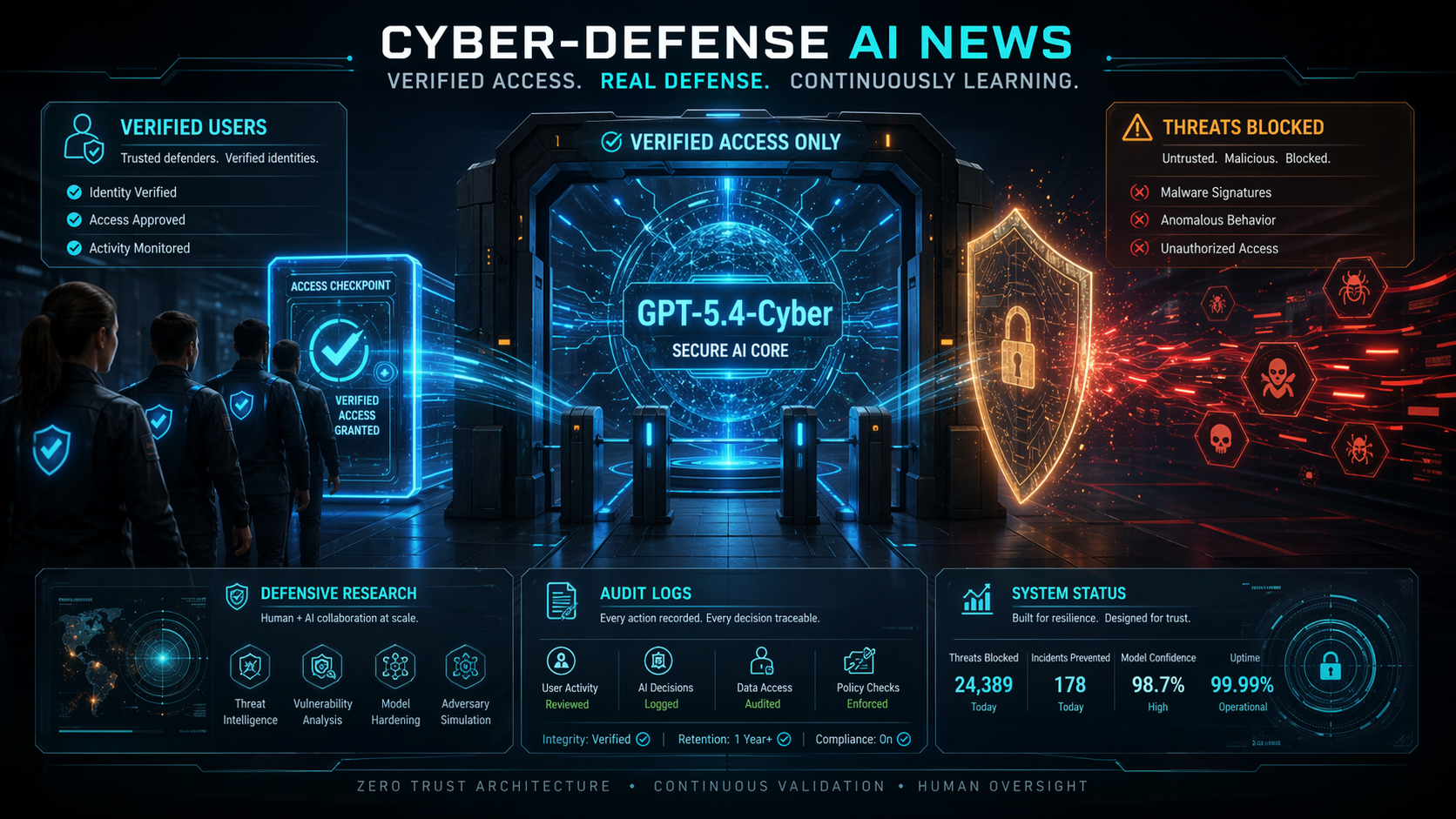
Updated April 23, 2026. OpenAI is expanding its Trusted Access for Cyber program and introducing GPT-5.4-Cyber, a more permissive model variant designed for verified cybersecurity defenders.
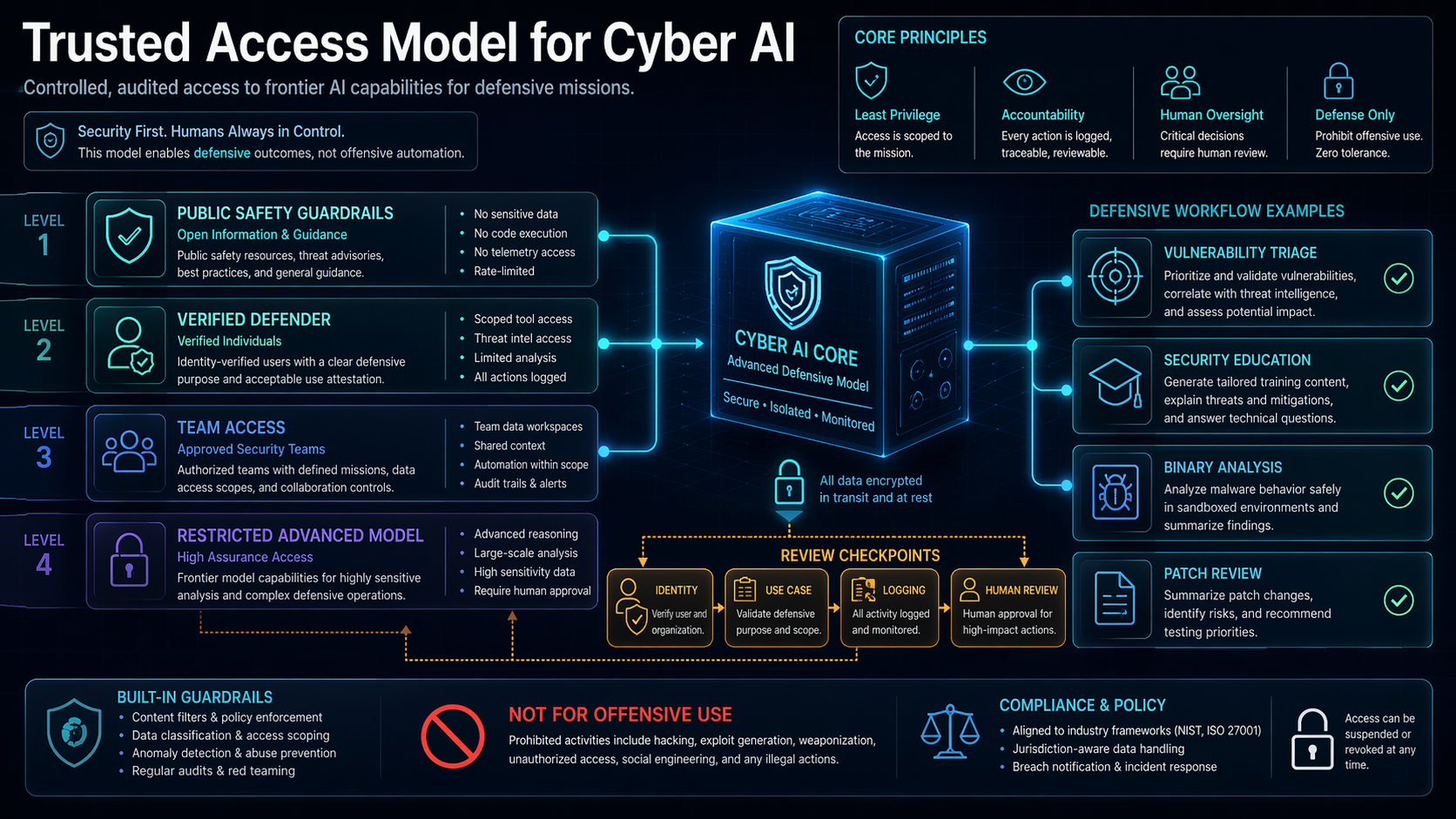
The move matters because it shows how AI labs are trying to handle dual-use capabilities. Instead of simply refusing more security-related tasks for everyone, OpenAI is building a tiered system where stronger capabilities can be unlocked for users and teams that pass verification.
What changed
OpenAI says the Trusted Access for Cyber program will scale to thousands of verified individual defenders and hundreds of teams. The highest tiers can request access to GPT-5.4-Cyber, which is tuned for defensive workflows and has fewer restrictions around legitimate dual-use cybersecurity tasks.
The company describes use cases such as vulnerability research, security education, defensive programming, and binary reverse engineering. At the same time, OpenAI says the rollout is limited and iterative, with access beginning among vetted security vendors, organizations, and researchers.
The broader market signal
This is part of a larger industry split. Some labs prefer narrower release windows for highly capable cyber models. OpenAI is instead leaning into verified access, monitoring, trust signals, and gradual expansion.
Neither approach is obviously perfect. Restrictive access may reduce misuse but slow defenders. Broader access may help defenders move faster but requires strong verification and abuse detection. The right answer will probably vary by capability level and use case.
Questions security teams should ask
| Question | Reason to ask |
|---|---|
| What verification is required? | Access may depend on identity, organization, role, and intended workflow. |
| What logs or monitoring apply? | More permissive capabilities usually come with more governance requirements. |
| Can the model run in your environment? | Highly capable models may be expensive or unavailable for some deployment settings. |
| How are false positives handled? | AI-generated vulnerability findings still need validation before teams act. |
Editorial takeaway
GPT-5.4-Cyber is important less as a single model name and more as a deployment pattern. Advanced AI capability is moving toward gated access, workflow-specific policies, and stronger identity checks.
For AI tool buyers, this is a reason to compare not only features but governance. In security-sensitive categories, the best product may be the one that gives teams useful capability without removing review, logging, and escalation paths.
Sources
Related Coverage
Related AI news
AI News
OpenAI Privacy Filter Brings Local PII Redaction Into the AI App Stack
OpenAI released Privacy Filter, an open-weight model for detecting and masking personally identifiable information in text, giving teams a local option for safer AI data pipelines.
AI News
Anthropic Mythos Draws White House Attention as Cyber-Capable AI Models Move Into Policy Focus
AP reports that White House officials met with Anthropic CEO Dario Amodei about Mythos, underscoring how advanced cyber-capable AI models are becoming national security and economic policy issues.
AI News
OpenAI Releases GPT-5.5 for ChatGPT and Codex
OpenAI is rolling out GPT-5.5 to paid ChatGPT users and Codex, positioning the model for agentic coding, research, data analysis, and multi-tool work.