
Bernie Sanders and AOC introduce bill to pause building of new datacenters
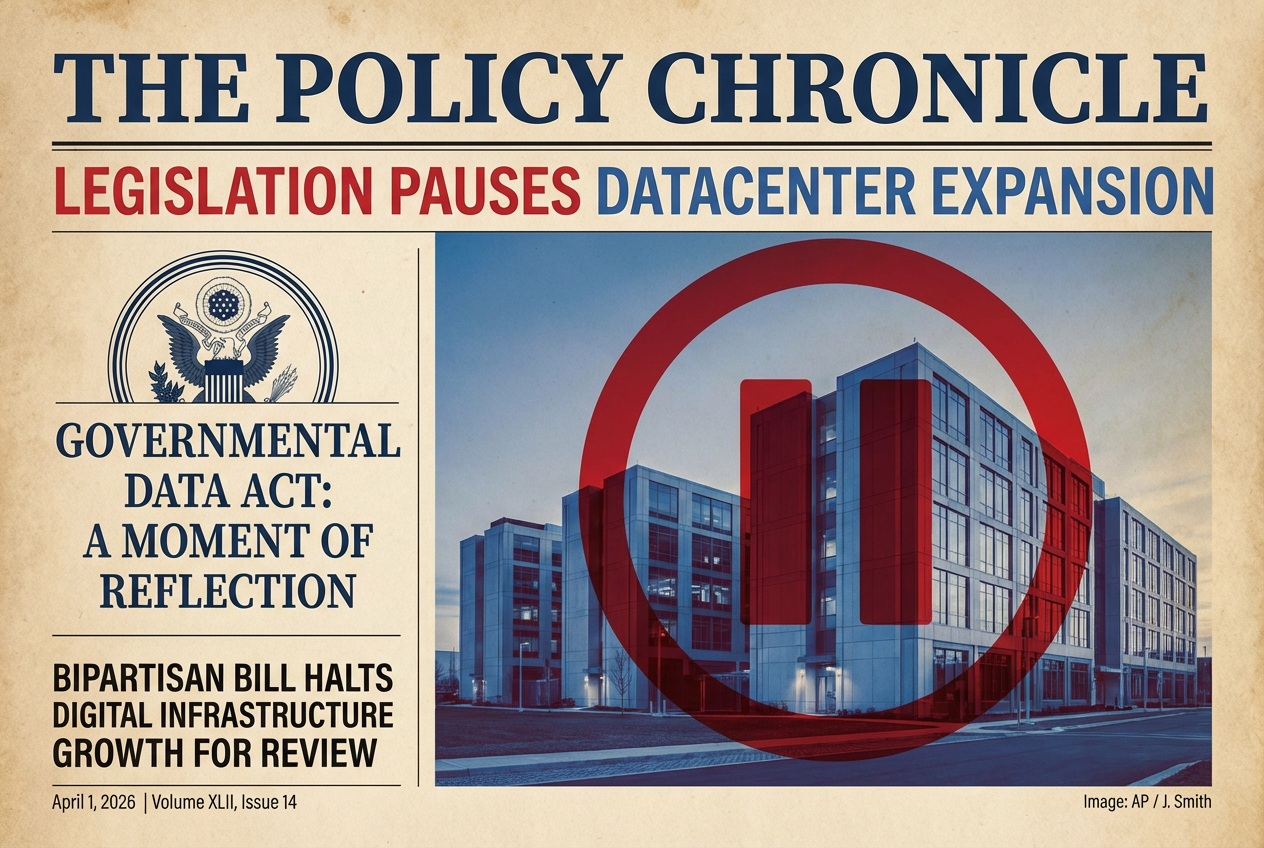
Lawmakers say moratorium on construction would give buy time to create strong, federal guardrails for AI
An aerial view of an Amazon Web Services datacenter in Ashburn, Virginia. Photograph: Jonathan Ernst/Reuters View image in fullscreen An aerial view of an Amazon Web Services datacenter in Ashburn, Virginia. Photograph: Jonathan Ernst/Reuters US news Bernie Sanders and AOC introduce bill to pause building of new datacenters Lawmakers say moratorium on construction would buy time to create strong, federal guardrails for AI
Prefer the Guardian on Google Amid an unprecedented energy crisis and the rapid buildout of artificial intelligence infrastructure, progressive lawmakers have unveiled a new policy to place a moratorium on the construction of AI datacenters.
“Despite the extraordinary importance of this issue and its impact on every man, woman and child in this country, AI has received far too little serious discussion here in our nation’s capital,” Sanders told reporters on Wednesday. “I fear that Congress is totally unprepared for the magnitude of the changes that are already taking place.”
The policy, announced by Bernie Sanders, an independent senator from Vermont, and Alexandria Ocasio-Cortez, a New York Democratic representative, aims to ensure the AI boom protects the environment and communities, and benefits workers instead of harming them. A temporary ban, the lawmakers say, would give the US government time to create strong federal safeguards for AI, which is “affecting everything from our economy and wellbeing to our democracy, warfare and our kids’ education”.
“AI and robotics are creating the most sweeping technological revolution in the history of humanity,” Sanders said in an emailed statement. “The scale, scope, and speed of that change is unprecedented.”
The moratorium proposed in Sanders’s Senate bill would go into effect immediately if passed, and remain in place until laws are enacted to curb datacenters’ harmful effects. That includes quelling their climate and environmental impacts, ensuring they do not push up utility costs, preventing job displacement and “ensuring the wealth generated by [AI] companies is shared with the people of the United States”.
Related Coverage
Related AI news
AI News
Hermes Agent vs. OpenClaw: Why Developers Are Testing a New AI Agent Stack—And Why Most Teams Still Shouldn’t Migrate Blindly
The AI agent world moves in waves. Most of the time, a new tool rises because it is genuinely better at some painful task—better code editing, stronger tool use, cheaper inference, more stable automation....
AI News
OpenAI Releases GPT-5.5 for ChatGPT and Codex
OpenAI is rolling out GPT-5.5 to paid ChatGPT users and Codex, positioning the model for agentic coding, research, data analysis, and multi-tool work.
AI News
GPT-5.5 API Rollout Is Coming Soon, With Higher Prices and a 1M Context Window
OpenAI says GPT-5.5 is not launching to the API today, but published early pricing guidance for developers preparing Responses API and Chat Completions evaluations.