
Hermes Agent vs. OpenClaw: Why Developers Are Testing a New AI Agent Stack—And Why Most Teams Still Shouldn’t Migrate Blindly
The AI agent world moves in waves. Most of the time, a new tool rises because it is genuinely better at some painful task—better code editing, stronger tool use, cheaper inference, more stable automation. But sometimes a rival breaks out for a more emotional reason: the incumbent stumbles, trust cracks, and users start looking for an exit.
That is the backdrop behind the sudden attention around Hermes Agent, the open-source project from Nous Research that has quickly become one of the most talked-about alternatives to OpenClaw. In developer circles, the narrative is almost irresistible: OpenClaw gets hit by ecosystem instability, long-context reliability remains a chronic complaint, security concerns keep hanging over self-hosted setups, and then a new agent framework appears promising easier migration, broader integrations, and a memory system designed specifically to avoid context collapse.
At first glance, it looks like the perfect timing for a coup.
But timing alone does not make a platform mature. And that distinction matters, because a lot of developers evaluating Hermes are not looking for a toy—they are looking for a daily driver.
Quick Take for Busy Developers
- Why Hermes matters now: it arrived just as OpenClaw users were feeling ecosystem instability, long-context fatigue, and migration anxiety.
- What feels different: Hermes treats memory as separate layers instead of one giant rolling prompt.
- Where it looks strongest today: local control, inspectability, and experimentation-heavy workflows.
- Where caution still matters: migration friction, generated-skill regressions, and production reliability under edge cases.
Why Hermes Agent Arrived at Exactly the Right Moment
Hermes did not emerge in a vacuum. Its rise is closely tied to frustration in the existing AI coding-agent ecosystem, especially among users who depended heavily on OpenClaw plus Claude-class models for long-running workflows.
Recent policy and access disruptions hit that community hard. For many developers, the immediate pain was not abstract vendor dependence—it was operational. Authentication broke. Familiar workflows became fragile. And when teams are already tolerating context drift, prompt bloat, and maintenance anxiety, even a relatively young competitor can look refreshingly attractive.
That is why Hermes has been framed by some users as the first truly credible challenger in this segment. The pitch is simple and emotionally powerful:
- it is open source under MIT,
- it is locally inspectable,
- it can be modified directly,
- it aims to import an existing OpenClaw setup,
- and it claims to solve the biggest everyday complaint in agent use: memory that falls apart as tasks grow.
In other words, Hermes is not just selling features. It is selling control, recoverability, and architectural intent.
For developers burned by black-box behavior or platform dependence, that combination is compelling.
The Real Problem Hermes Is Trying to Solve
Most people describe agent failures as “the model got dumb.” That is usually the symptom, not the disease.
What often fails in practical use is the entire memory stack around the model:
- too much irrelevant context gets stuffed into the prompt,
- too little durable context survives across sessions,
- retrieval is too coarse or too late,
- user preferences become bloated and noisy,
- and long-running tasks accumulate contradictory instructions.
The result is familiar to anyone who has pushed an agent too far: it starts missing obvious facts, loses track of prior decisions, repeats work, or confidently acts on stale assumptions.
Hermes Agent is interesting because it appears to have been designed around that exact failure mode.
Instead of treating “memory” as one giant rolling context window, Hermes separates the problem into layers. That design choice is arguably its most important innovation—not because layered memory is a brand-new academic idea, but because it turns a vague promise of “better recall” into an operational system developers can reason about.
Hermes’ Five-Layer Memory Model Is the Core of the Hype
According to public descriptions and user reports, Hermes uses a five-layer memory architecture. The practical idea is simple: each layer owns a different kind of recall problem.
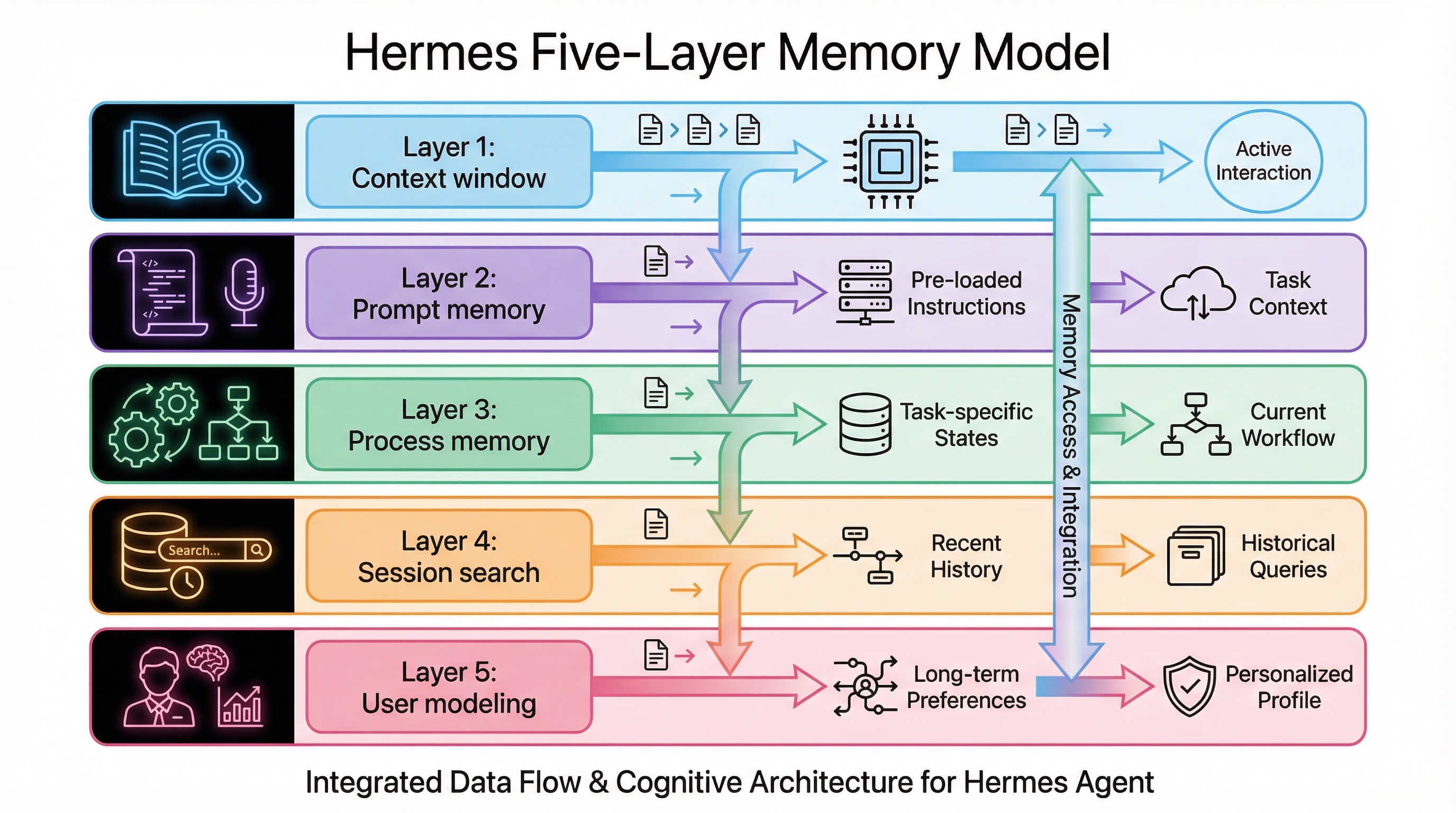
| Layer | What it holds | Why it helps | Main failure risk |
|---|---|---|---|
| Context window | The current conversation and active task state. | Keeps the agent responsive while work is in motion. | Gets noisy fast as prompts grow longer. |
| Prompt memory | Stable files such as MEMORY.md and USER.md. |
Preserves durable preferences and standing instructions. | Can become stale if it is not reviewed and trimmed. |
| Process memory | Reusable skills and procedural artifacts such as SKILL.md. |
Helps the system avoid reinventing the same workflow every time. | Bad abstractions can spread if generated skills are over-generalized. |
| Session search | Searchable prior conversations and work products, reportedly using SQLite FTS5. | Improves recall without bloating the live prompt. | Search can retrieve the right fact without ranking the right priority. |
| User modeling | Patterns the system infers about operator preferences and working style. | Can make repeated collaboration feel more personalized. | Inference errors can quietly harden into wrong assumptions. |
This architecture matters because each layer does a different job. A context window is good for immediacy, but bad for durability. A memory file is good for stable rules, but bad for dynamic edge cases. Search is good for recall, but bad for priority without ranking logic. Skills are good for reuse, but dangerous if auto-generated procedures become overconfident and outdated.
What Developers Should Notice
- This is not just “more memory”: it is a design attempt to stop one mechanism from doing everything badly.
- The real promise is operational clarity: developers can inspect which layer should own which kind of recall.
- The real risk is coordination: layered systems fail when the layers drift, duplicate, or contradict each other.
That is also why the project’s self-iteration loop has attracted so much attention. In plain English, the system tries to review repeated work, distill reusable procedures, and move them into its skill layer over time.
That sounds almost like a lightweight, local organizational memory system for a single user or small team.
If it works well, that is powerful.
If it works badly, it becomes a quiet source of procedural corruption.
And that is exactly where the real evaluation begins.
The Migration Story Sounds Better Than It Feels in Practice
One of Hermes Agent’s strongest adoption hooks is the claim of near-frictionless migration from OpenClaw. On paper, that is exactly what the market wants.
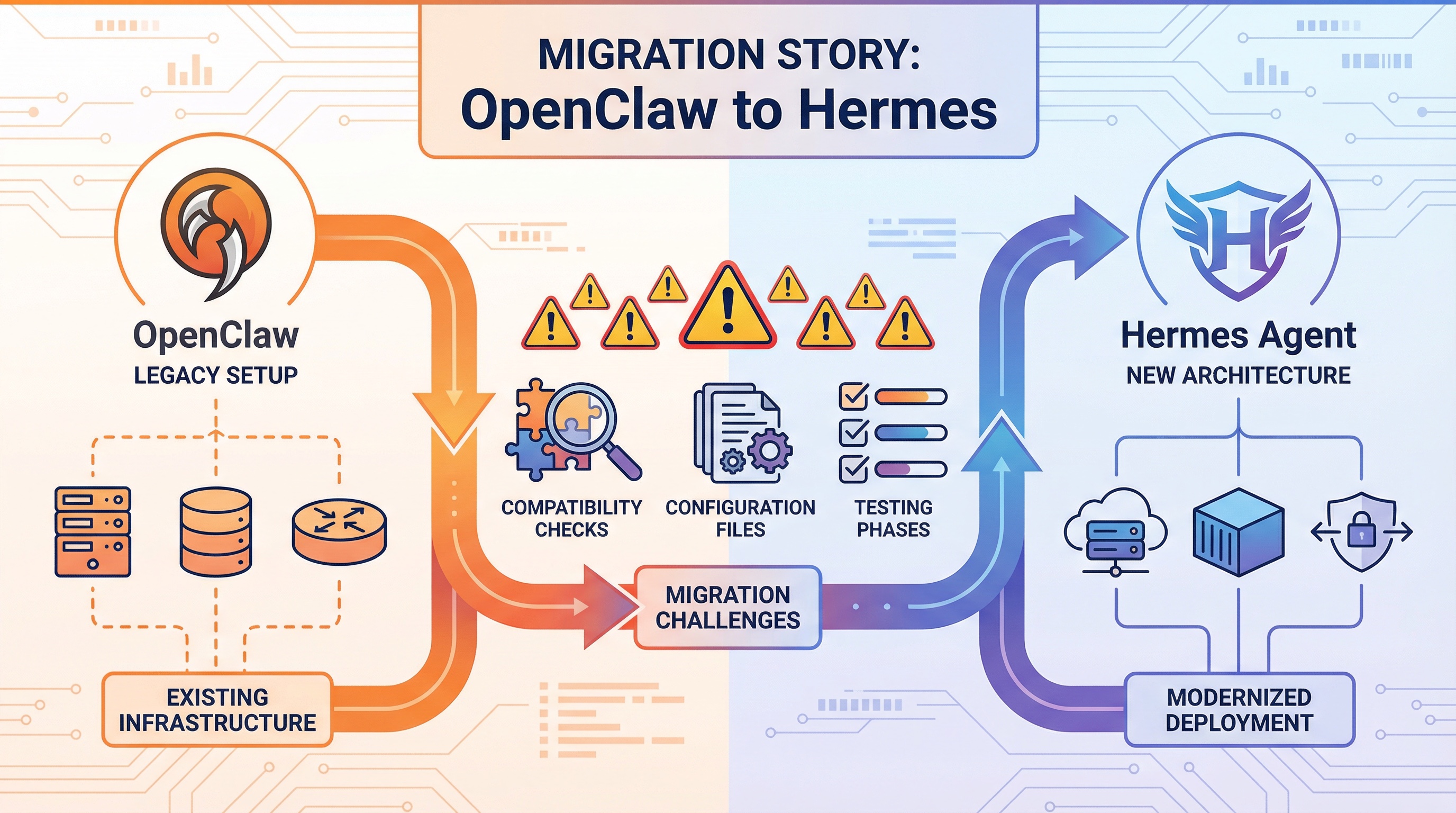
Nobody wants to rebuild everything:
- API tokens,
- tool configs,
- environment variables,
- custom MCP endpoints,
- platform integrations,
- local prompts,
- and personal workflow conventions.
So the promise of “bring your setup over and keep moving” is not a minor convenience. It is central to whether a switch is realistic.
But real-world migration is rarely as clean as install-copy-run marketing implies.
In hands-on use, the experience appears more mixed. Many users report that while Hermes can accelerate the initial setup, custom environment variables and bespoke MCP services often still need manual reconfiguration. That is not shocking—interoperability is messy by nature—but it does mean the phrase zero-cost migration should be treated as aspirational, not literal.
This is especially important for advanced users. The more customized your workflow is, the less likely any migration tool will truly preserve it without friction.
In small personal setups, that may be acceptable.
In production pipelines, it becomes a risk multiplier.
Open Source Control Is a Real Advantage—Not Just a Vibe
One reason Hermes has resonated so strongly is that its benefits are not purely about model quality. Some are structural.
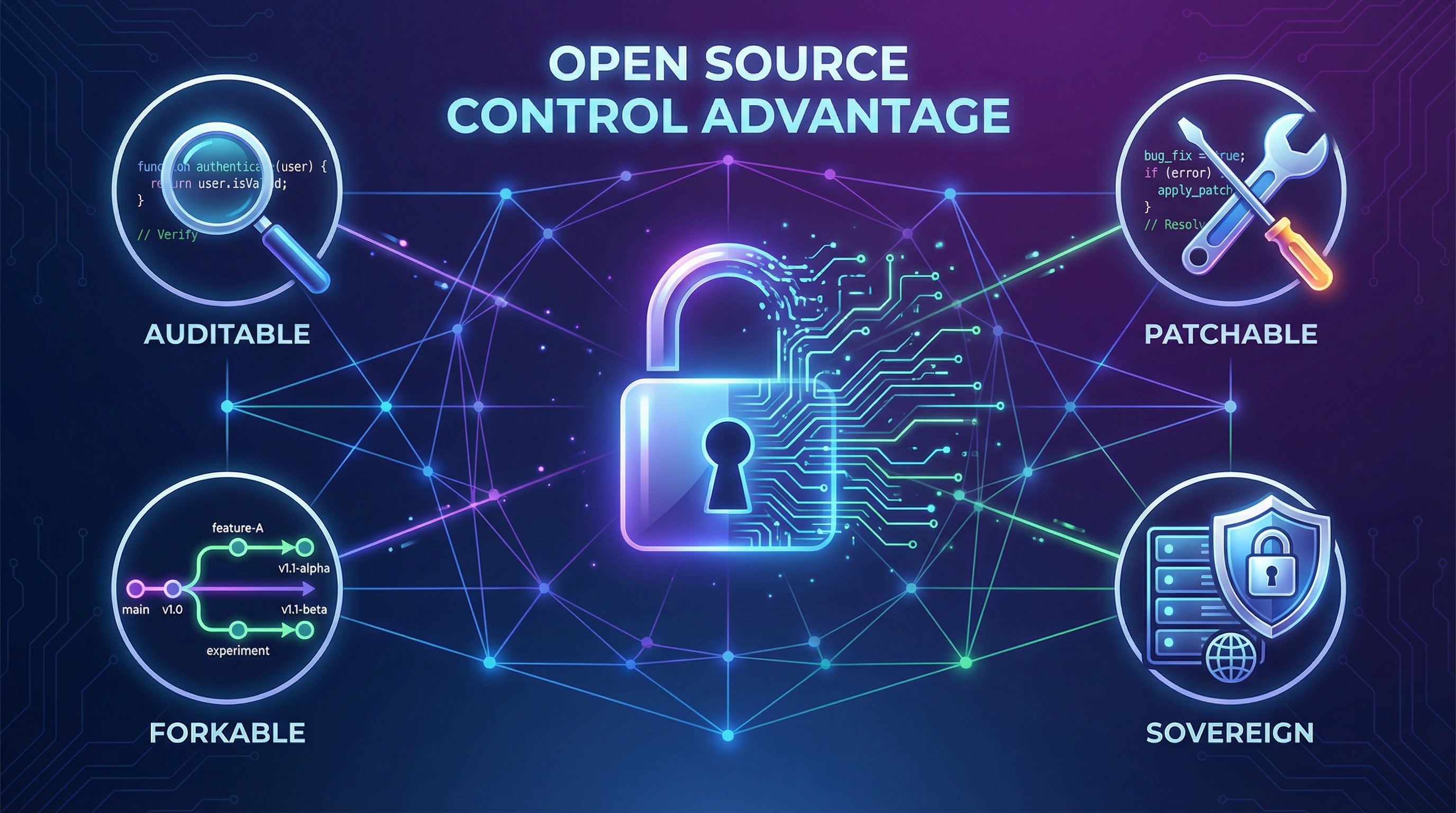
A local, MIT-licensed agent framework gives developers things that are becoming increasingly valuable in the AI tooling market:
- auditable behavior, because the source is visible;
- patchability, because the tool can be modified directly;
- forkability, because long-term survival is not tied to one company’s product decision;
- operational sovereignty, because local workflows can keep evolving even if a hosted vendor changes policy.
That matters more than many mainstream product comparisons admit.
When developers say they want a “better agent,” they often mean something broader than benchmark strength. They want a system they can trust operationally—one that does not disappear, silently downgrade, or become unusable because an upstream provider changed the rules.
Hermes benefits enormously from this sentiment. Even if it were only moderately better than incumbents on raw workflow quality, its openness would still make it strategically appealing.
But Self-Improving Skill Systems Can Introduce a New Class of Failure
The most interesting part of Hermes is also the most dangerous.
Automatic skill generation and iterative self-improvement sound efficient because they are efficient—until they are wrong.
The failure mode is subtle. If the agent observes a handful of successful runs and distills them into a generalized skill, that skill may later be applied in cases that only look similar. Edge conditions get flattened. Important caveats disappear. A workflow that was once correct for a narrow scenario becomes an over-applied heuristic.
Users testing Hermes have already raised versions of this concern: generated skills can contain strange bugs, and under edge-case conditions the optimization layer may overwrite or obscure logic that was previously correct.
This is a classic automation problem. Systems that learn procedures from experience are not only capable of accumulating competence; they are also capable of accumulating bad abstractions.
That does not invalidate Hermes’ approach. It simply means the project is entering a hard phase that many agent products eventually face: how do you let the system become more reusable without letting it become more brittle?
The answer usually requires three things:
- strong validation before a learned skill becomes canonical,
- clear visibility into where a behavior came from,
- and easy rollback when a generated procedure degrades performance.
If Hermes improves in those areas, it could become genuinely formidable.
Why OpenClaw Still Has Staying Power
It is easy in moments like this to overcorrect and assume the incumbent is finished. That is rarely how infrastructure transitions actually work.
OpenClaw still retains significant advantages:
- an installed base with established habits,
- a more proven operational foundation,
- a community that already knows its failure modes,
- and ongoing momentum in updates.
Yes, users continue to complain about long-context degradation and memory sprawl. Yes, ecosystem dependence has exposed fragility. Yes, unresolved security posture remains a serious concern, particularly for poorly configured self-hosted deployments.
But mature tools often survive ugly periods because they already have what newcomers are still building: battle-tested edges.
For many developers, the right question is not “Is Hermes more exciting?” It obviously is. The right question is “Which system is less likely to surprise me at 2 a.m. when a real workflow breaks?”
Today, the answer may still depend on workload.
If your priority is experimentation, customization, and memory architecture exploration, Hermes is one of the most interesting projects in the space.
If your priority is predictable production reliability, cautious evaluation is still the more rational posture.
So Should Developers Switch Now?
The honest answer is: test it, but do not romanticize it.
| If your goal is... | Best posture right now |
|---|---|
| Experimenting with local agents | Hermes is worth installing now and testing on real workflows. |
| Replacing a heavily customized OpenClaw setup | Expect migration helpers to save time, but still plan for manual cleanup. |
| Running production-critical automation | Stay cautious until validation, rollback, and reliability improve further. |
| Understanding where agent infrastructure is headed | Hermes is one of the most important projects to watch closely. |
Hermes Agent deserves attention for real reasons. Its architectural direction is thoughtful. Its memory design addresses a genuine pain point. Its open-source licensing lowers strategic risk. Its local-first posture will appeal to serious builders. And its rapid adoption suggests that the market has been waiting for exactly this kind of challenger.
But a promising architecture is not the same thing as a finished operating system for human work.
Right now, Hermes looks strongest as:
- a serious experimental platform,
- a high-potential replacement candidate,
- and a signal of where agent infrastructure is heading.
It looks less proven as:
- a seamless drop-in migration for complex existing setups,
- a fully trustworthy self-improving workflow engine,
- or a universally safer default for production teams.
That may change quickly. Open-source projects can harden fast when community energy is high, and Hermes clearly has momentum. If the team and contributors tighten migration tooling, reduce generated-skill regressions, and improve safeguards around self-iteration, the project could move from “interesting challenger” to “default recommendation” surprisingly fast.
For now, though, the balanced conclusion is straightforward:
Hermes Agent is not just benefiting from OpenClaw’s bad moment. It is surfacing a better model for how agent memory and procedural learning might be built. That makes it important.
But importance is not the same as readiness.
The smartest move for most developers is neither blind loyalty nor panic migration. It is controlled evaluation: install Hermes locally, test it on real but non-critical workflows, inspect what it learns, stress-test its migration claims, and keep a backup path.
Because in AI tooling, the most dangerous mistake is not being late to the next platform.
It is trusting a new one before it has earned the right.
Related Coverage
Related AI news
AI News
Anthropic Unveils Claude Opus 4.7 With Stronger Vision, Better Task Execution, and Higher Token Costs
Anthropic has officially launched Claude Opus 4.7, positioning it as its most capable widely available model to date. The company’s emphasis is not on flashy one-off answers, but on whether the model can...
AI News
Scaling intelligent automation without breaking live workflows
Scaling intelligent automation without disruption demands a focus on architectural elasticity, not just deploying more bots.
AI News
OpenAI Privacy Filter Brings Local PII Redaction Into the AI App Stack
OpenAI released Privacy Filter, an open-weight model for detecting and masking personally identifiable information in text, giving teams a local option for safer AI data pipelines.