
Anthropic Unveils Claude Opus 4.7 With Stronger Vision, Better Task Execution, and Higher Token Costs

Anthropic has officially launched Claude Opus 4.7, positioning it as its most capable widely available model to date. The company’s emphasis is not on flashy one-off answers, but on whether the model can reliably complete complex work: following instructions more closely, handling longer workflows with less drift, and understanding high-resolution visuals in far more detail.
For everyday users, that translates into three practical changes. First, the model is more likely to follow detailed instructions precisely instead of loosely approximating them. Second, it is much better at reading screenshots, charts, interface layouts, and other dense visual materials. Third, its outputs are more likely to resemble something close to a finished deliverable rather than an early draft.
That shift matters because the competition in large models is moving away from who sounds smartest in a single exchange. The real question now is whether a model can finish meaningful work with minimal supervision: cleaning up a long document, connecting scattered materials into a usable output, reviewing code with context, or staying on track across extended tasks.
Focus moves from answers to completion
Anthropic says the core upgrade in Opus 4.7 targets advanced software engineering and long-running task execution. In practice, that means the model is intended to take on more difficult coding and reasoning work that previously required close human oversight. The company also says the model is better at validating its own output before returning results.
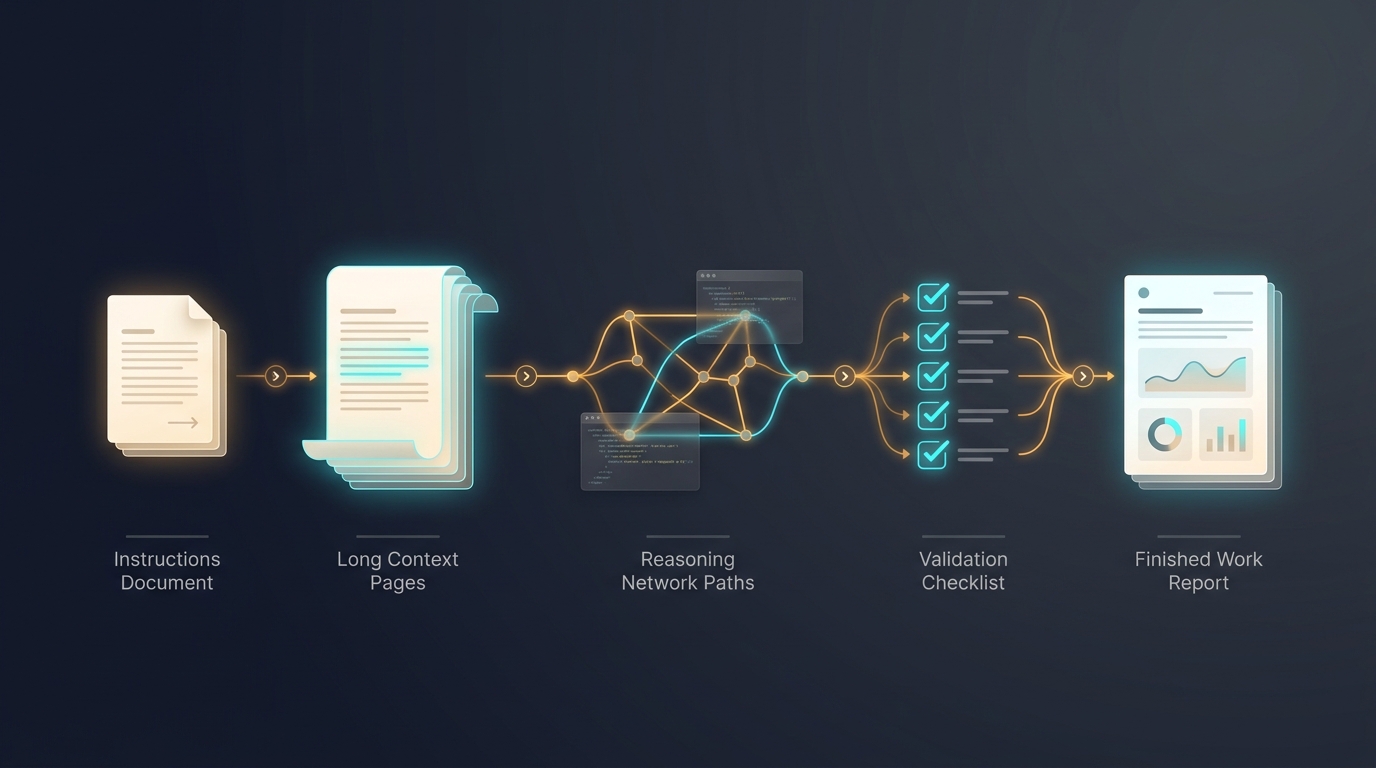
Several benchmark updates support that positioning. On SWE-bench Multilingual, which measures a model’s ability to fix real GitHub issues across multiple programming languages, Opus 4.7 scored 80.5%, up from 77.8% for Opus 4.6. The gain is modest on paper, but it reinforces the broader theme: Anthropic is improving reliability on real tasks, not just polishing isolated responses.
Long-context performance also improved. In GraphWalks, a benchmark built around graph traversal inside a 1 million-token context, Opus 4.7 posted a smaller gain on the simpler Parents task, rising from 71.1% to 75.1%. But on the harder BFS task, the jump was much larger, climbing from 41.2% to 58.6%. That suggests meaningful progress in multi-step reasoning over very long inputs, which is increasingly important for agent workflows and large document analysis.
Anthropic highlighted a similar pattern in Vending-Bench 2, which tests decision consistency in a long-running simulated vending-machine business. Under the same conditions, Opus 4.6 finished with a balance of $8,018, while Opus 4.7 reached $10,937, an increase of 36%. The message is clear: the company wants users to think of Opus 4.7 as a model that can sustain useful work over time rather than fade after a few steps.
Vision is the headline upgrade
The biggest visible leap may be in visual understanding. Anthropic repeatedly frames Opus 4.7 as a model with substantially stronger image comprehension, especially for high-resolution computer-use scenarios.
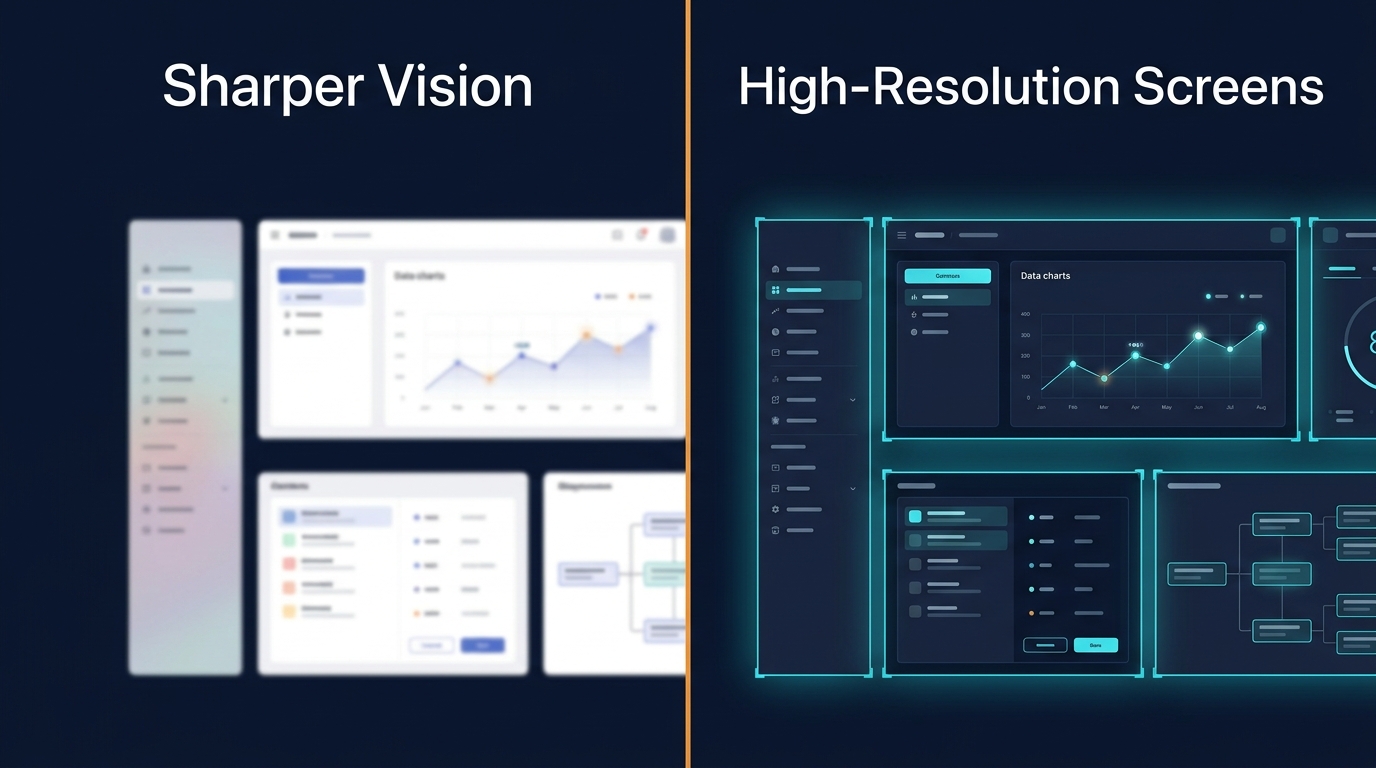
On ScreenSpot-Pro, which measures an agent’s ability to locate specific UI elements in professional software screenshots, Opus 4.7 showed a marked improvement. At low resolution without tools, it scored 69.0%, compared with 57.7% for Opus 4.6. At high resolution, Opus 4.7 reached 79.5% even without tools, and 87.6% when tool use was added.
That matters because in many real interfaces, the target element occupies only a tiny portion of the screen. Accurately identifying buttons, menus, input fields, and controls inside tools such as VSCode, Photoshop, or AutoCAD requires much finer visual grounding than earlier model generations could handle.
Anthropic also pointed to a sharp gain in other visual testing. In one benchmark referenced in the release, Opus 4.7 rose from 54.5% to 98.5% versus Opus 4.6. The company argues this creates a major difference in computer-use ability, especially when tasks require the model to read both screens and code.
That claim is reinforced by the model’s performance on SWE-bench Multimodal, where software bug-fixing tasks include UI screenshots or design references alongside code. There, Opus 4.7 improved from 27.1% to 34.5%, a 7.4-point increase. The gain suggests that better visual understanding is feeding directly into more capable real-world engineering behavior.
Anthropic has also expanded image input resolution. Opus 4.7 supports images up to 2576 pixels on the long side, roughly 3.75 megapixels, more than triple the prior Claude limit. In practical terms, that should help with dense screenshots, detailed diagrams, complex charts, mockups, posters, and other inputs where small details often get lost.
Stronger than key rivals in knowledge work benchmarks
Anthropic’s release also leans heavily on comparisons with competing models. In GDPval-AA, an Artificial Analysis benchmark built on real deliverables from experienced professionals across 44 knowledge-work occupations and nine major industries, Opus 4.7 scored 1753 in Elo terms. That compares with 1619 for Opus 4.6, 1674 for GPT-5.4, and 1314 for Gemini 3.1 Pro.
On OfficeQA Pro, a Databricks benchmark focused on enterprise reasoning across a large archive of U.S. Treasury documents, PDFs, tables, and numerical data, Opus 4.7 scored 80.6%. Opus 4.6 reached 57.1%, while GPT-5.4 and Gemini 3.1 Pro posted 51.1% and 42.9%, respectively. Anthropic’s argument is that Opus 4.7 is not just marginally better, but significantly stronger for document-heavy analytical work.
One of the most dramatic jumps appeared in Structural Biology, where Opus 4.7 rose to 74.0% from 30.9% for Opus 4.6. Anthropic presents that increase as the most striking gain among the benchmarks shown in the release.
Taken together, the benchmark mix suggests that Anthropic is trying to win on a specific category of model utility: high-value knowledge work that combines reasoning, document handling, visual interpretation, and extended task execution.
What ordinary users will notice first
For regular users, benchmark charts are less important than daily experience. Anthropic says Opus 4.7 is much better at instruction following, which could reduce some of the prompt-engineering guesswork that has frustrated users of earlier systems. Clear constraints, formatting requirements, and step-by-step requests should have a better chance of being executed as written.
The second change is visual precision. Users working with product mockups, dashboard screenshots, financial tables, flowcharts, or dense reports should see fewer missed details.
The third is output quality. Anthropic says Opus 4.7 shows stronger taste and creativity in professional tasks such as interfaces, slides, and documents. It also says the model performs better with file-system-based memory, helping it retain key notes across multiple turns and sessions. For users who repeatedly refine the same materials, that could be more noticeable than any benchmark score.
Safety remains part of the pitch
Anthropic is also trying to frame Opus 4.7 as a stronger model released with guardrails rather than an unrestricted leap forward. The company recently discussed cybersecurity risks and benefits under its Project Glasswing initiative, and says Opus 4.7 is the first publicly deployed model shaped by that approach.
According to Anthropic, Opus 4.7 is weaker than the previously mentioned Mythos Preview in cyber capability and includes automatic detection and blocking for high-risk cybersecurity requests. The company also says eligible compliance and safety researchers can apply to join a new Cyber Verification Program.
In its own safety summary, Anthropic describes the overall safety profile of Opus 4.7 as similar to that of Opus 4.6, with stronger honesty and resistance to malicious prompt injection in some areas, alongside small regressions in certain subcategories. Its conclusion is that the model is generally reliable and trustworthy, while still leaving room for improvement.
Better performance, but not a free upgrade
The release comes with trade-offs. Higher-resolution images consume more tokens, and Anthropic explicitly advises users to compress images when full detail is unnecessary. The company also says Opus 4.7 uses a new tokenizer, meaning the same input may require roughly 1.0 to 1.35 times as many tokens. Output token counts can also rise under higher-effort settings.
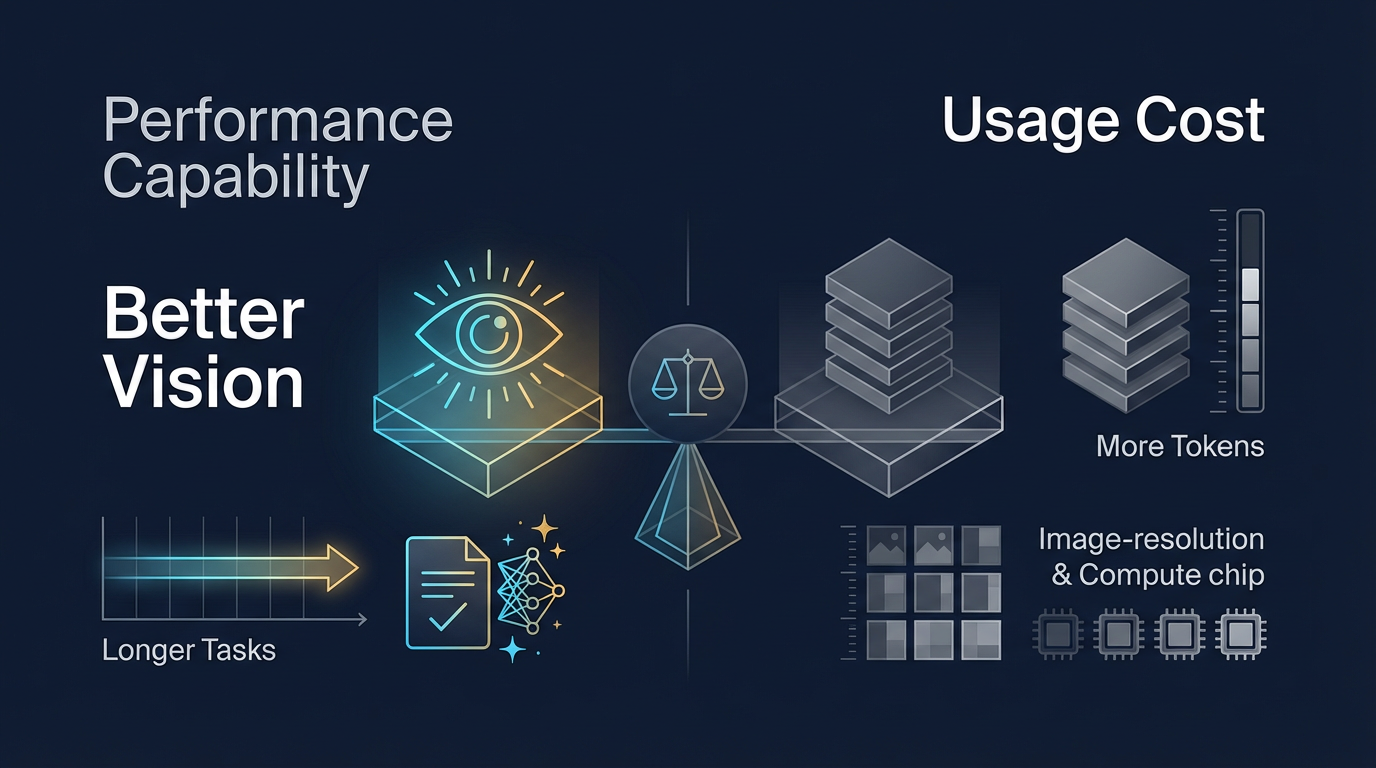
For users chatting casually in Claude, that may show up as tighter usage limits or slower-feeling sessions. For API users and enterprise teams, it is a direct cost consideration.
Anthropic says pricing remains unchanged from Opus 4.6 and 4.5, but unchanged pricing does not mean cheaper usage. If token consumption rises, actual spend can still increase materially.
Anthropic’s direction is now hard to miss
The broader signal from Opus 4.7 is straightforward. Anthropic is betting that the next phase of the model race will be defined by long-task execution, visual understanding, tool use, and lower-supervision delivery. The company’s related updates, including Xhigh Effort, Task Nudges in public beta, and the /ultrareview feature in Claude Code, all point in the same direction.
For users, the immediate takeaway is simple: once given clear instructions, Claude Opus 4.7 appears more likely to do the job correctly, see visual details that earlier models missed, and produce work that is closer to ready-to-use. The shift from models that can chat well to models that can work well has taken another step forward.
With this release, Anthropic is making its claim plainly. The most capable productivity-focused Claude model is no longer Opus 4.6. It is Opus 4.7.
Related Coverage
Related AI news
AI News
Hermes Agent vs. OpenClaw: Why Developers Are Testing a New AI Agent Stack—And Why Most Teams Still Shouldn’t Migrate Blindly
The AI agent world moves in waves. Most of the time, a new tool rises because it is genuinely better at some painful task—better code editing, stronger tool use, cheaper inference, more stable automation....
AI News
Anthropic Mythos Draws White House Attention as Cyber-Capable AI Models Move Into Policy Focus
AP reports that White House officials met with Anthropic CEO Dario Amodei about Mythos, underscoring how advanced cyber-capable AI models are becoming national security and economic policy issues.
AI News
OpenAI Releases GPT-5.5 for ChatGPT and Codex
OpenAI is rolling out GPT-5.5 to paid ChatGPT users and Codex, positioning the model for agentic coding, research, data analysis, and multi-tool work.