The phrase AI book generator makes it sound as if one tool can write, edit, structure, design, and publish a book for you. That is not how the best workflows actually work.
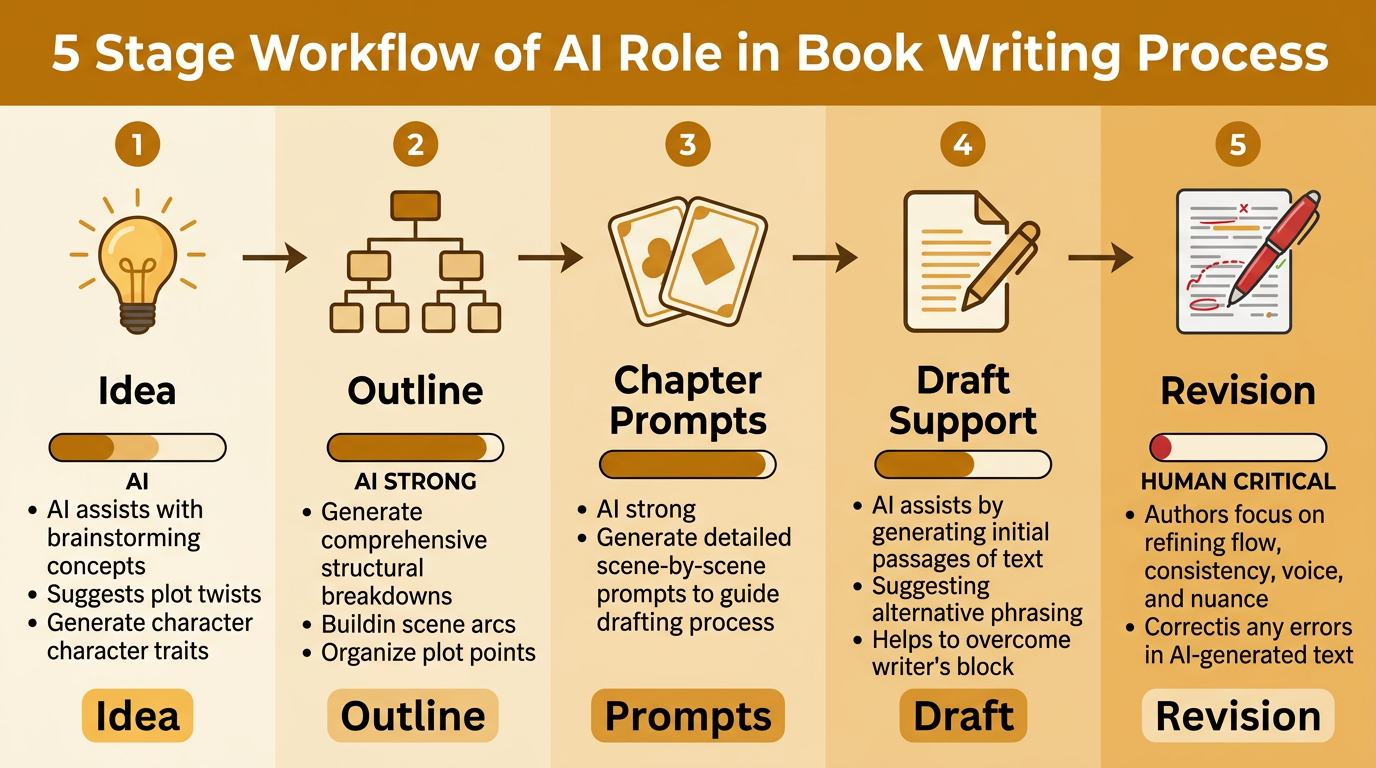
What these tools really do is help with parts of the book process: idea generation, outline building, chapter drafting, rewrite support, research organization, and cover concepting.
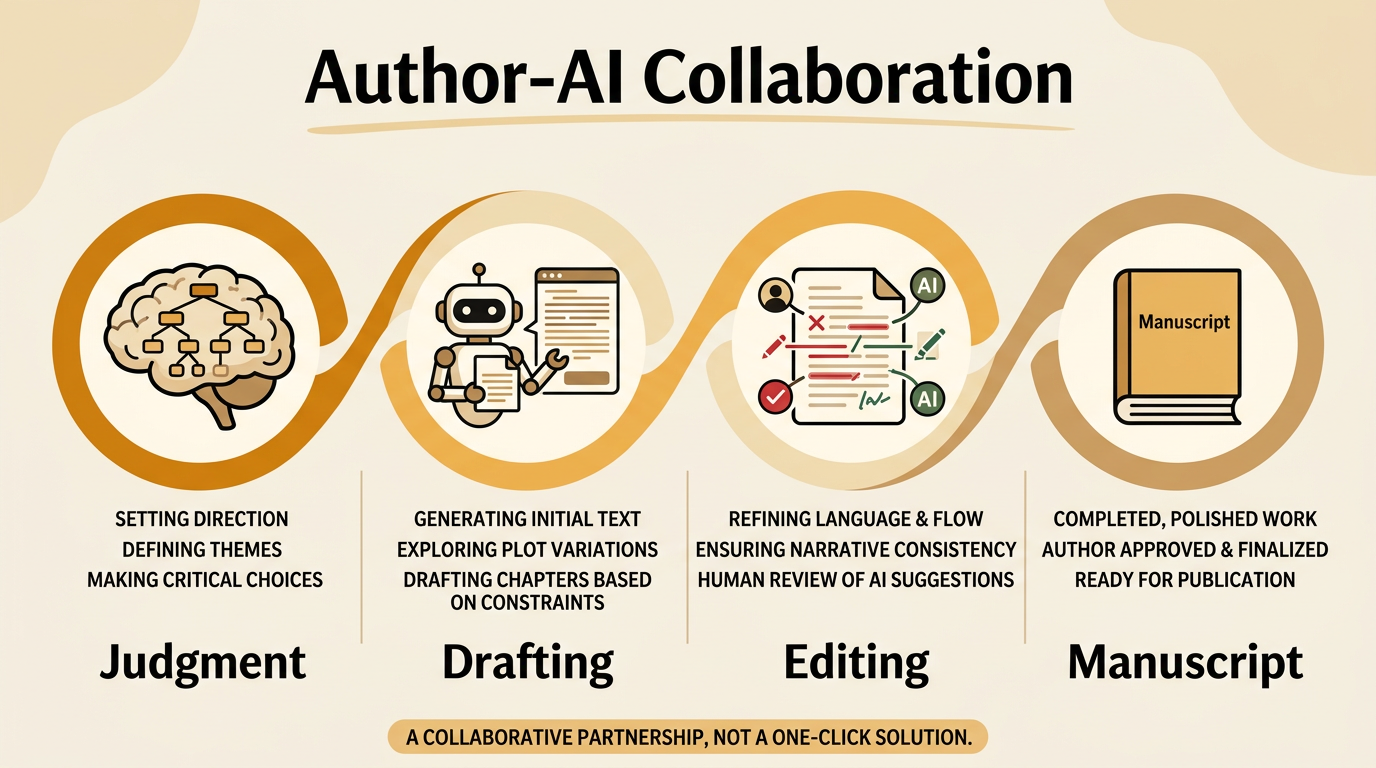
Short answer: AI book generators are best understood as writing assistants and workflow accelerators. They can help a lot with ideation and drafting, but they do not remove the need for human structure, judgment, and revision.
What AI can genuinely help with
There are several parts of the book process where AI can save real time.
- Generating outline options and chapter structures.
- Drafting rough sections from detailed prompts or notes.
- Rewriting, condensing, or expanding passages during revision.
What AI still does poorly
The biggest risks show up in long-form cohesion.
- Maintaining consistent voice and structure across a full manuscript.
- Making smart editorial decisions about pacing, emphasis, and argument flow.
- Replacing expert knowledge when the material needs trust and originality.
A realistic workflow for authors
The strongest book workflow usually keeps humans in charge of structure.
- Use AI to brainstorm and outline before you draft seriously.
- Use it again during revision for compression, examples, or alternative phrasing.
- Keep final chapter logic, narrative flow, and fact checking under human control.
Who benefits most from these tools
AI book tools are most helpful when the bottleneck is momentum.
- Nonfiction writers who need help structuring ideas.
- Creators repurposing talks, transcripts, or newsletters into longer assets.
- Fiction writers using AI for scene ideation and rewrite support rather than final prose.
How we approach prompt and workflow tools
This guide is attributed to Aisha Hassan, Prompt Design Coach at Generator AI Tools. For prompt-heavy categories, we focus on usability, controllability, how easy the tool is to iterate with, and whether the output improves with better instructions instead of collapsing into generic filler.
- We look for tools that help users shape tone, structure, and intent with reasonable control.
- We separate ideation value from publication-ready value, because a useful prompt tool is not always a strong final-writing tool.
- We prefer workflows that make revision and human editing easier rather than hiding weak output behind polished marketing copy.
What to verify before you choose
- Check how much prompt control and revision flexibility the tool actually gives you.
- Compare current output quality against your real task, not just example screenshots.
- Verify pricing, usage limits, and any restrictions that affect repeated daily use.
Bottom line
AI book generators are useful when you think of them as assistants, not as authors. They can save time, but the book is still better when a person is making the high-level creative and editorial calls.