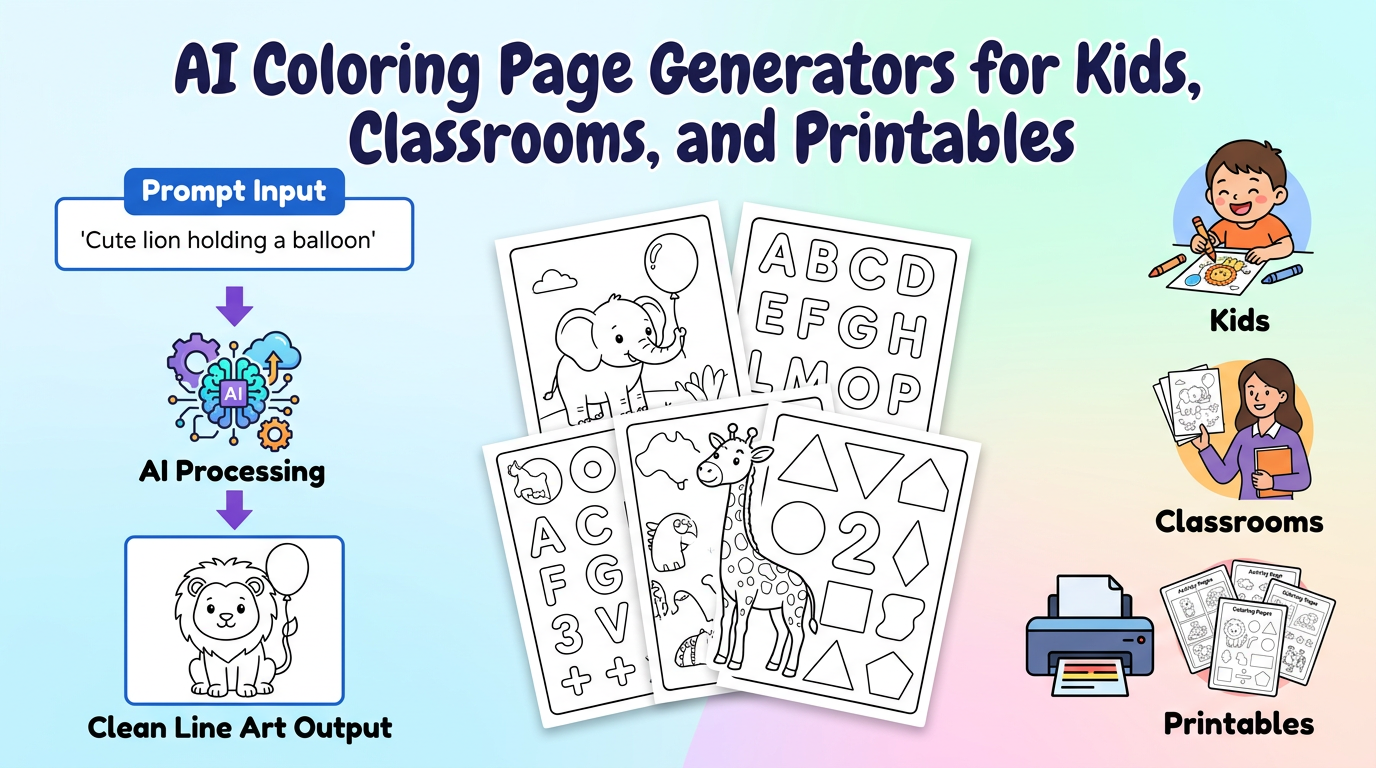
AI coloring page generators are valuable because they turn an abstract idea into a printable activity quickly. That matters for parents, teachers, activity publishers, and creators who need themed visuals without designing every page from scratch.
The strongest tools are not the ones that create the most complex art. They are the ones that generate clean outlines, age-appropriate detail, and printable layouts that actually work once you hit export.
TL;DR: A good coloring page generator should produce clean line art, understandable composition, and printable output. Complexity is helpful only when it still supports the final use case.
What matters most
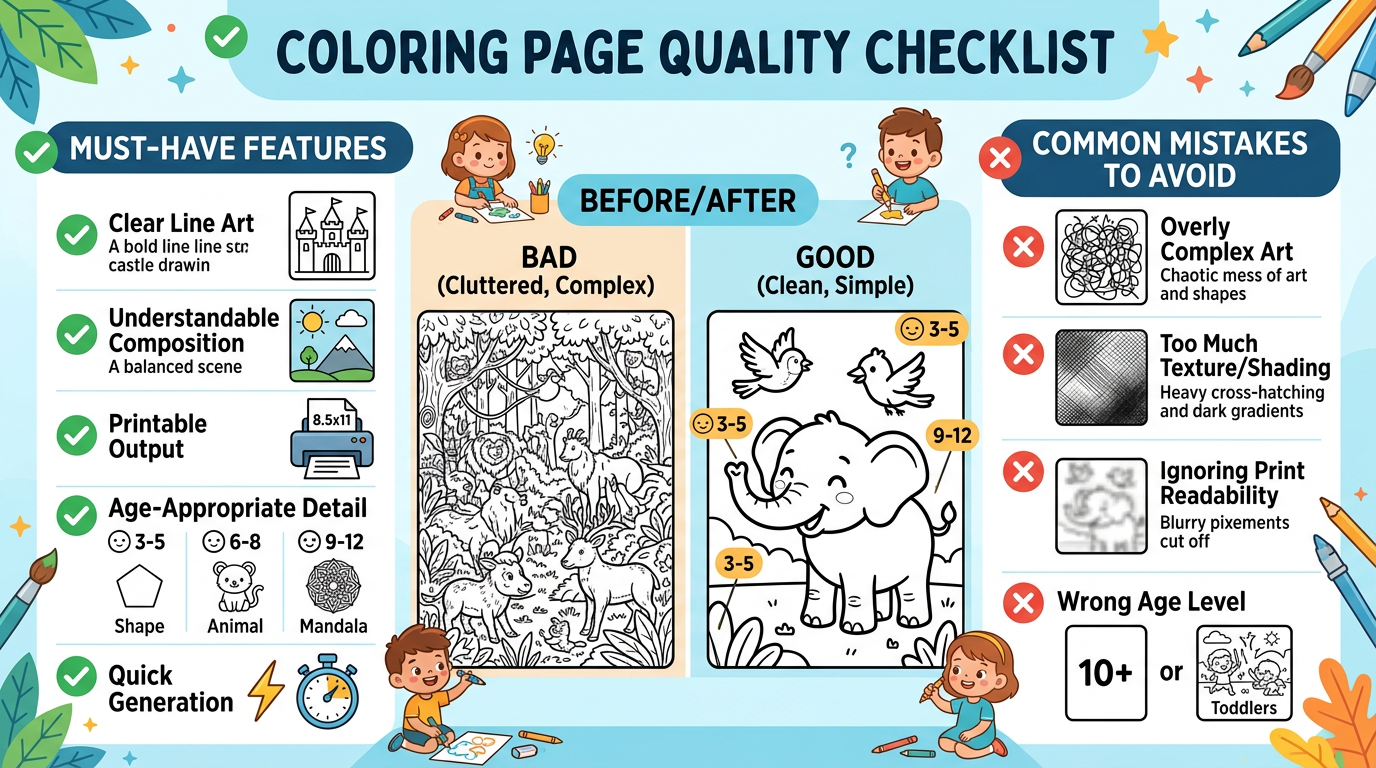
Coloring page workflows rise or fall on practical output quality.
- The line art should be clear and easy to color.
- The level of detail should match the age group or intended audience.
- The result should print cleanly without muddy visual clutter.
Useful tools to test
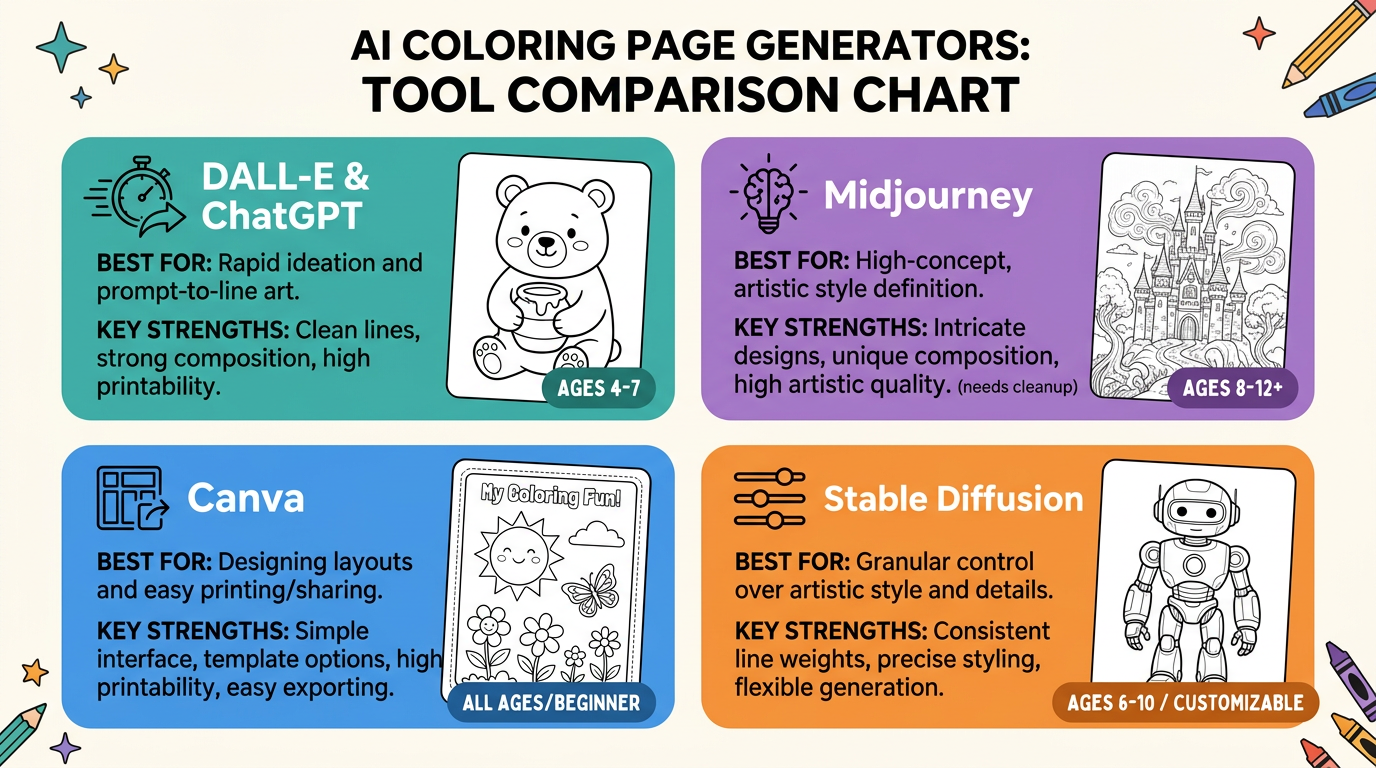
The best fit depends on whether you want raw generation or template support.
- DALL-E and ChatGPT workflows are useful for fast prompt iteration.
- Midjourney can help with strong concepts, though cleanup may be needed for line art.
- Canva is helpful if the final step includes page layout and export.
- Stable Diffusion workflows make sense when you want more control over style and line simplicity.
Who should choose what
Different users need different levels of polish.
- Teachers and parents usually need printable, fast, and simple.
- Publishers may need stronger consistency across sets or themes.
- Creators selling printables benefit from a workflow that supports variation and cleanup.
Common mistakes
The biggest mistake is overcomplicating the art.
- Using prompts that create too much texture or shading.
- Ignoring print readability while focusing only on screen preview.
- Forgetting that age level should influence line complexity.
How we approach prompt and workflow tools
This guide is attributed to Aisha Hassan, Prompt Design Coach at Generator AI Tools. For prompt-heavy categories, we focus on usability, controllability, how easy the tool is to iterate with, and whether the output improves with better instructions instead of collapsing into generic filler.
- We look for tools that help users shape tone, structure, and intent with reasonable control.
- We separate ideation value from publication-ready value, because a useful prompt tool is not always a strong final-writing tool.
- We prefer workflows that make revision and human editing easier rather than hiding weak output behind polished marketing copy.
What to verify before you choose
- Check how much prompt control and revision flexibility the tool actually gives you.
- Compare current output quality against your real task, not just example screenshots.
- Verify pricing, usage limits, and any restrictions that affect repeated daily use.
Referenced product pages
The products mentioned above are linked to their Generator AI Tools profiles so readers can compare positioning, category fit, and current availability without leaving the research flow too early.
Bottom line
AI coloring page generators are most useful when they save layout time without making the result harder to color. Start with clean line art and audience fit, then choose the tool that gets you there fastest.