
Editorial note, draft prepared April 22, 2026: This draft is educational and should not be presented as legal advice. Before publishing, verify dates and obligations against official EU and NIST sources.
AI governance is no longer a slide in a risk deck. Teams adopting AI tools need a way to decide who owns the workflow, what data enters the system, how outputs are reviewed, and which risks require escalation.
A practical AI governance checklist helps non-legal teams ask better questions before AI becomes embedded in customer support, hiring, finance, product, or engineering workflows.
TL;DR: Governance should cover use-case inventory, data handling, model/vendor review, human oversight, output monitoring, incident response, and periodic updates. Use official frameworks such as the EU AI Act and NIST AI RMF as references, but translate them into workflow-level controls.

Who this guide is for
This guide is for operations, product, legal, and security teams reviewing AI adoption across an organization or inside the AI tools directory.
- Teams creating an internal AI policy.
- Operators evaluating vendor risk before adopting new AI tools.
- Readers of industry insights who need practical governance steps.
The practical framework
Governance works best when it is attached to real workflows, not abstract model categories.
| Control area | Question to answer | Evidence to keep |
|---|---|---|
| Use case | What job does AI perform? | Use-case register and owner |
| Data | What information enters the tool? | Data classification and access notes |
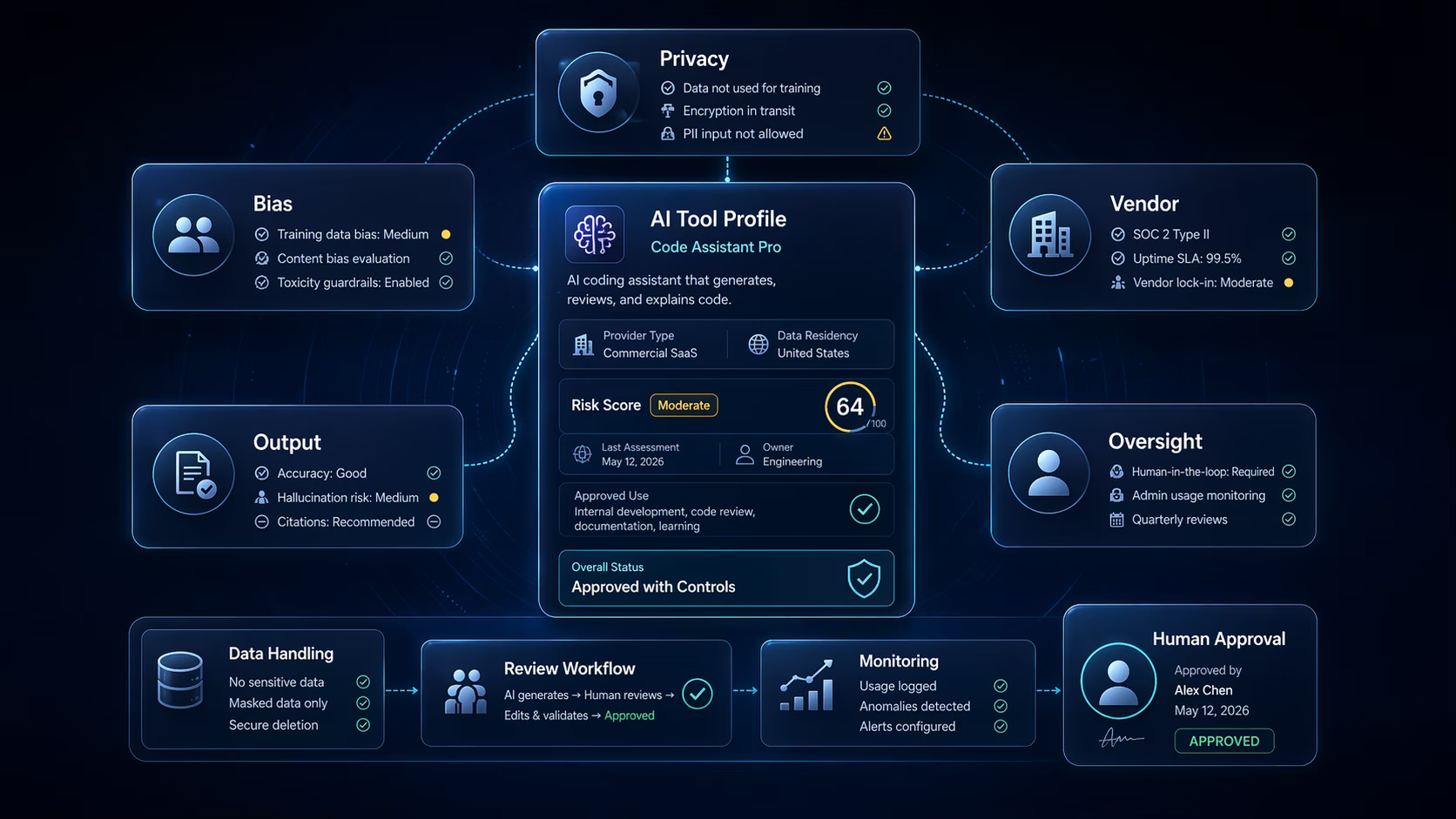
| Vendor | Who provides the model or app? | Security, privacy, and terms review |
| Oversight | Who reviews outputs? | Human review checklist |
| Monitoring | What can go wrong? | Incident log and update cadence |
Start with an AI use-case inventory
Most organizations discover AI risk late because nobody knows where AI is already being used. A lightweight inventory should list the workflow, owner, tool, data type, audience, and whether outputs affect customers or employees.
This does not need to slow teams down. It gives governance a map so high-risk workflows can get more attention and low-risk workflows can move with clear rules.
Match controls to risk level
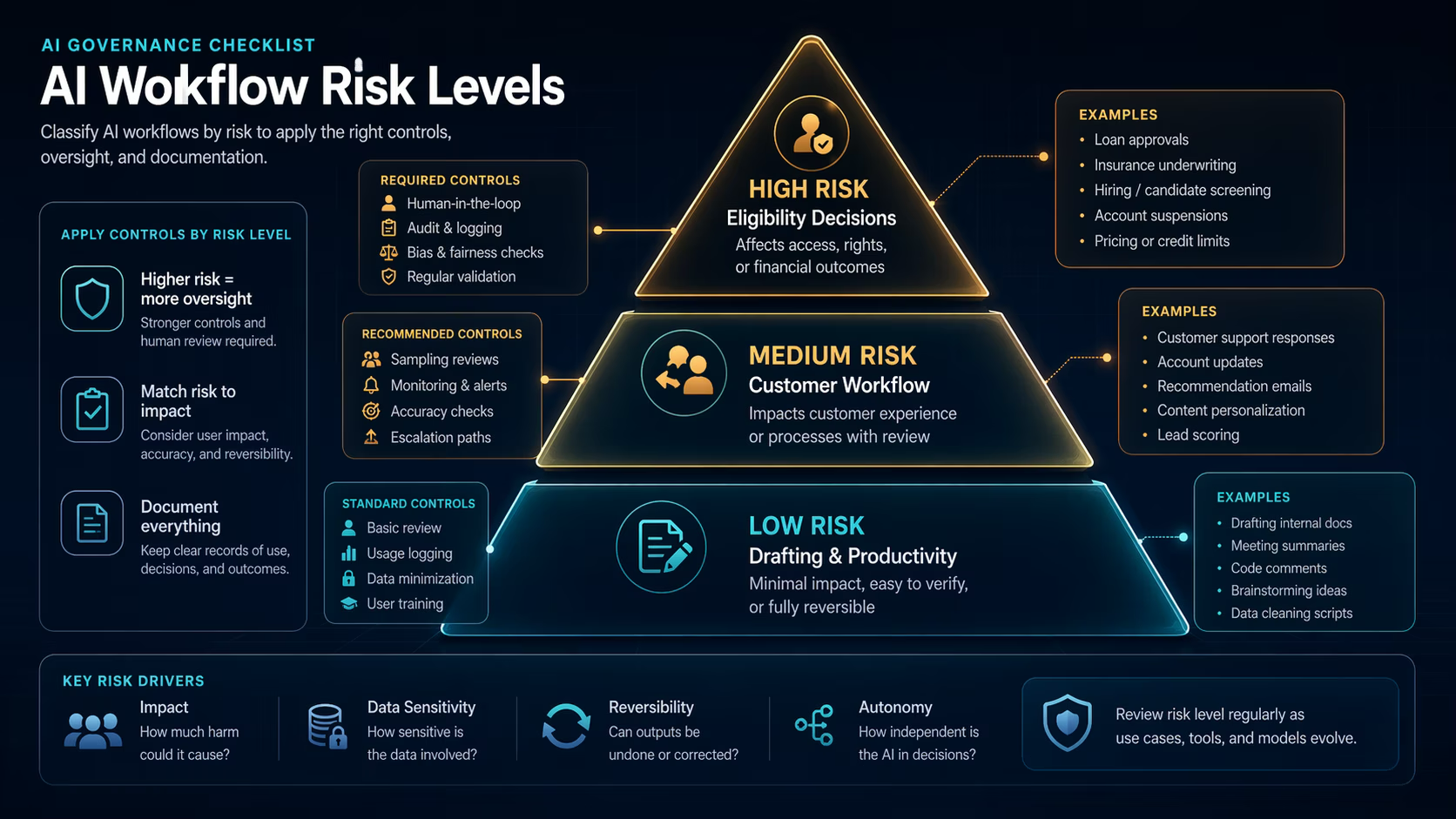
Not every AI workflow needs the same review. A brainstorming assistant for internal blog ideas is different from an AI system that affects hiring, credit, education, health, or safety.
Risk-based governance lets teams protect sensitive workflows without creating bureaucracy for every low-stakes use case.
- Low risk: internal drafting, summarization, brainstorming.
- Medium risk: customer support drafts, sales personalization, analytics summaries.
- Higher risk: decisions affecting rights, access, eligibility, safety, or employment.
Document human oversight before launch
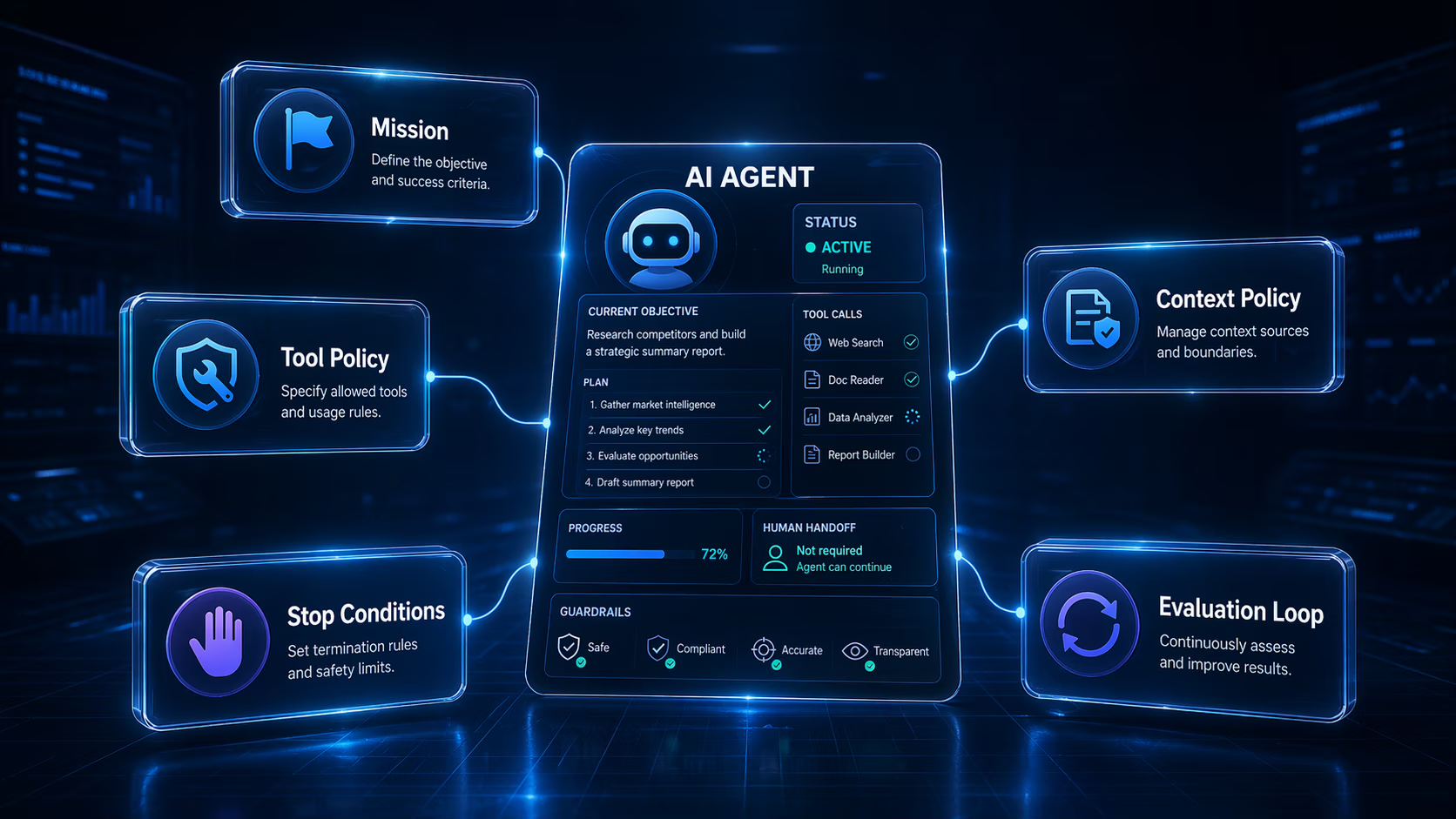
Human review should not be a vague promise. Define who reviews outputs, what they check, and when AI output must not be used without approval.
For public content, that means factual review, source checks, and author accountability. For operational systems, it may mean escalation paths, audit logs, and incident response.
| Workflow | Oversight need | Example control |
|---|---|---|
| Content | Accuracy and source review | Editor verifies claims before publishing |
| Support | Customer impact review | Agent approves sensitive replies |
| Hiring | Fairness and compliance review | Human decision-maker required |

Implementation checklist
- Create an AI use-case register with owners.
- Classify data before it enters AI tools.
- Review vendor privacy, security, retention, and training terms.
- Define human review and escalation rules.
- Schedule quarterly reviews for active AI workflows.
E-E-A-T notes for editors
Because governance can touch legal and compliance topics, Olivia should keep language educational, cite official sources, and add a clear note that readers should consult legal counsel for regulated decisions.
References and further reading
- European Commission AI Act overview - official EU AI Act policy page
- NIST AI Risk Management Framework 1.0 - official risk management framework
Where to go next
Use these related pages to move from research into tool selection, comparison, and implementation.
- Industry insights - more AI market and policy context
- AI news - follow AI regulation and policy updates
- AI tools FAQ - answer adoption and evaluation questions
Final recommendation
Good AI governance is practical. It names the workflow, the owner, the data, the vendor, the reviewer, and the escalation path. That is what turns broad policy into decisions teams can actually follow.