Editorial note, draft prepared April 22, 2026: This draft gives a practical evaluation framework and should avoid legal certainty. Add tool-specific screenshots, vendor policy links, and review dates before publishing.
Most AI tool evaluations focus on output quality first. That is understandable, but incomplete. A tool can produce impressive results and still create privacy, bias, data retention, security, or governance risk.
An AI tool risk assessment helps teams ask the questions that do not fit on a feature checklist: what data is used, how outputs are reviewed, what happens when the tool is wrong, and who owns the decision.
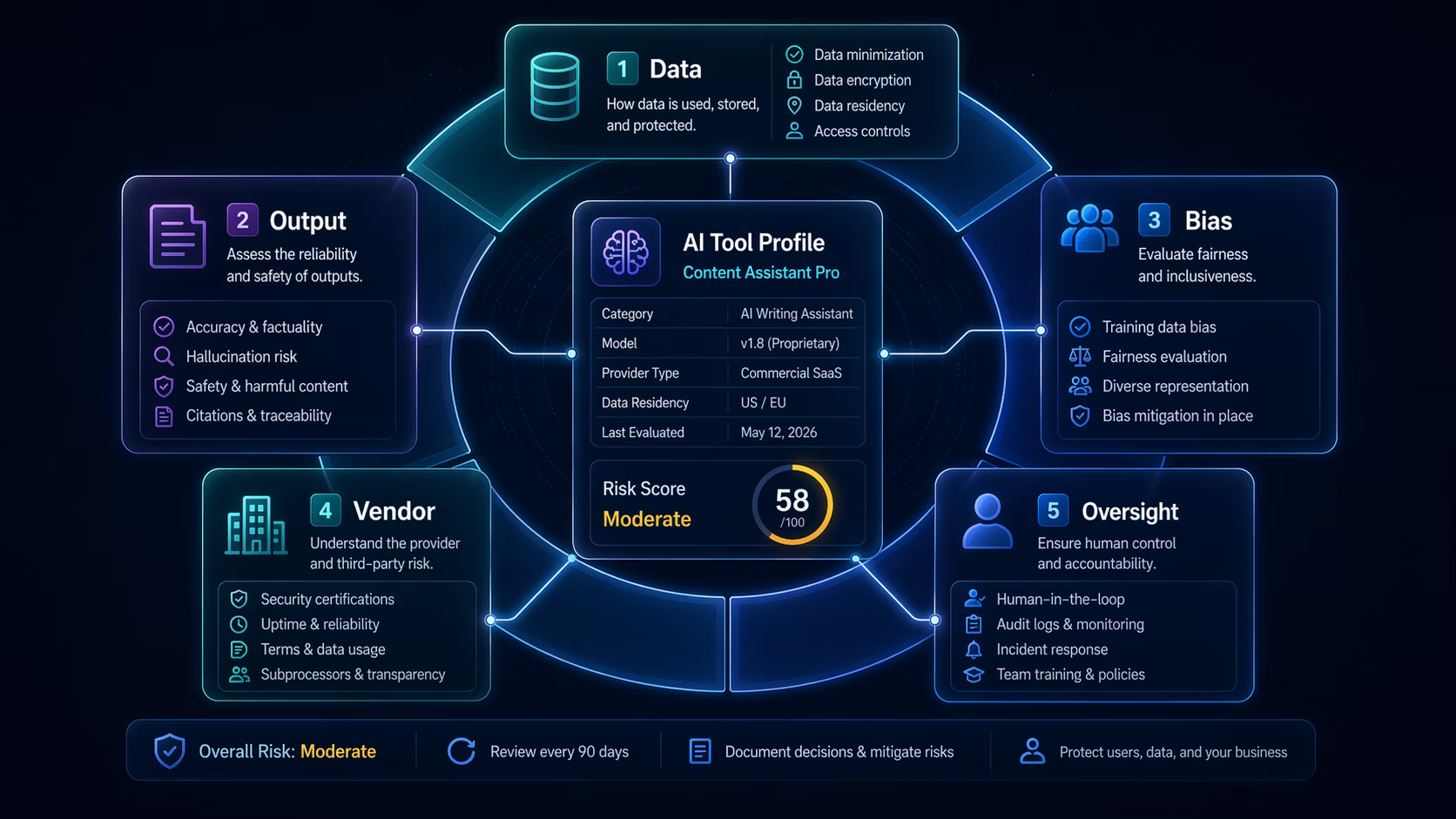
TL;DR: Assess AI tools across five areas: data handling, output risk, bias and fairness, vendor transparency, and operational oversight. The higher the impact on customers or employees, the more evidence you should require before adoption.
Who this guide is for
This guide is for buyers, operators, and reviewers comparing tools from the AI tools list before using them in business workflows.
- Teams evaluating AI vendors before procurement.
- Editors reviewing public AI tool recommendations.
- Product teams adding AI features to customer-facing workflows.
The practical framework
Risk assessment should be proportional. A caption idea generator does not need the same review as a tool that summarizes customer records or screens job applicants.
| Risk area | What to ask | Why it matters |
|---|---|---|
| Data handling | What data is stored, retained, or used for training? | Protects privacy and confidentiality |
| Output risk | What decisions could the output influence? | Prevents overtrust |
| Bias and fairness | Who could be harmed by errors? | Reduces disparate impact |
| Vendor transparency | What does the vendor document clearly? | Supports accountability |
| Oversight | Who reviews and escalates issues? | Keeps humans responsible |
Separate tool risk from workflow risk
The same AI tool can be low-risk in one workflow and high-risk in another. Summarizing public blog posts is different from summarizing confidential legal notes. Drafting generic social copy is different from drafting medical or financial advice.
Assess the tool in the workflow where it will actually be used. That makes the review more useful and less performative.
Ask data questions before output questions
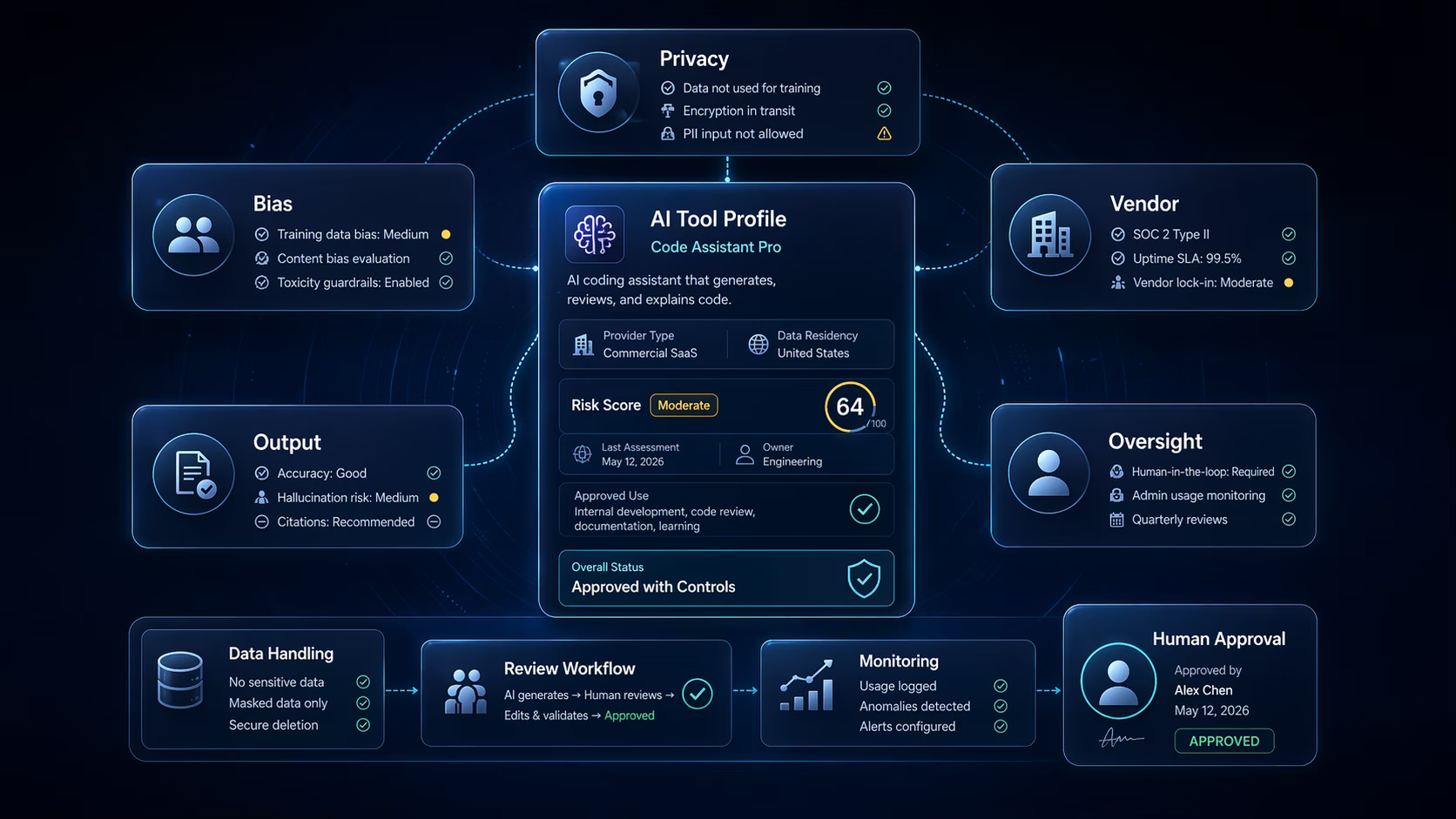
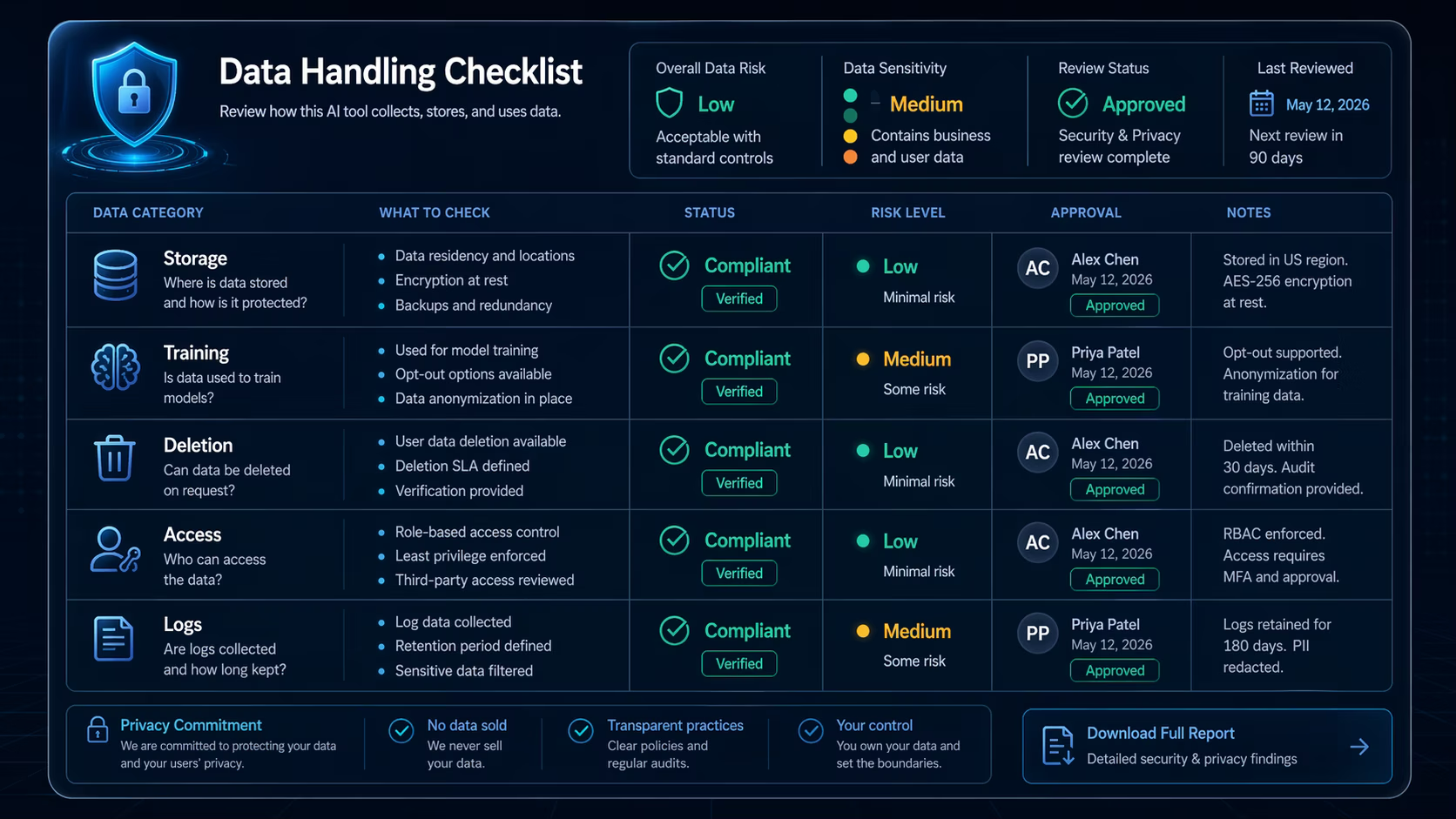
Data handling is often the first gate. Teams should know whether the tool stores prompts, uses inputs for training, supports enterprise controls, allows deletion, and integrates with existing access policies.
If the vendor cannot answer basic privacy and retention questions, do not compensate by trusting the output more. Weak transparency is itself a risk signal.
- What types of data are allowed in the tool?
- Can users opt out of training or retention where relevant?
- Does the tool support role-based access or admin controls?
- Can logs be exported for review if something goes wrong?
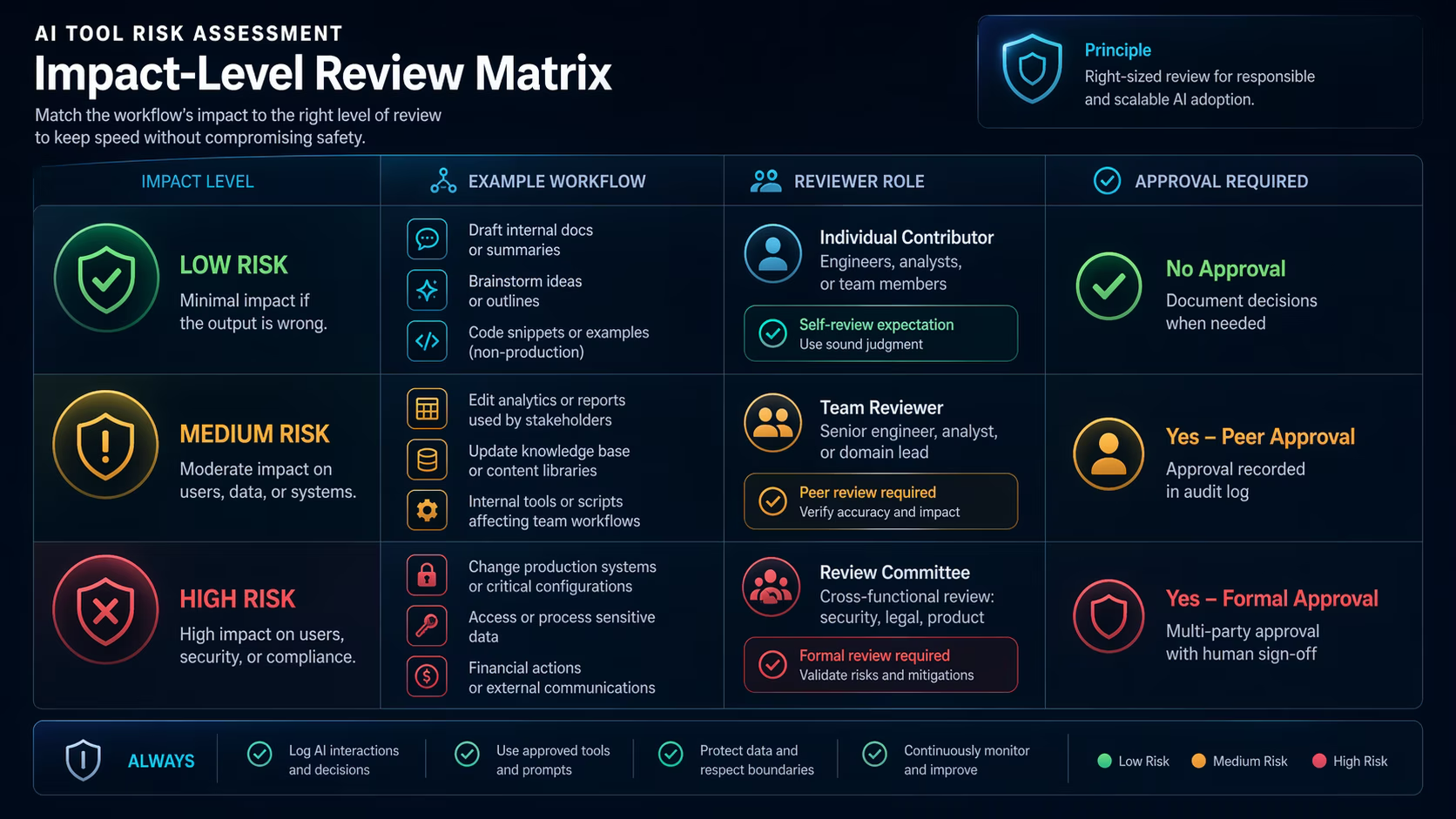
Review outputs based on impact
Low-impact outputs can often be reviewed by the person using the tool. Higher-impact outputs need a second reviewer, policy owner, or formal approval path.
The key question is not whether AI is sometimes wrong. It is whether the workflow catches errors before they affect people, customers, or business records.
| Impact level | Example workflow | Review pattern |
|---|---|---|
| Low | Internal brainstorming | User checks before reuse |
| Medium | Customer support draft | Agent approves before sending |
| High | Eligibility or employment support | Policy owner and human decision-maker required |
Implementation checklist
- Define the exact workflow and owner.
- Classify data before testing the tool.
- Review vendor privacy, retention, and training terms.
- Set human review requirements by impact level.
- Keep a short assessment record with date, reviewer, and decision.
E-E-A-T notes for editors
Olivia should add a downloadable assessment table or public checklist in the final version. This creates practical value and reinforces trust for readers evaluating vendors.
References and further reading
- NIST AI Risk Management Framework 1.0 - risk framing for AI systems
- European Commission AI Act overview - official risk-based regulatory context
Where to go next
Use these related pages to move from research into tool selection, comparison, and implementation.
- AI tool reviews - compare features after risk questions are clear
- Industry insights - read more policy and market analysis
- AI tools directory - browse tools by category
Final recommendation
A useful AI tool risk assessment does not block adoption. It makes adoption safer by matching controls to the workflow, the data, the vendor, and the people affected by the output.