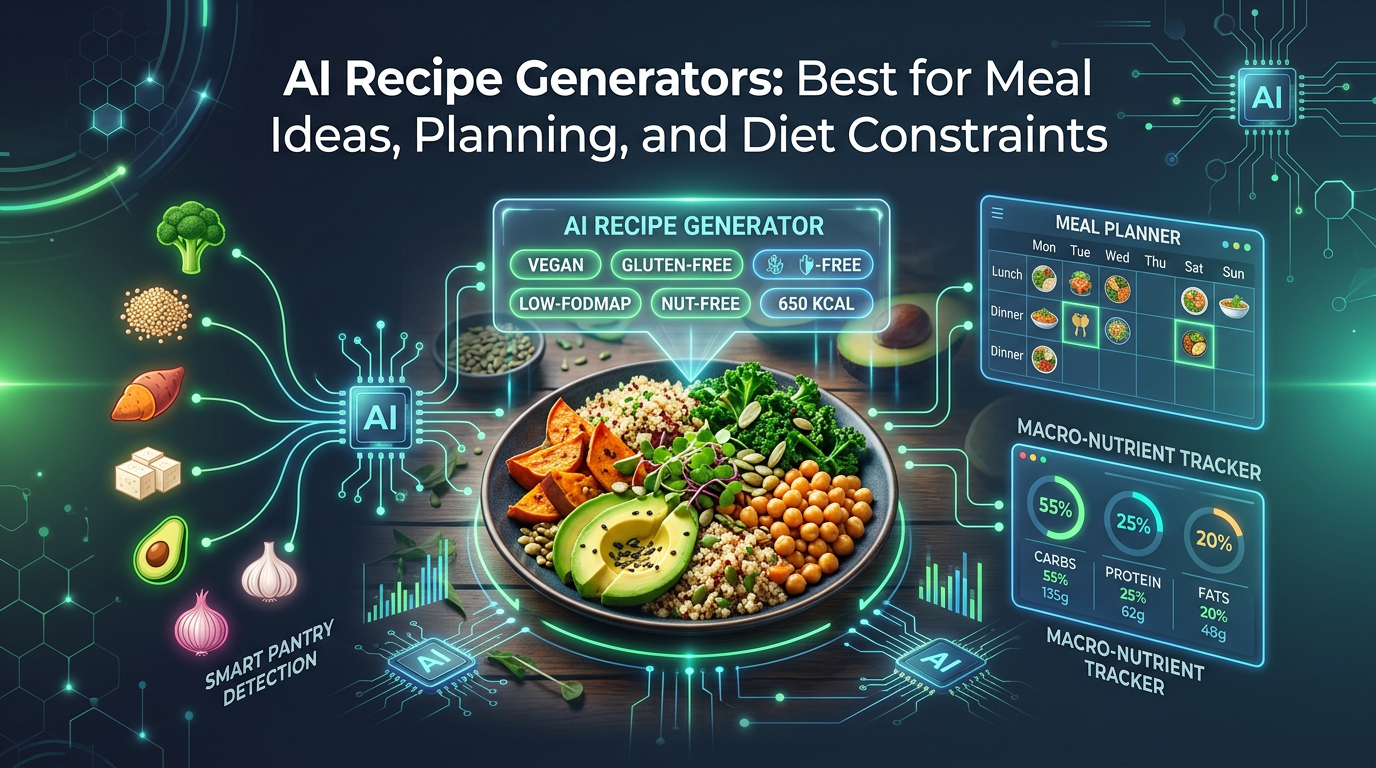
AI recipe generators are most useful when cooking friction comes from planning, not from the act of cooking itself. They help when you have ingredients but no idea, dietary constraints but no plan, or limited time and too many possible meal directions.
The best ones do not just suggest random dishes. They help you make practical decisions based on ingredients, effort level, dietary needs, and what kind of meal you actually want to eat.
TL;DR: A good AI recipe generator should solve dinner planning, not create unnecessary complexity. The strongest tools are the ones that balance creativity with real-world constraints.
What matters in a recipe tool
The useful test is practical, not theoretical.
- The recipe should match the ingredients or dietary boundaries you give it.
- Instructions should be realistic for a home kitchen.
- The output should be easy to adapt based on time, servings, and skill level.
Helpful options to compare
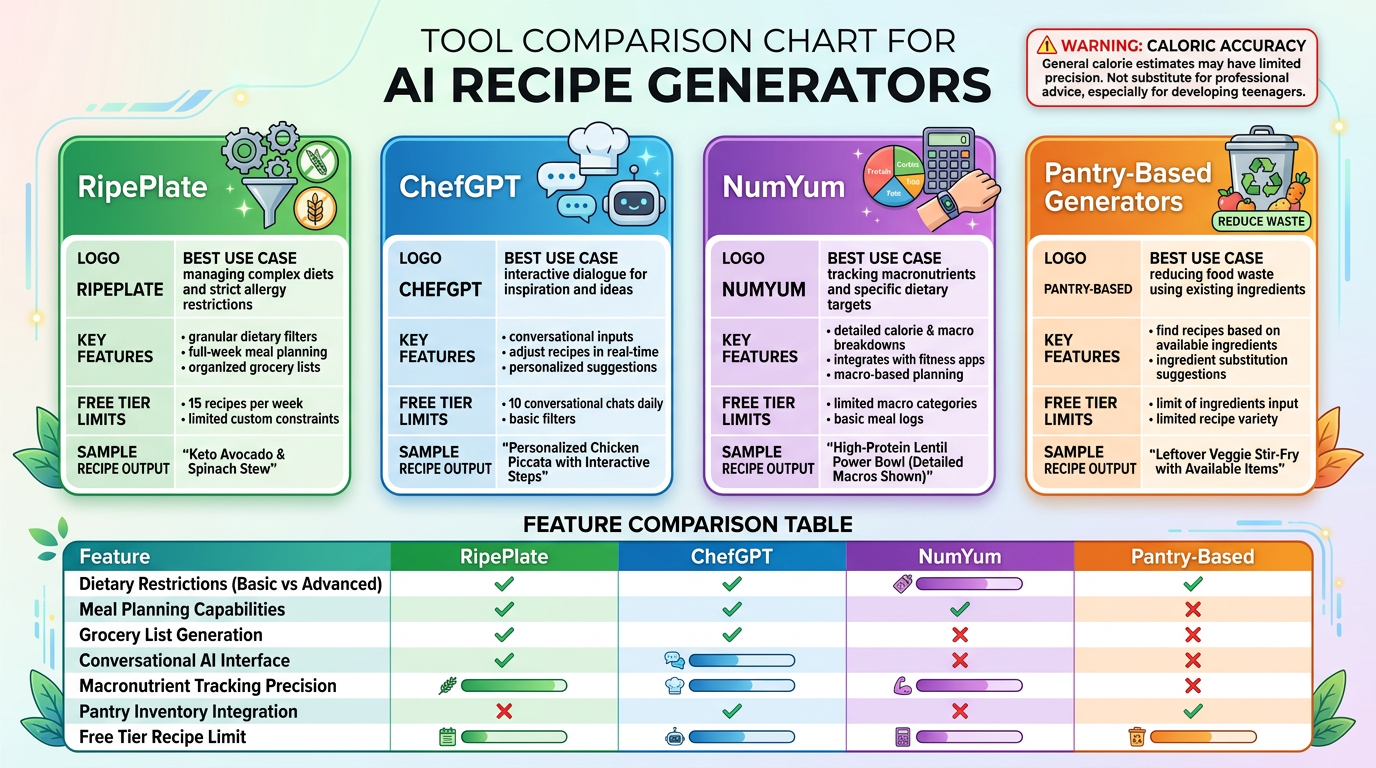
The best choice depends on whether you want flexibility or structure.
- ChatGPT is useful for highly customized recipe prompts and substitutions.
- Claude is often stronger when you want cleaner instructions and planning help.
- Meal-planning apps with AI layers make sense when shopping and prep are part of the job.
- Recipe-specific generators can be faster for simple weeknight planning.
Best use cases
Recipe tools tend to work best in a few repeatable scenarios.
- Using up leftovers or partial ingredients.
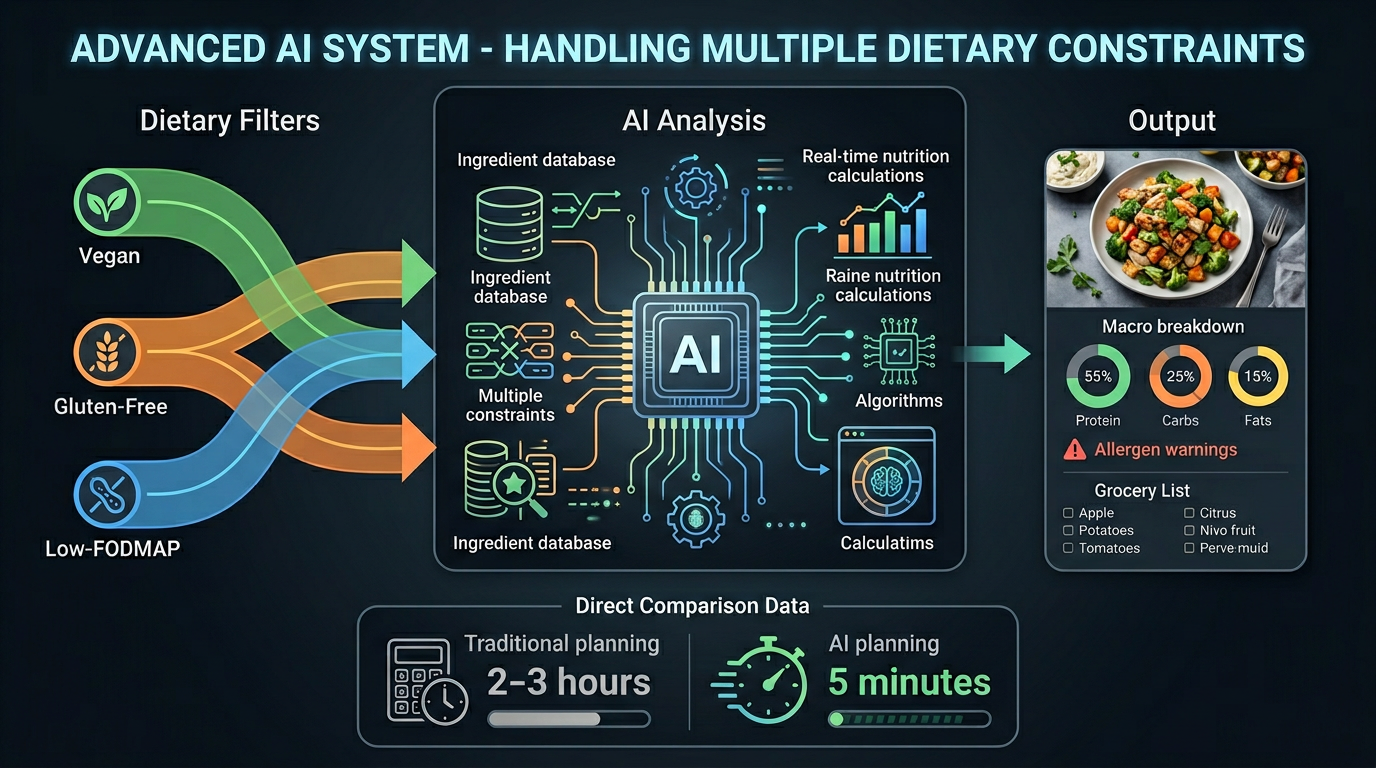
- Planning meals around dietary restrictions or calorie goals.
- Generating quick variations when the household is tired of the same meals.
Common mistakes
The most common failure is over-trusting the first answer.
- Skipping a quick sanity check on cooking times and ingredient combinations.
- Forgetting to specify equipment, servings, or prep limits.
- Using vague prompts and blaming the tool for vague output.
How we approach prompt and workflow tools
This guide is attributed to Aisha Hassan, Prompt Design Coach at Generator AI Tools. For prompt-heavy categories, we focus on usability, controllability, how easy the tool is to iterate with, and whether the output improves with better instructions instead of collapsing into generic filler.
- We look for tools that help users shape tone, structure, and intent with reasonable control.
- We separate ideation value from publication-ready value, because a useful prompt tool is not always a strong final-writing tool.
- We prefer workflows that make revision and human editing easier rather than hiding weak output behind polished marketing copy.
What to verify before you choose
- Check how much prompt control and revision flexibility the tool actually gives you.
- Compare current output quality against your real task, not just example screenshots.
- Verify pricing, usage limits, and any restrictions that affect repeated daily use.
Referenced product pages
The products mentioned above are linked to their Generator AI Tools profiles so readers can compare positioning, category fit, and current availability without leaving the research flow too early.
Bottom line
AI recipe generators are strongest when the real problem is meal planning, not culinary mastery. Give them clear constraints, then use the output as a smart starting point rather than an unquestioned final recipe.