AI fanfic generators are most useful when they help writers move faster without flattening everything into the same generic voice. The best ones help with scene starts, alternate scenarios, dialogue momentum, and character-specific prompting.
That means the right tool depends on whether you want to brainstorm ideas, draft scenes, rewrite pacing, or stay close to a specific fandom tone without copying it too literally.
TL;DR: The best fanfic tool is not always the one with the biggest model. Writers usually get the most value from a mix of strong prompting, revision support, and enough control to preserve voice.
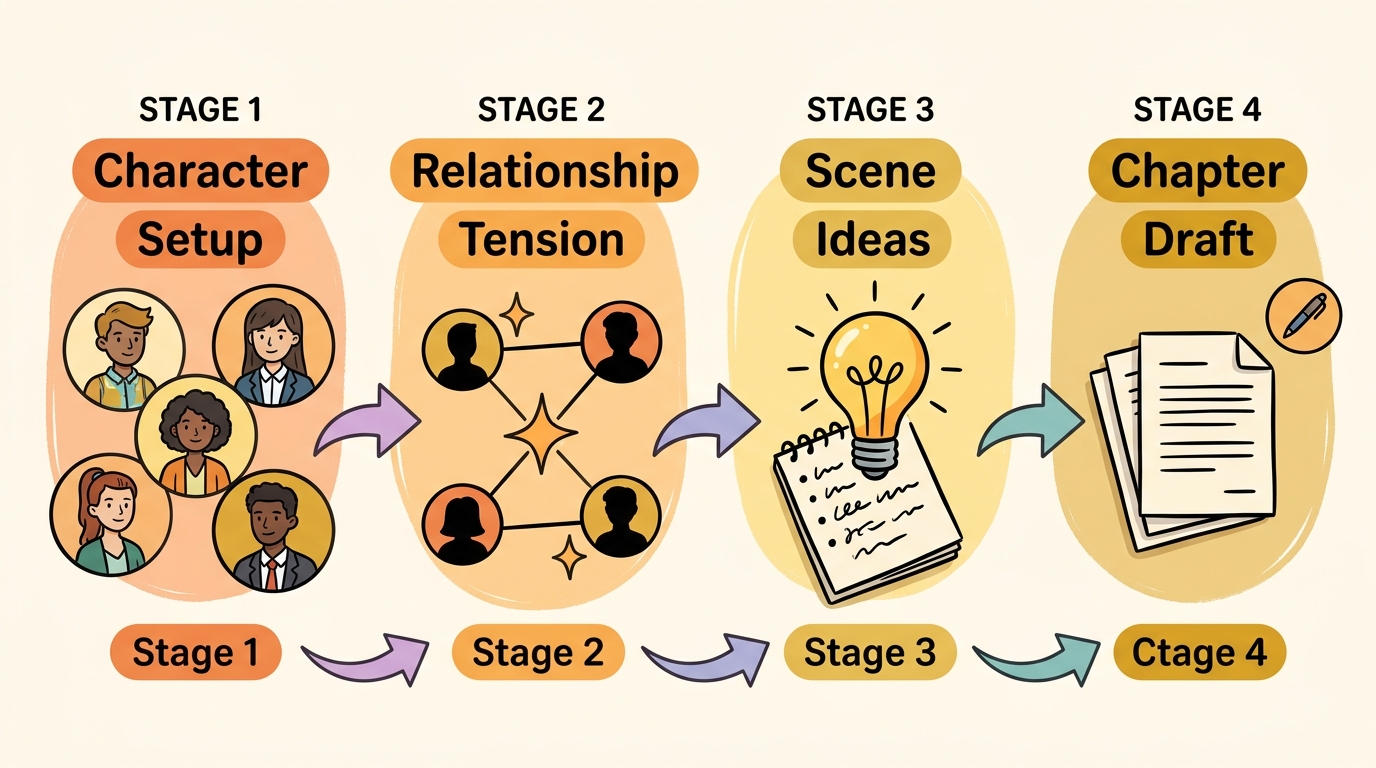
What matters in a fanfic workflow
The strongest tools for fanfic writing usually help in four places.
- Scene generation that can maintain character intent and emotional pacing.
- Prompt flexibility so you can guide point of view, canon boundaries, and tone.
- Revision support for expanding, tightening, or rewriting awkward passages.
Tools worth testing for fanfic drafting
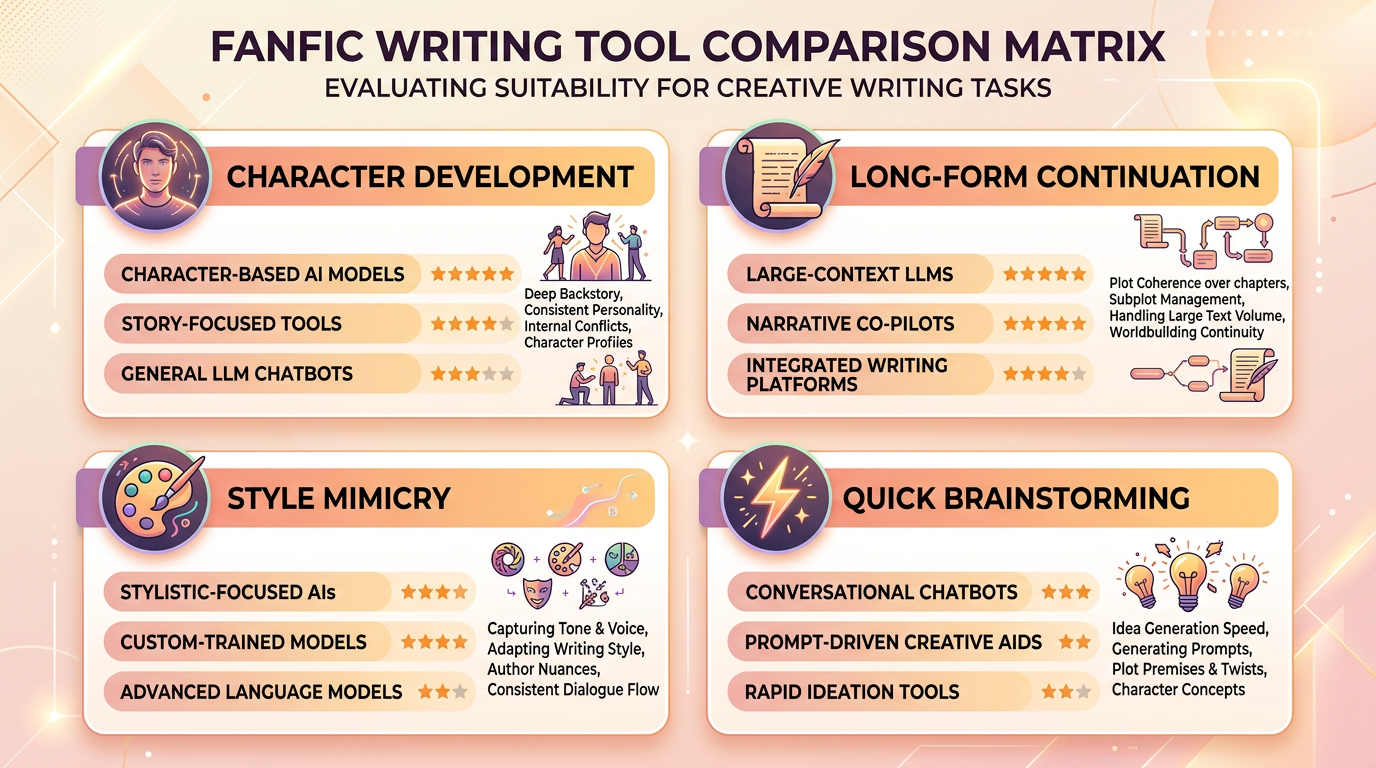
Different tools shine at different stages of the process.
- ChatGPT is useful for ideation, scene rewrites, and back-and-forth prompt iteration.
- Claude is often stronger for cleaner prose and more controlled long-form editing.
- Sudowrite is a smart option when you want fiction-specific drafting support.
- Perchance works well for low-friction character and plot exploration.
How to choose based on the kind of fanfic you write
Writers usually get better results when they match the tool to the stage.
- Use flexible chat-based models for outline refinement and scene branching.
- Use fiction-oriented tools when you care about prose rhythm and narrative expansion.
- Use lightweight generators when you need quick ideas rather than finished paragraphs.
What usually makes AI fanfic feel bad
Most weak fanfic output has the same failure modes.
- Letting the tool invent a generic voice instead of giving it enough character direction.
- Accepting first-draft emotional beats that have not been sharpened by revision.
- Confusing speed with quality and publishing output that has not been edited by a human.
How we approach prompt and workflow tools
This guide is attributed to Aisha Hassan, Prompt Design Coach at Generator AI Tools. For prompt-heavy categories, we focus on usability, controllability, how easy the tool is to iterate with, and whether the output improves with better instructions instead of collapsing into generic filler.
- We look for tools that help users shape tone, structure, and intent with reasonable control.
- We separate ideation value from publication-ready value, because a useful prompt tool is not always a strong final-writing tool.
- We prefer workflows that make revision and human editing easier rather than hiding weak output behind polished marketing copy.
What to verify before you choose
- Check how much prompt control and revision flexibility the tool actually gives you.
- Compare current output quality against your real task, not just example screenshots.
- Verify pricing, usage limits, and any restrictions that affect repeated daily use.
Referenced product pages
The products mentioned above are linked to their Generator AI Tools profiles so readers can compare positioning, category fit, and current availability without leaving the research flow too early.
Bottom line
The best AI fanfic generator is the one that helps you keep creative momentum without erasing your own voice. Treat the model as a drafting partner, not as the final author, and the quality of the result improves fast.