The EU AI Act is no longer theoretical. As of February 2, 2025, the first enforcement provisions took effect, and 2026 is the year when the bulk of the regulation becomes operational. If you build AI tools, use them in business, or simply care about how artificial intelligence is governed, this is the most consequential piece of AI legislation in the world right now. This article tracks the latest EU AI Act developments, explains what the regulation actually requires, and breaks down its practical impact on AI tool developers and users. We update this page as new enforcement actions and guidance emerge.
EU AI Act: Key Provisions and Timeline
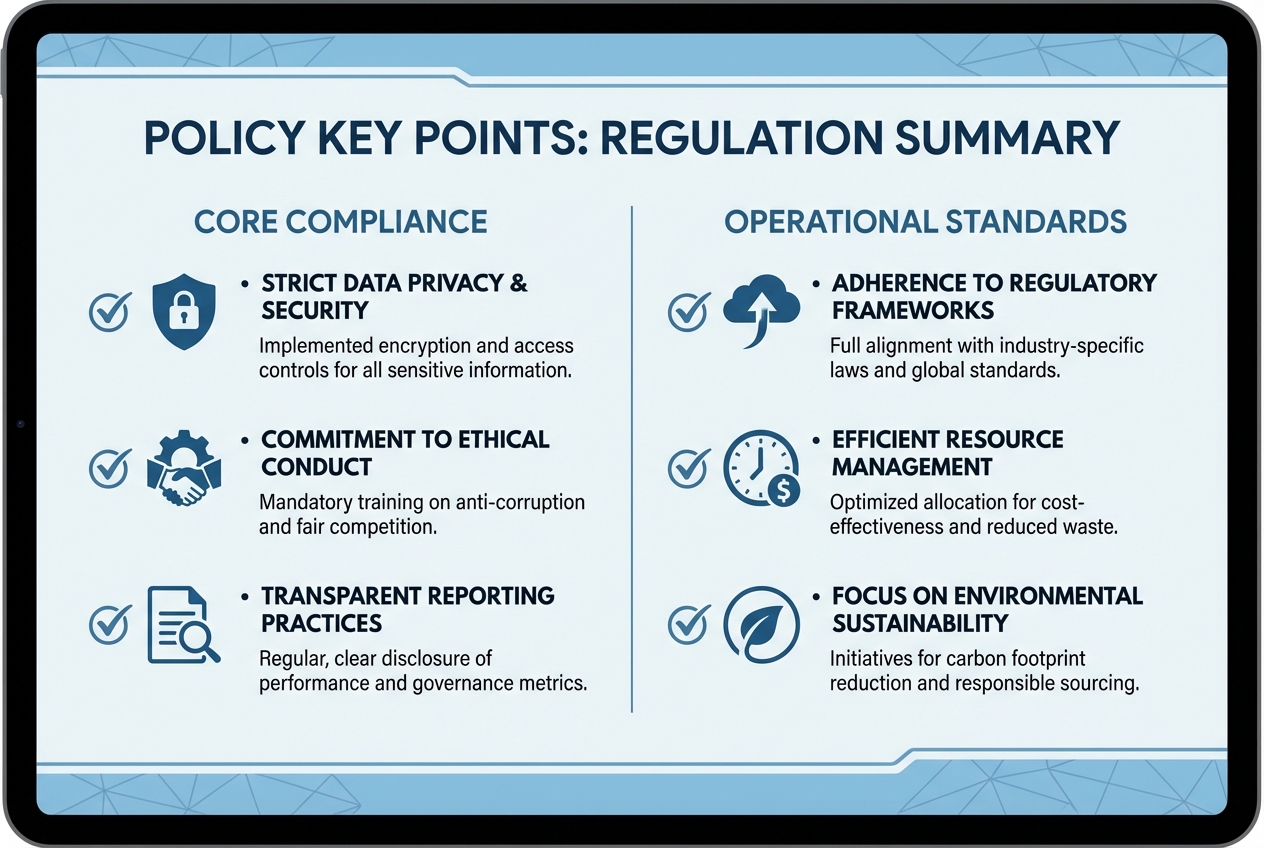
The EU AI Act is a risk-based regulatory framework. Instead of regulating AI as a single category, it classifies AI systems into four risk tiers, with progressively stricter requirements as risk increases.
Readers should treat this image as a mental map for the article: it connects the four risk categories with the dates and obligations that matter most for AI builders and buyers.
The Four Risk Categories
| Risk Level | Definition | Examples | Requirements |
|---|---|---|---|
| Unacceptable | AI systems that threaten fundamental rights | Social scoring, real-time biometric surveillance, manipulative AI targeting vulnerable groups | Banned outright |
| High Risk | AI systems affecting health, safety, or rights | Medical AI diagnostics, hiring algorithms, credit scoring, law enforcement tools | Conformity assessment, risk management, human oversight, data governance |
| Limited Risk | AI systems with transparency obligations | Chatbots, AI-generated content, emotion recognition | Must disclose AI use to end users |
| Minimal Risk | Most AI systems | Spam filters, recommendation algorithms, AI video generators, AI image tools | No specific obligations (codes of conduct encouraged) |
For AI tool users and directory visitors: the vast majority of AI generators, editors, and creative tools fall into the "Minimal Risk" category. This means no mandatory compliance requirements, though the EU encourages voluntary codes of conduct. The key exception is AI tools that generate deepfakes or synthetic media — these fall under "Limited Risk" and must clearly disclose that output is AI-generated.
Enforcement Timeline
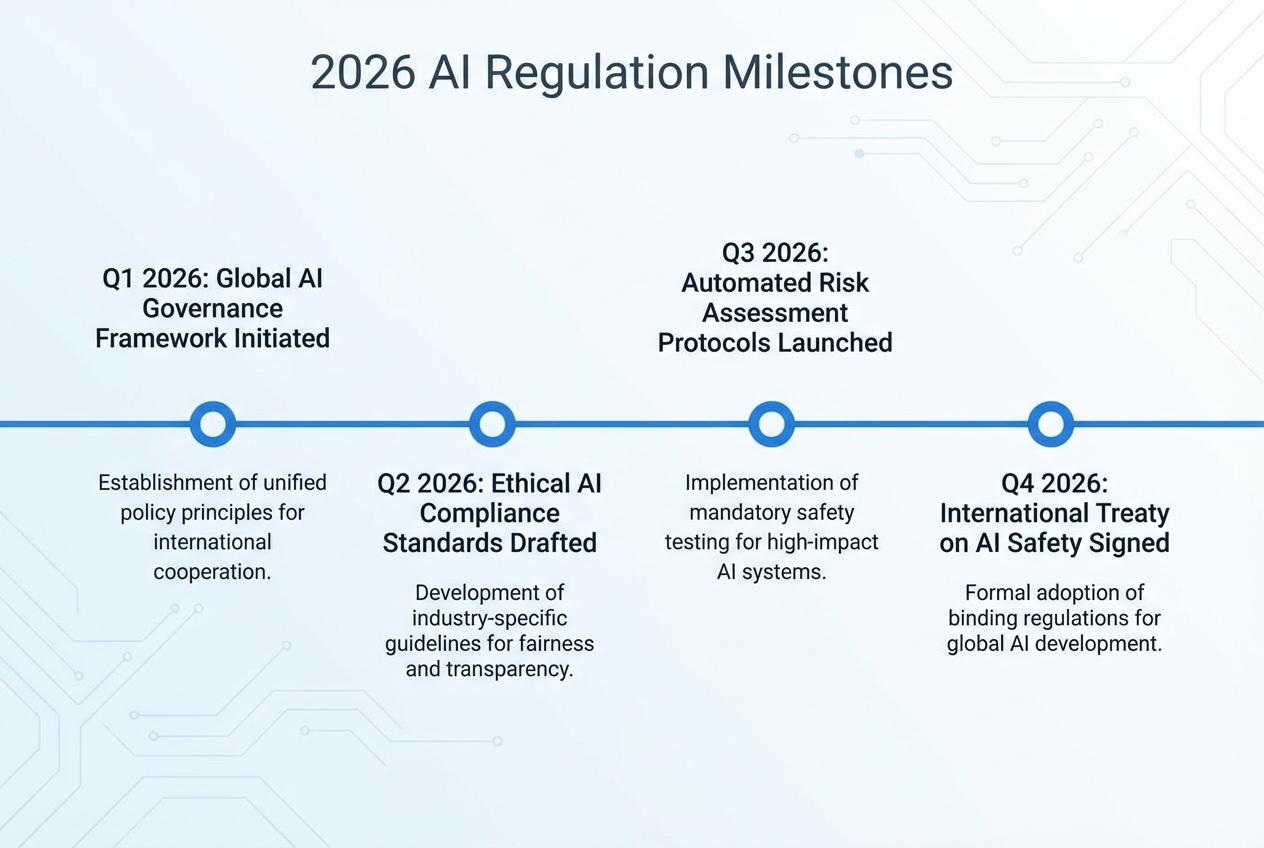
The EU AI Act entered into force on August 1, 2024, but enforcement is phased:
- February 2, 2025: Banned AI practices (unacceptable risk) become enforceable. Penalties of up to €35 million or 7% of global turnover.
- August 2, 2025: Obligations for general-purpose AI (GPAI) models take effect. This is the provision that impacts large language models like GPT, Claude, and Gemini.
- August 2, 2026: Full enforcement for high-risk AI systems. Conformity assessments, CE marking, and EU database registration become mandatory.
- August 2, 2027: Remaining high-risk provisions for AI systems embedded in regulated products (medical devices, vehicles, aviation).
Source: European Commission, Regulation (EU) 2024/1689, Official Journal of the European Union
Latest EU AI Act Enforcement Updates (2026)
Here are the most significant developments so far in 2026:
The EU AI Office Is Now Operational
The European AI Office, established within the European Commission, became fully operational in January 2026. It serves as the central coordinating body for AI Act enforcement across all 27 EU member states. The office has published its first set of guidelines on GPAI model compliance, which directly affect companies like OpenAI, Google, Anthropic, and Meta.
First GPAI Model Compliance Deadlines
The August 2025 deadline for general-purpose AI model obligations has passed. Major LLM providers are now required to:
- Publish detailed technical documentation about their model's capabilities and limitations
- Implement copyright compliance policies for training data
- Provide sufficiently detailed summaries of training data content
- Comply with EU copyright rules (Article 53)
Several providers have published transparency reports, though enforcement actions for non-compliance have not yet been announced. The AI Office is reportedly conducting preliminary assessments.
Source: EU AI Office, GPAI Compliance Guidelines, January 2026
Codes of Practice for GPAI Providers
The EU AI Office has invited GPAI providers to participate in drafting voluntary codes of practice ahead of the formal standards. Over 100 organizations have signed up, including all major AI labs. These codes of practice are expected to serve as the de facto compliance benchmark until formal harmonized standards are published by CEN/CENELEC.
Member State Implementation Progress
EU member states are required to designate national competent authorities and market surveillance bodies for the AI Act. As of March 2026, approximately two-thirds of member states have made their designations, with France's CNIL, Germany's BNetzA, and Italy's AGID taking early leadership roles.
How the EU AI Act Affects AI Tool Developers
If you develop AI tools — whether a startup building an image generator or an enterprise deploying AI-powered analytics — here is what you need to know:
For AI Tool Developers Building Creative Tools
Most AI generators (video, image, text, audio) fall under Minimal Risk. You are not subject to conformity assessments or mandatory compliance audits. However:
- Transparency obligation: If your tool generates deepfakes or synthetic content that could be mistaken for real, you must ensure the output is machine-detectably labeled as AI-generated (Article 50).
- GPAI downstream: If your tool uses a GPAI model (e.g., built on GPT-4, Claude, or Gemini), the GPAI provider bears the compliance burden — not you. But you should verify that your provider is compliant.
For AI Tool Developers in High-Risk Categories
If your AI system touches healthcare, employment, education, law enforcement, or critical infrastructure, you are likely in the High Risk category and face significant obligations:
- Risk management system implementation
- Data governance and quality requirements
- Technical documentation and logging
- Human oversight mechanisms
- Accuracy, robustness, and cybersecurity standards
- Registration in the EU AI database before market placement
The compliance costs for high-risk AI systems are estimated at €200,000-€300,000 for initial conformity assessment, with ongoing annual costs of €50,000-€100,000 for monitoring and documentation.
Source: European Commission Impact Assessment, SWD(2024) 1
EU AI Act vs US AI Regulation: Key Differences
The transatlantic divide on AI regulation is significant and growing:
| Dimension | EU AI Act | US Approach |
|---|---|---|
| Framework | Comprehensive legislation (binding) | Executive orders plus sector-specific rules |
| Risk Classification | Mandatory four-tier risk system | No unified risk classification |
| Enforcement | Centralized EU AI Office plus national authorities | Decentralized across agencies such as the FTC and FDA |
| Penalties | Up to €35M or 7% of global turnover | Varies by sector and agency |
| GPAI / LLM Rules | Specific obligations for foundation models | No federal foundation-model rulebook |
What This Means for AI Tool Users
If you are a user of AI tools rather than a developer, the EU AI Act's direct impact on your daily workflow is minimal but worth understanding:
- Transparency disclosures: Expect to see more "AI-generated" labels on content produced by tools, especially in the EU. This is a positive development for trust and media literacy.
- Improved documentation: GPAI providers must publish better documentation about their models' capabilities and limitations, which means more informed tool selection.
- Potential feature restrictions: Some AI features that are banned under the Act (e.g., emotion recognition in workplaces, social scoring) may be removed from tools available in the EU.
- Data rights: The EU AI Act strengthens the right to explanation for decisions made by high-risk AI systems, complementing existing GDPR rights.
Frequently Asked Questions
When does the EU AI Act take full effect?
The EU AI Act is being phased in between 2025 and 2027. Banned AI practices became enforceable on February 2, 2025. GPAI model obligations took effect August 2, 2025. Full high-risk AI system requirements activate on August 2, 2026. Embedded high-risk systems (medical devices, vehicles) have until August 2, 2027.
Which AI tools are banned under the EU AI Act?
The Act bans AI systems used for social scoring by governments, real-time remote biometric identification in public spaces (with narrow exceptions for law enforcement), manipulation of vulnerable groups, and inferring emotions in workplaces and educational settings. Standard AI generators, chatbots, and productivity tools are not banned.
How does the EU AI Act classify AI risk levels?
There are four tiers: Unacceptable (banned), High Risk (strict compliance required), Limited Risk (transparency obligations), and Minimal Risk (no mandatory requirements). Most consumer AI tools like image generators, video editors, and writing assistants fall under Minimal Risk.
Do US-based AI tools need EU AI Act compliance?
Yes, if they serve users in the EU market. The AI Act has extraterritorial scope — it applies to any AI system placed on the EU market or whose output is used in the EU, regardless of where the provider is based. This is similar to how GDPR applies to non-EU companies processing EU residents' data.
What are the penalties for non-compliance?
Penalties range from €7.5 million (or 1% of global turnover) for incorrect information to €15 million (3%) for violations of most obligations, up to €35 million (7%) for using banned AI practices. These are the maximum fines — actual penalties depend on the severity, duration, and scale of the violation.
How does this affect free AI tools?
Free AI tools are subject to the same risk classification as paid tools. The EU AI Act does not distinguish based on pricing model. However, open-source AI models released under permissive licenses have certain exemptions from GPAI obligations, unless they are classified as presenting systemic risk.