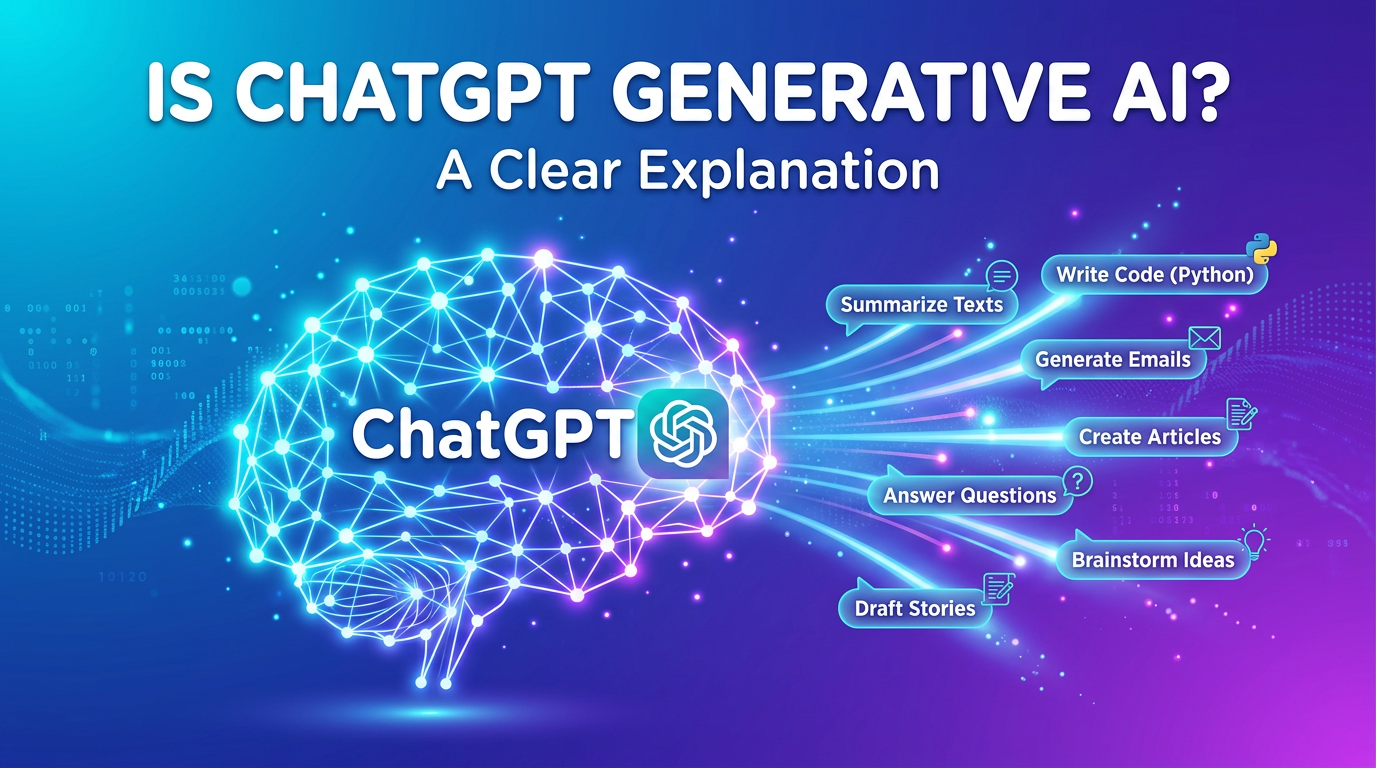
Yes, ChatGPT is generative AI, but the phrase is often used so loosely that beginners still end up confused. The reason is simple: people use ChatGPT as a chatbot, while the term generative AI describes the underlying capability rather than the interface.
Once you separate the product from the category, the answer becomes clearer and much more useful.
Short answer: ChatGPT is a generative AI product because it uses large language models to generate new text and other outputs from prompts. The chatbot interface is the product experience; generative AI is the capability behind it.
Why ChatGPT counts as generative AI
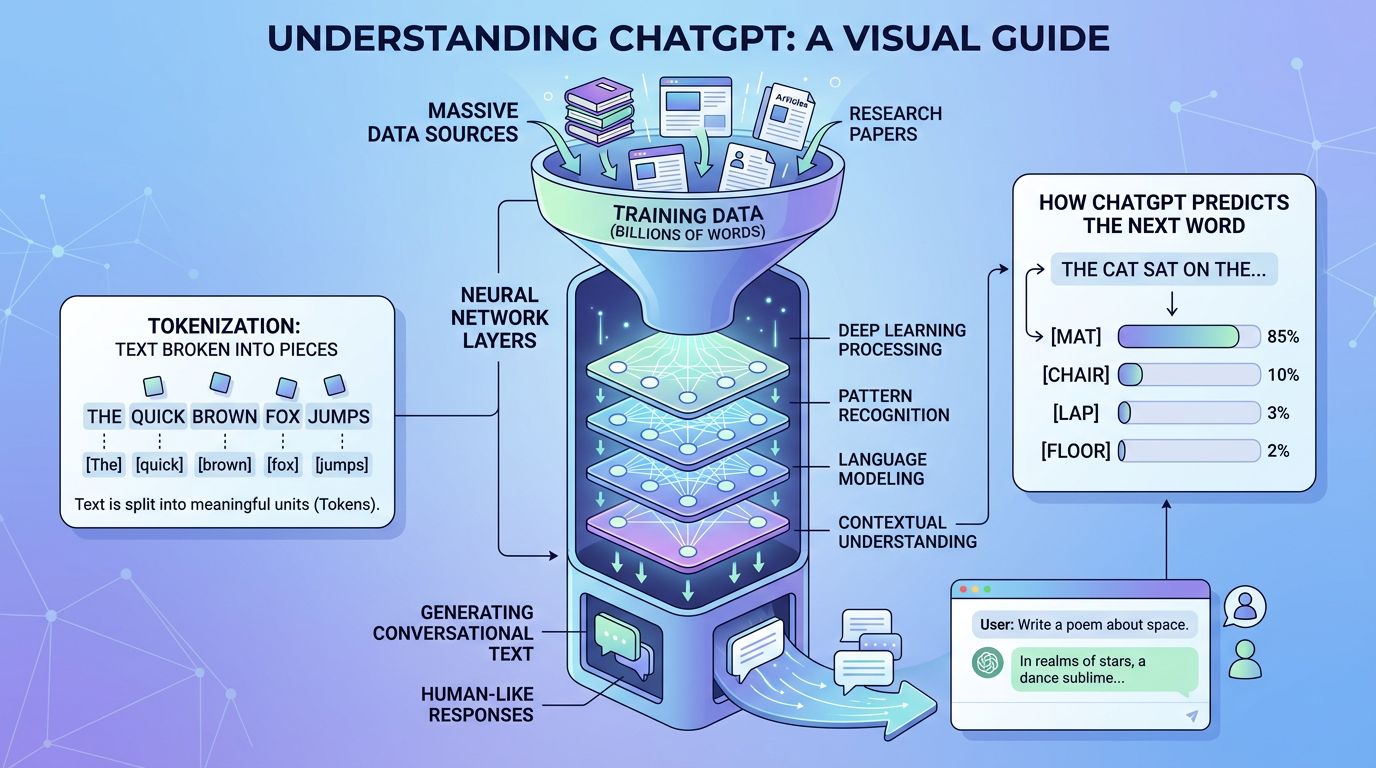
The defining feature is output generation.
- It creates original text responses based on prompts.
- It can draft, summarize, rewrite, explain, and structure information.
- In broader workflows, it also supports code, image-related prompts, and reasoning tasks.
Why people still get confused
The confusion usually comes from mixing interface, model, and category.
- People treat chatbot as if it were the technical category.
- Marketing language often bundles LLMs, copilots, agents, and chatbots together.
- Many users encounter generative AI first through ChatGPT, so the brand becomes shorthand for the whole field.
What ChatGPT is not
Clarity improves when you also define the boundaries.
- It is not the same thing as predictive AI systems used for scoring or forecasting.
- It is not automatically agentic just because it can respond well in conversation.
- It is not a guarantee of truth or expertise simply because the output sounds fluent.
Why the distinction matters
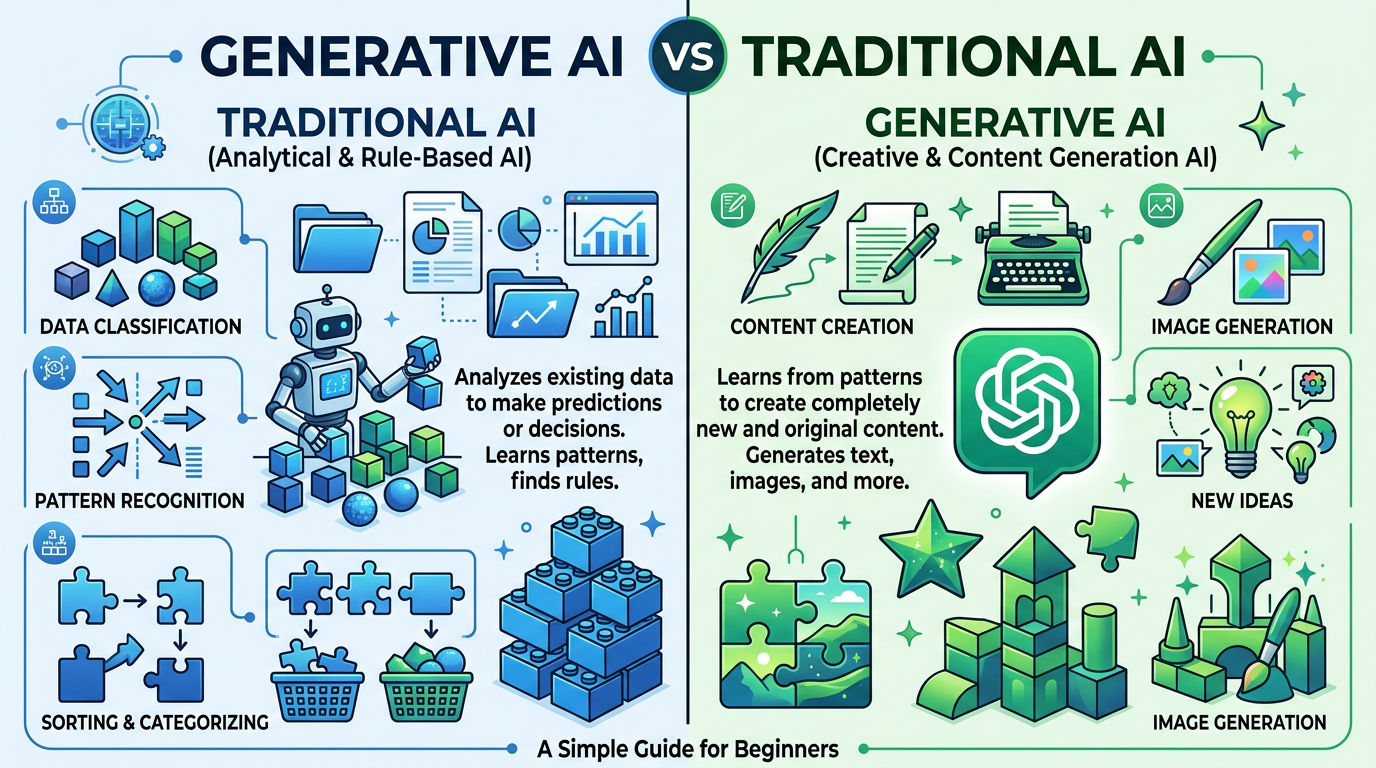
This matters for buyers, teams, and everyday users.
- It helps you compare products more accurately.
- It keeps expectations realistic about what the tool can and cannot do.
- It makes AI conversations less fuzzy when you are planning workflows or buying software.
How we approach AI industry coverage
This guide is attributed to Priya Patel, AI Industry Analyst at Generator AI Tools. For industry pieces, we focus on what changes practical decision-making: product launches, workflow shifts, market structure, pricing pressure, and the difference between headline noise and actual operational impact.
- We aim to translate market changes into plain-language consequences for builders, marketers, and operators.
- We avoid treating a single product demo as proof that a category has fundamentally changed.
- We encourage readers to validate current details against company announcements, product pages, and official documentation where applicable.
What to verify before acting on this article
- Check whether the products or policies mentioned have changed since publication.
- Confirm pricing, rollout scope, and availability directly with the companies involved.
- For regulated or risk-sensitive topics, verify the most recent official guidance before making decisions.
Referenced product pages
The products mentioned above are linked to their Generator AI Tools profiles so readers can compare positioning, category fit, and current availability without leaving the research flow too early.
Bottom line
So yes: ChatGPT is generative AI. The more useful takeaway is understanding that ChatGPT is one product interface built on top of a generative AI capability, not the full definition of the category itself.