
Google Updates Gemini Mental Health Safety With Crisis Support and ReflexAI Training Funding
Updated April 23, 2026. Google is updating Gemini's mental health safety features and providing new funding for crisis-support organizations, including a larger global hotline effort and expanded work with ReflexAI.
Because this topic touches health and safety, it needs a higher standard of caution. This article summarizes the product and funding update; it is not medical advice, mental health advice, or crisis guidance.
What Google announced
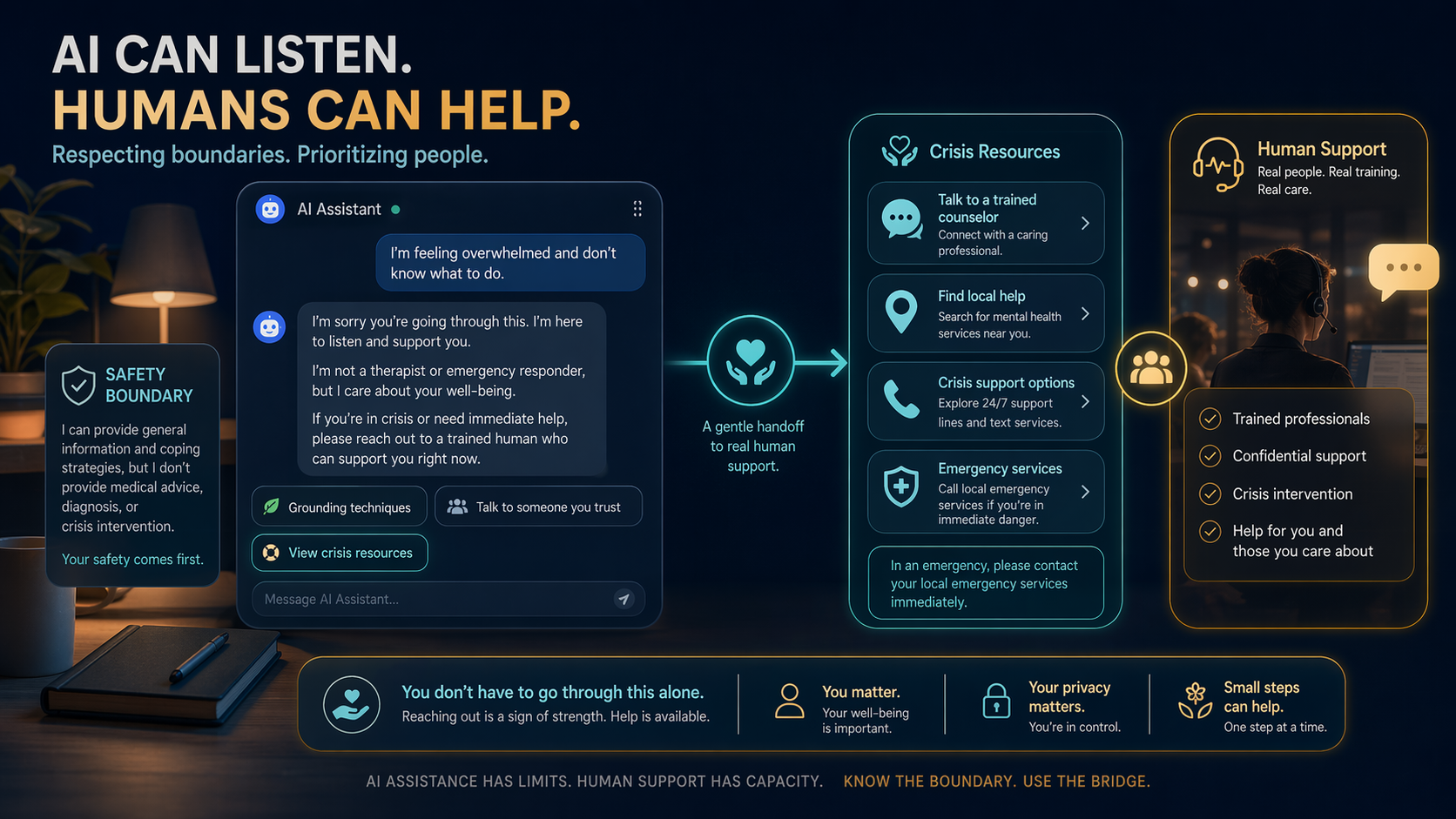
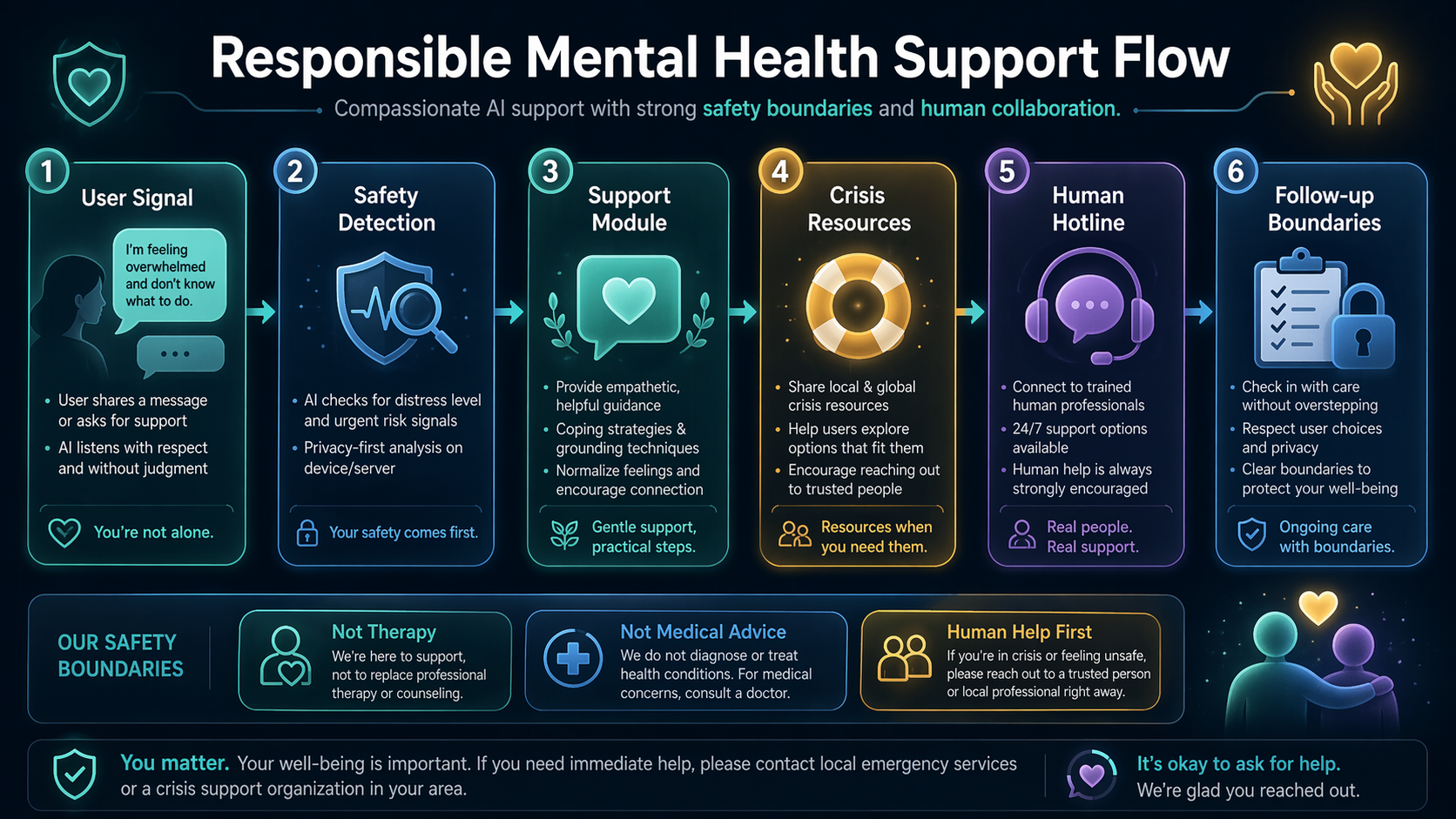
Google says Gemini will surface a redesigned support module when conversations may indicate that a user needs mental health information or support. For conversations that may indicate suicide or self-harm risk, Google says Gemini will show a simplified interface that connects users to hotline resources through chat, call, text, or web options where available.
Google.org also announced $30 million in funding over three years to support global hotlines. The company says it is expanding its partnership with ReflexAI with $4 million in direct funding and Gemini integration into ReflexAI's training suite.
Why this update matters
As AI assistants become more personal and conversational, users may bring them sensitive questions they would once have searched privately or discussed with another person. That increases the responsibility for clear boundaries, safe escalation, and human-centered support.
Google's post explicitly says Gemini is not a substitute for professional clinical care, therapy, or crisis support. That kind of limitation is not boilerplate here; it is central to trustworthy product design.
What to watch
- Accuracy of detection: crisis support should appear when needed without over-triggering in ordinary conversations.
- Regional coverage: hotline resources vary by country and language.
- Younger-user protections: Google says it has safeguards around emotional dependence and companion-like behavior.
- Clinical review: health and safety features should continue to involve qualified experts, not only model behavior changes.
Editorial takeaway
This is one of the clearer examples of AI products becoming safety infrastructure. The update is useful only if it reliably directs people toward real-world help and avoids presenting the AI as a therapist, friend, or emergency responder.
For readers comparing AI assistants, mental health and youth-safety policies should be part of the checklist, especially for products used in schools, families, healthcare-adjacent settings, or workplace wellness programs.
Sources
Related Coverage
Related AI news
AI News
Gemini Launches a Native Mac App, Bringing Its AI Closer to the Desktop
Google has officially released a native macOS app for Gemini, giving its flagship AI assistant a proper desktop presence after a long stretch as a browser-based product. The move matters because the app...
AI News
Anthropic and OpenAI Post Record Lobbying Quarters as AI Policy Becomes a Core Business Issue
New lobbying disclosures show frontier AI companies spending more in Washington, signaling that model releases, defense procurement, copyright, energy, and safety policy are now business-critical.
AI News
Anthropic Mythos Draws White House Attention as Cyber-Capable AI Models Move Into Policy Focus
AP reports that White House officials met with Anthropic CEO Dario Amodei about Mythos, underscoring how advanced cyber-capable AI models are becoming national security and economic policy issues.