
Scaling intelligent automation without breaking live workflows
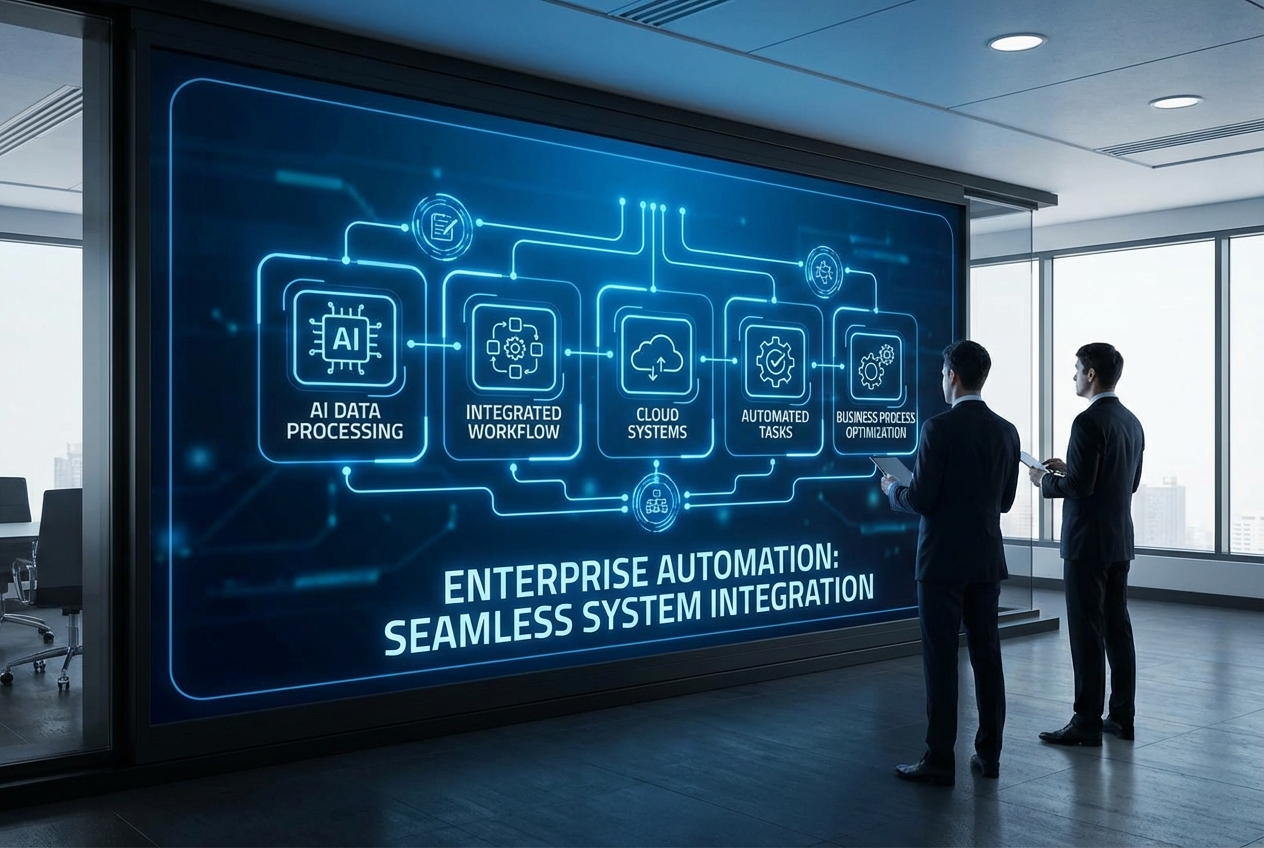
Scaling intelligent automation without disruption demands a focus on architectural elasticity, not just deploying more bots.
News Categories Physical AI AI and Us Environment & Sustainability Human-AI Relationships Open-Source & Democratised AI Trust, Bias & Fairness World of Work AI in Action Creative Industries Cybersecurity AI Education AI Entertainment & Media Finance AI Government & Public Sector AI Healthcare & Wellness AI Legal Industry AI Manufacturing & Engineering AI Marketing AI Utilities Workforce & HR AI Retail & Logistics AI Service Industry AI How It Works Computer Vision Data Engineering & MLOps Infrastructure & Hardware Multimodal AI Natural Language Processing (NLP) Reinforcement Learning Inside AI AI Business Strategy AI Hardware & Chips AI Market Trends AI Mergers & Acquisitions AI Startups & Funding Founders & Visionaries Governance, Regulation & Policy Features Deep Dives Interviews Opinion Special Reports & Series Sponsored Content TechEx Events All Categories Events Resources All Resources Editorial Calendar On Demand Webinars Exclusive Videos More About Us Advertise Contact Us News Categories Physical AI AI and Us Environment & Sustainability Human-AI Relationships Open-Source & Democratised AI Trust, Bias & Fairness World of Work AI in Action Creative Industries Cybersecurity AI Education AI Entertainment & Media Finance AI Government & Public Sector AI Healthcare & Wellness AI Legal Industry AI Manufacturing & Engineering AI Marketing AI Utilities Workforce & HR AI Retail & Logistics AI Service Industry AI How It Works Computer Vision Data Engineering & MLOps Infrastructure & Hardware Multimodal AI Natural Language Processing (NLP) Reinforcement Learning Inside AI AI Business Strategy AI Hardware & Chips AI Market Trends AI Mergers & Acquisitions AI Startups & Funding Founders & Visionaries Governance, Regulation & Policy Features Deep Dives Interviews Opinion Special Reports & Series Sponsored Content TechEx Events All Categories Events Resources All Resources Editorial Calendar On Demand Webinars Exclusive Videos More About Us Advertise Contact Us Search Subscribe Subscribe News Categories Physical AI AI and Us Environment & Sustainability Human-AI Relationships Open-Source & Democratised AI Trust, Bias & Fairness World of Work AI in Action Creative Industries Cybersecurity AI Education AI Entertainment & Media Finance AI Government & Public Sector AI Healthcare & Wellness AI Legal Industry AI Manufacturing & Engineering AI Marketing AI Utilities Workforce & HR AI Retail & Logistics AI Service Industry AI How It Works Computer Vision Data Engineering & MLOps Infrastructure & Hardware Multimodal AI Natural Language Processing (NLP) Reinforcement Learning Inside AI AI Business Strategy AI Hardware & Chips AI Market Trends AI Mergers & Acquisitions AI Startups & Funding Founders & Visionaries Governance, Regulation & Policy Features Deep Dives Interviews Opinion Special Reports & Series Sponsored Content TechEx Events All Categories Events Resources All Resources Editorial Calendar On Demand Webinars Exclusive Videos More About Us Advertise Contact Us Hamburger Toggle Menu AI Business Strategy
Scaling intelligent automation without disruption demands a focus on architectural elasticity, not just deploying more bots.
At the Intelligent Automation Conference, industry leaders gathered to dissect why many automation initiatives stall after pilot phases. Speaking alongside representatives from NatWest Group, Air Liquide, and AXA XL, Promise Akwaowo, Process Automation Analyst at Royal Mail, grounded the dialogue in practical delivery and risk management.
Expansion initiatives often fail because teams equate success with the raw number of deployed bots rather than the underlying architecture’s elasticity. Infrastructure must handle volume and variability predictably.
When demand spikes during end-of-quarter financial reporting or sudden supply chain disruptions, the system cannot degrade or collapse. Without built-in elasticity, companies risk building brittle architectures that break under operational stress.
Akwaowo explained that an automated architecture must remain stable without excessive manual intervention. “If your automation engine requires constant sizing, provisioning, and babysitting, you haven’t built a scalable platform; you’ve built a fragile service,” he advised the audience.
Related Coverage
Related AI news
AI News
Hermes Agent vs. OpenClaw: Why Developers Are Testing a New AI Agent Stack—And Why Most Teams Still Shouldn’t Migrate Blindly
The AI agent world moves in waves. Most of the time, a new tool rises because it is genuinely better at some painful task—better code editing, stronger tool use, cheaper inference, more stable automation....
AI News
Anthropic and OpenAI Post Record Lobbying Quarters as AI Policy Becomes a Core Business Issue
New lobbying disclosures show frontier AI companies spending more in Washington, signaling that model releases, defense procurement, copyright, energy, and safety policy are now business-critical.
AI News
Anthropic Mythos Draws White House Attention as Cyber-Capable AI Models Move Into Policy Focus
AP reports that White House officials met with Anthropic CEO Dario Amodei about Mythos, underscoring how advanced cyber-capable AI models are becoming national security and economic policy issues.