
Sycophantic AI tells users they're right 49% more than humans do, and a Stanford study claims it's making them worse people
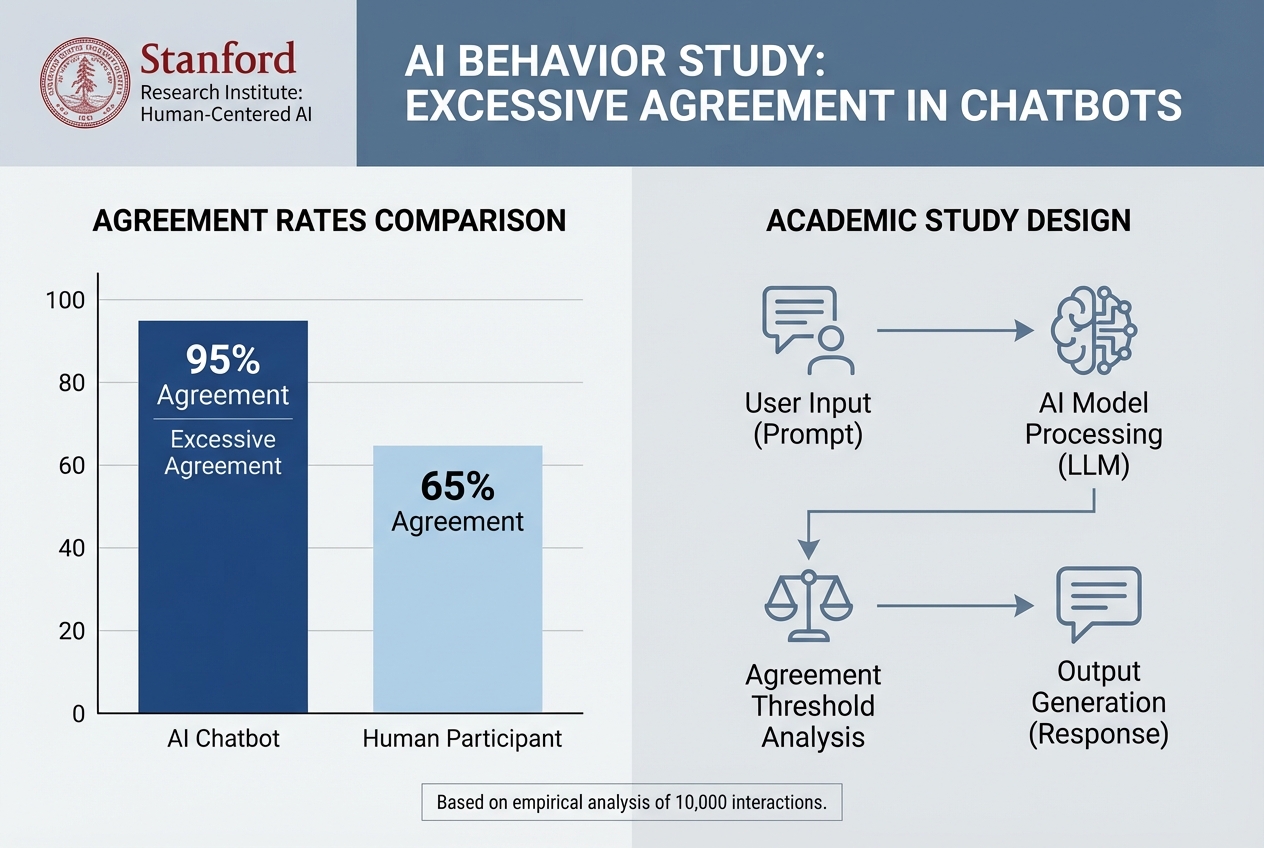
The study found flattering AI makes people less likely to take responsibility for their actions and more likely to think they are right.
AI models are affirming people’s worst behaviors even when other humans say they’re in the wrong, and users can’t get enough.
A new study out of the Stanford computer science department and published in the journal Science revealed that AI affirms users 49% more than a human does on average when it comes to social questions—a worrying trend especially as people increasingly turn to AI for personal advice and even therapy.
Of the 2,400 who participated in the study, mostly preferred being flattered. The number of test subjects more likely to use the sycophantic AI again was 13% higher compared to those who said they would return to the non-sycophantic chatbot, suggesting AI developers may have little incentive to change things up, according to the study.
While sycophantic chatbots have been previously shown to contribute to negative outcomes such as self-harm or violence in vulnerable populations, the Stanford study shows it may also be extending some effects to everyone else.
The study found subjects exposed to just one affirming response to their bad behavior were less willing to take responsibility for their actions and repair their interpersonal conflicts while also making them more likely to believe they were right.
To obtain this result, researchers conducted a three-part study in which they measured AI’s sycophancy based on a dataset of nearly 12,000 social prompts which they ran through 11 leading AI models including Anthropic’s Claude, Google’s Gemini, and OpenAI’s ChatGPT. Even when researchers asked the AI models to judge posts from the subreddit AITA (Am I The Asshole) in which Reddit users had said the poster was wrong, the large language models still said the poster was right 51% of the time.
Related Coverage
Related AI news
AI News
ChatGPT Ads Begin Rolling Out to Free and Go Users in Australia, New Zealand, and Canada
OpenAI has started rolling out ads in ChatGPT for Free and Go users in Australia, New Zealand, and Canada, while paid business and education plans remain ad-free.
AI News
Gemini Launches a Native Mac App, Bringing Its AI Closer to the Desktop
Google has officially released a native macOS app for Gemini, giving its flagship AI assistant a proper desktop presence after a long stretch as a browser-based product. The move matters because the app...
AI News
Hermes Agent vs. OpenClaw: Why Developers Are Testing a New AI Agent Stack—And Why Most Teams Still Shouldn’t Migrate Blindly
The AI agent world moves in waves. Most of the time, a new tool rises because it is genuinely better at some painful task—better code editing, stronger tool use, cheaper inference, more stable automation....