
HappyHorse-1.0 Hits No. 1 on Video Arena, but the Public Story Behind It Is Still Murky

Primary source: Zhihu original article
Additional reporting: 36Kr English · Securities Times · Artificial Analysis API documentation · HappyHorses site · HappyHorses attribution page · HappyHorses docs
Editor's note: This is a reported English news analysis based on current public sources available on April 9, 2026. The article separates verified facts from claims that remain unconfirmed.
HappyHorse-1.0 is suddenly one of the most watched names in AI video. Multiple Chinese media outlets reported on April 8 that the model jumped to the top of Artificial Analysis's Video Arena rankings, surpassing well-known systems such as Seedance 2.0, Kling AI 3.0, and SkyReels V4 in key categories. What makes the story more interesting is not only the ranking jump, but the fact that the public record around the model remains incomplete and unusually hard to pin down.
What appears to be verified right now
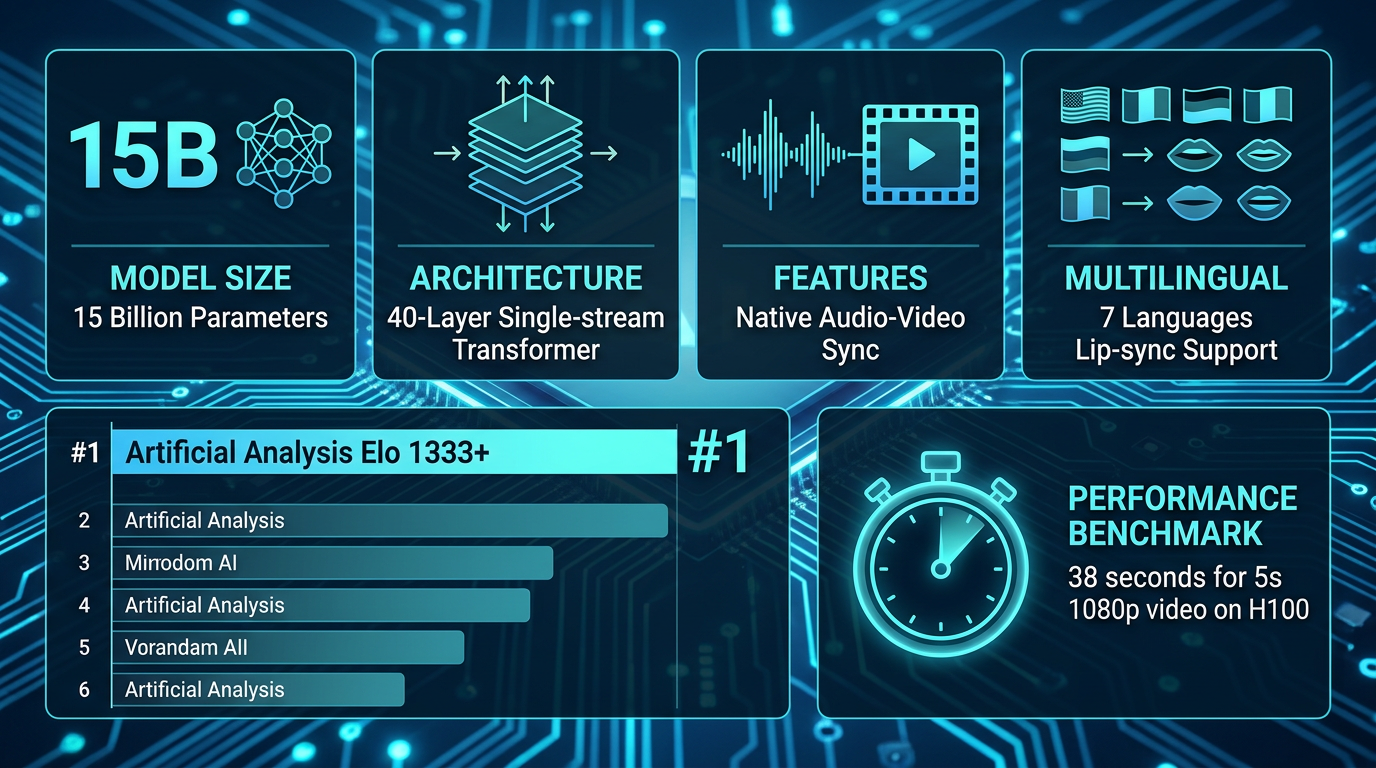
The core benchmark story is real enough to have triggered broad coverage. Securities Times reported that HappyHorse-1.0 reached an Elo score of 1357 in text-to-video without audio, 1217 in video generation with audio, and also ranked first in image-to-video. 36Kr framed the same development as a surprise leader that arrived without a launch event, technical blog, or explicit corporate endorsement.
Artificial Analysis's own documentation also helps explain why the ranking drew so much attention. Its public API reference shows that text-to-video and image-to-video leaderboards are exposed as Elo-based benchmark endpoints, reinforcing that the rankings are based on model preference data rather than a company's own promotional claims alone.
Why the ranking matters
In the current AI video market, perception quality matters almost as much as architecture. A benchmark built on blind preference voting can change how creators, developers, and investors talk about a model very quickly, because it maps more closely to how people actually choose outputs in practice. That is why HappyHorse's appearance immediately triggered industry speculation, stock-market chatter, and a wave of comparisons with the leading Chinese and global video systems.
If the reported rankings hold up over time, HappyHorse has done more than post a strong technical score. It has inserted itself into the commercial conversation around who is leading AI video in 2026.
What is still unclear
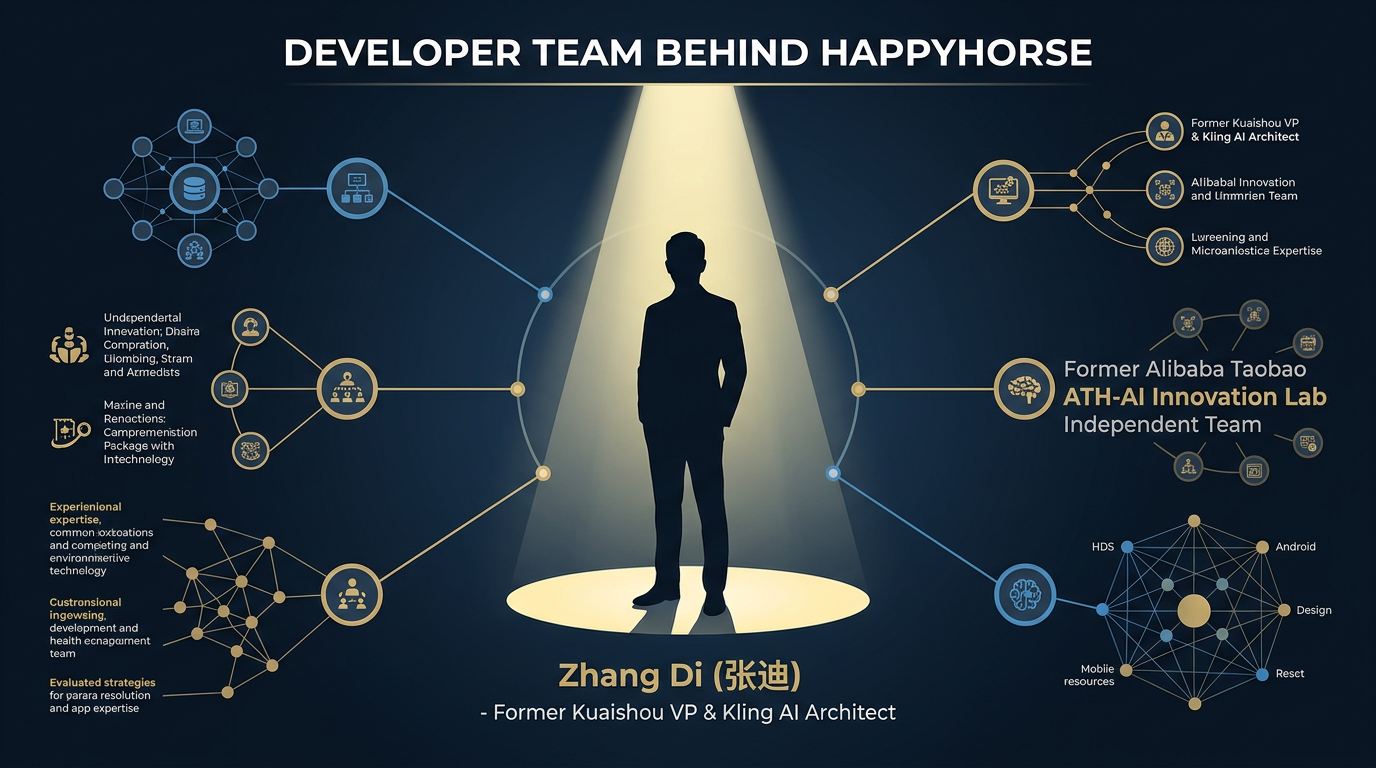
The public story behind HappyHorse-1.0 is much less settled than the benchmark headlines suggest. 36Kr reported that online investigators compared public benchmark data and website structure to an earlier open-source project called daVinci-MagiHuman, and suggested a possible relationship between the two. That same reporting has fed broader speculation that the model may be connected to Chinese teams associated with Sand.ai, SII, or Alibaba-linked talent.
But none of that appears to be fully confirmed by a clear, official technical release note from the project itself. Securities Times explicitly noted that the model's developer identity had not been confirmed and that no definitive official usage portal had been established at the time of its report. That is an important distinction: the market narrative is moving fast, while the formal provenance story still looks unsettled.
The public website raises as many questions as it answers
The current public HappyHorses site presents Happy Horse as a video-generation capability and uses language that strongly implies a major model launch. At the same time, other parts of the public site are harder to reconcile with a polished open-source release. The documentation page still contains placeholder text rather than a finished model explanation, and the site's attribution page says the service is an independent commercial platform that builds on legally licensed open-source components and is not affiliated with Alibaba Group or other organizations associated with the original open-source model.
That does not prove the benchmark story is wrong. But it does mean outside observers should be careful not to treat every circulating attribution claim as settled fact. Right now, the model's ranking story is clearer than its release story.
What this means for the AI video race
Even with those caveats, HappyHorse-1.0 matters. The AI video leaderboard has become more fluid over the past year, with new systems repeatedly reshuffling the pecking order. Securities Times pointed out that Chinese video models have repeatedly climbed to the top of Artificial Analysis rankings, while older headline products such as Sora have lost momentum or exited the center of the conversation. HappyHorse adds one more signal that the market is moving fast and that video leadership may now depend on iteration speed, output quality in blind tests, and distribution strategy as much as on headline model size.
The more immediate implication is strategic: if a little-known or ambiguously presented model can still generate this level of attention simply by surfacing at the top of a respected arena, then benchmarking visibility has become a product launch channel in its own right.
Bottom line
The best way to understand HappyHorse-1.0 today is not as a fully resolved launch story, but as a live industry mystery with one strong verified datapoint: it is already being treated as a serious contender in AI video quality rankings. What remains unresolved is who exactly built it, what part of the stack is truly open, and how much of the current narrative is benchmark fact versus ecosystem speculation.
That mix of high performance and low clarity is exactly why the model has become one of the most interesting AI video stories of the week.
Related Coverage
Related AI news
AI News
OpenAI Privacy Filter Brings Local PII Redaction Into the AI App Stack
OpenAI released Privacy Filter, an open-weight model for detecting and masking personally identifiable information in text, giving teams a local option for safer AI data pipelines.
AI News
Anthropic Mythos Draws White House Attention as Cyber-Capable AI Models Move Into Policy Focus
AP reports that White House officials met with Anthropic CEO Dario Amodei about Mythos, underscoring how advanced cyber-capable AI models are becoming national security and economic policy issues.
AI News
OpenAI Says Enterprise AI Is Moving From Point Tools to a Unified Agent Layer
OpenAI outlined an enterprise strategy built around Frontier, company-wide agents, and a unified AI superapp, arguing that businesses are moving beyond isolated copilots.