
OpenAI Says Enterprise AI Is Moving From Point Tools to a Unified Agent Layer
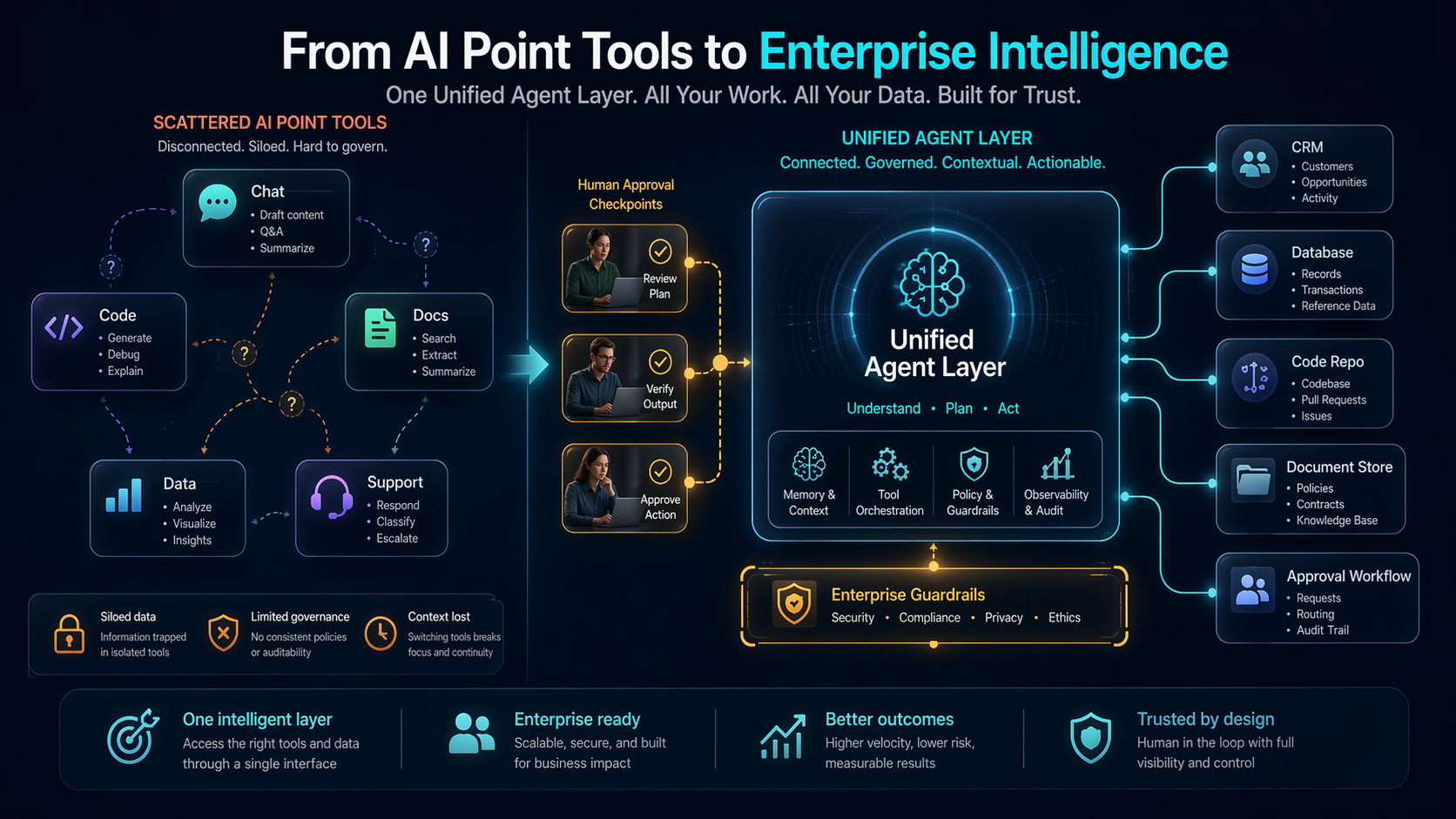
Updated April 23, 2026. OpenAI has outlined a new enterprise AI strategy centered on company-wide agents, its Frontier operating layer, and what it describes as a unified AI superapp for work.
The company says enterprise now represents more than 40% of its revenue and could reach parity with consumer revenue by the end of 2026. It also says Codex has reached 3 million weekly active users and that its APIs process more than 15 billion tokens per minute.
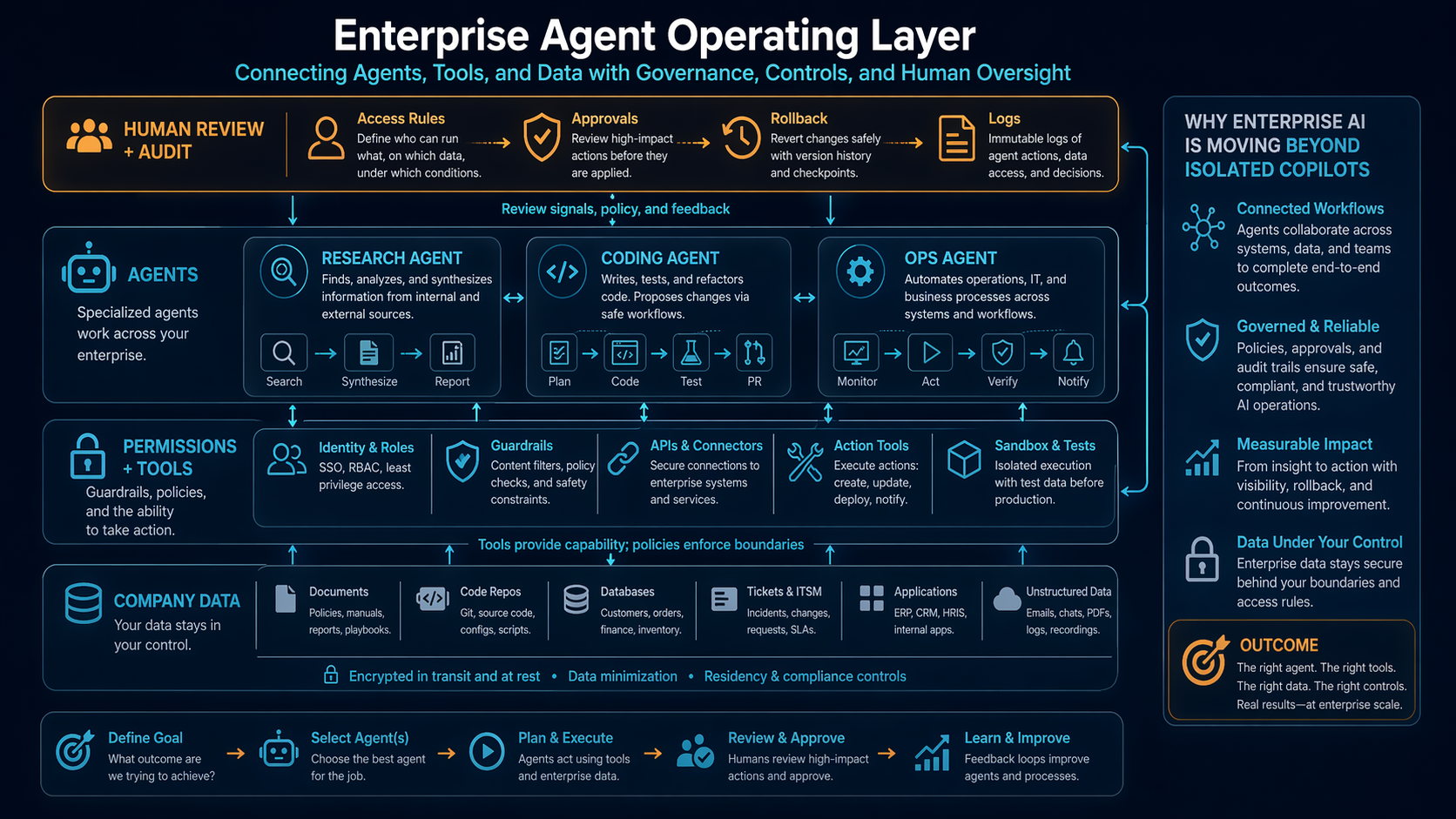
What OpenAI is arguing
The main message is that companies are moving past isolated experiments. OpenAI says enterprise buyers want agents that can work across systems rather than point solutions that create another layer of tool sprawl.
That framing puts OpenAI in direct competition with enterprise software platforms, cloud providers, workflow automation tools, coding assistants, and internal agent frameworks.
What this means for teams
- AI governance becomes operational: if agents act across tools, permissions and audit trails matter more than chat quality alone.
- Context becomes a product feature: enterprise AI needs access to company data without leaking it or making unsupported claims.
- Agent management becomes a skill: teams may shift from asking assistants for help to supervising multiple agents doing work.
- Vendor lock-in becomes a real question: a unified AI layer is convenient, but companies should understand portability and data boundaries.
The E-E-A-T reading
This is a vendor-authored strategy note, so it should be read as both information and positioning. The strongest confirmed points are the stated revenue mix, usage metrics, named enterprise customers, and product direction. The claims about future work patterns are plausible but should be validated against customer results and independent adoption data.
Editorial takeaway
The enterprise AI market is moving toward workflow ownership. The winning products will not simply answer questions; they will coordinate work, preserve context, enforce rules, and make completed actions reviewable.
For readers choosing tools, this makes practical evaluation more important than ever. Use the AI tools directory and our agentic AI guides to separate polished demos from systems that can survive real operations.
Sources
Related Coverage
Related AI news
AI News
OpenAI Rebuilds Agents SDK to Push AI Agents Toward Production
OpenAI has rolled out a major rewrite of its Agents SDK, turning what had largely been a lightweight chatbot-oriented toolkit into a more complete foundation for production-grade AI agents.
AI News
Anthropic and OpenAI Post Record Lobbying Quarters as AI Policy Becomes a Core Business Issue
New lobbying disclosures show frontier AI companies spending more in Washington, signaling that model releases, defense procurement, copyright, energy, and safety policy are now business-critical.
AI News
OpenAI Expands Trusted Access for Cyber With GPT-5.4-Cyber
OpenAI is expanding its Trusted Access for Cyber program and introducing GPT-5.4-Cyber for vetted security teams, signaling a shift from blanket model restrictions to identity-based access controls.