Editorial note, draft prepared April 22, 2026: This draft treats agent prompts as operating instructions, not magic words. Add product-specific examples before publishing if testing against a real agent builder or coding agent.
An AI agent prompt is not just a longer chatbot prompt. It is a small operating manual for a system that can plan, call tools, inspect results, and decide what to do next.
That is why AI agent prompt engineering needs stricter rules than normal prompting. A helpful agent needs a goal, tool boundaries, memory rules, escalation criteria, and a way to evaluate whether it completed the task safely.
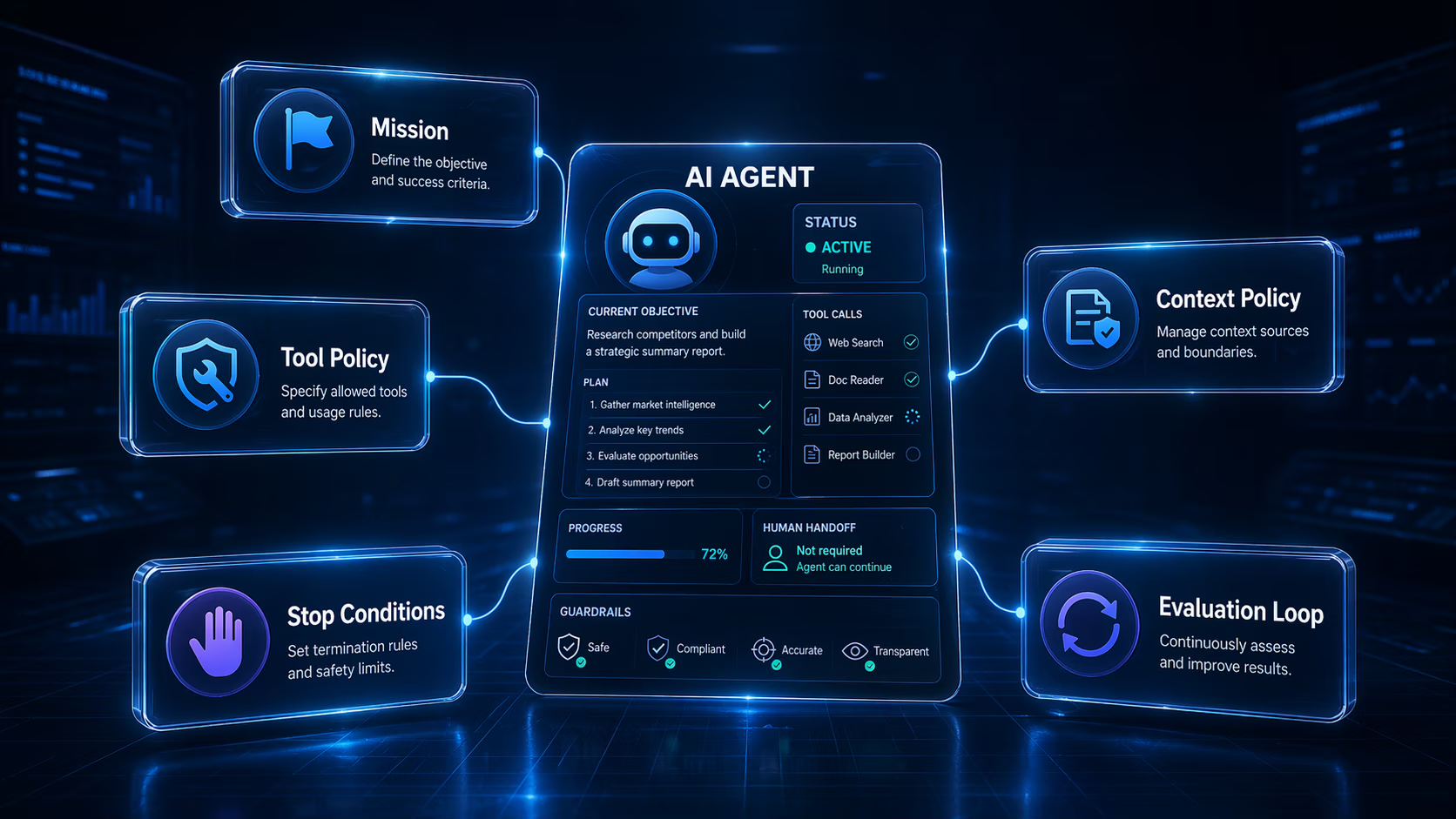
TL;DR: Write agent prompts around five controls: mission, tool policy, context policy, stop conditions, and evaluation. If an agent can take actions, the prompt must tell it when to proceed, when to ask, and when to stop.
Who this guide is for
This guide is for builders, automation teams, and product managers who are moving from chat prompts into agentic AI workflows.
- Teams designing research agents, coding agents, support agents, or operations agents.
- Builders comparing agent tools in the AI tools directory.
- Editors who need a checklist before recommending an agent workflow publicly.
The practical framework
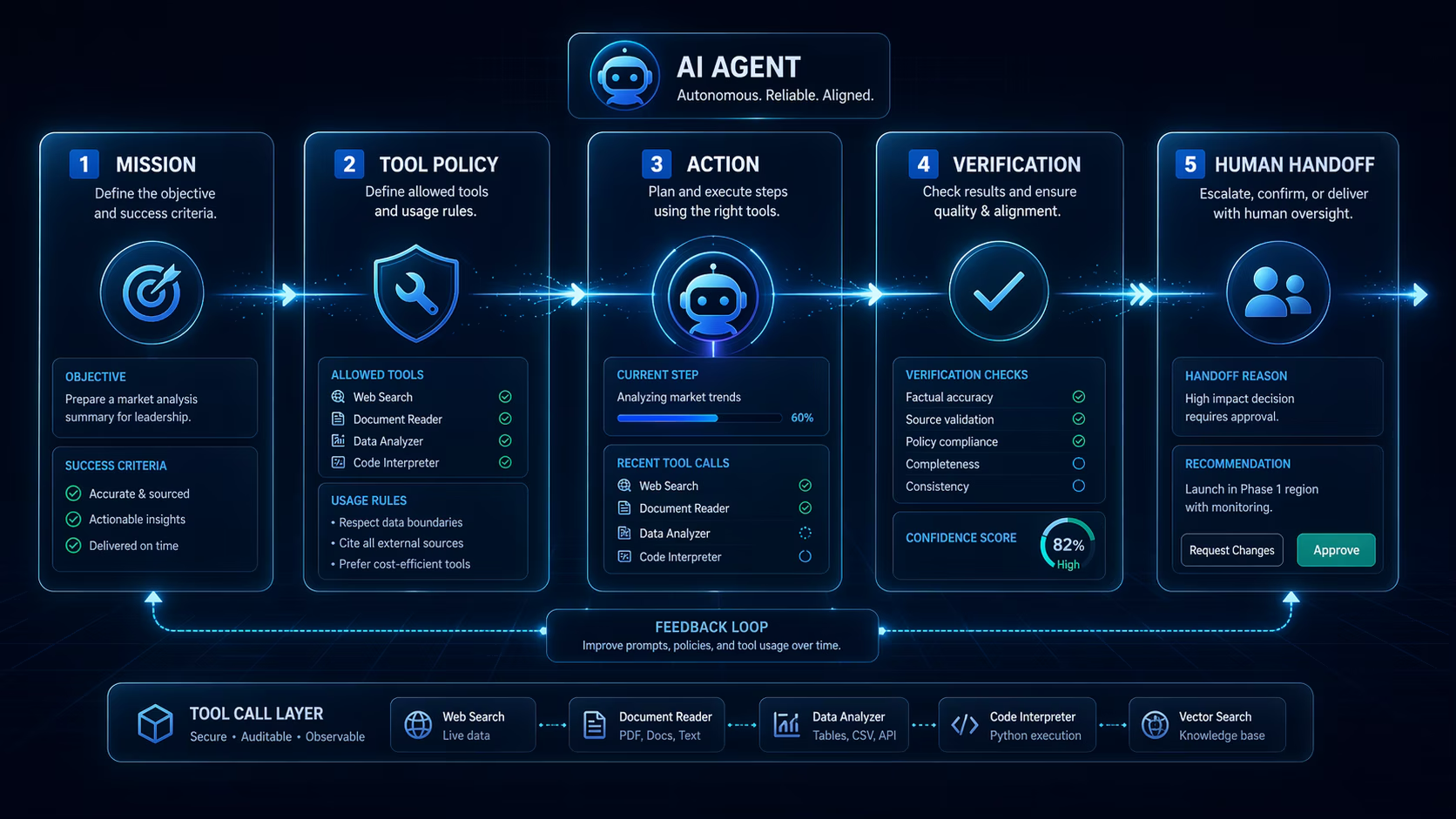
Agent instructions should be written as a control system. The prompt should not only say what success looks like; it should also define what the agent is not allowed to do.
| Control | Purpose | Prompt question |
|---|---|---|
| Mission | Defines the job | What outcome should the agent optimize for? |
| Tool policy | Limits actions | Which tools can it use, and when? |
| Context policy | Controls memory and sources | What information can it rely on? |
| Stop conditions | Prevents runaway work | When should it stop or ask for help? |
| Evaluation loop | Checks quality | How should success be verified? |
Write the mission as an observable outcome
Bad agent missions sound aspirational: "help with research" or "improve engineering productivity." Good missions describe a visible result: "produce a cited brief with five source-backed options and a recommendation."
Observable outcomes make agent behavior easier to review. They also make internal links, source citations, and final handoffs easier for readers to trust.
Define tool permissions in plain language
If an agent can browse, edit files, send messages, or call APIs, tool rules belong in the prompt. Permissions should be specific enough to prevent accidental actions but not so narrow that the agent stalls on every step.
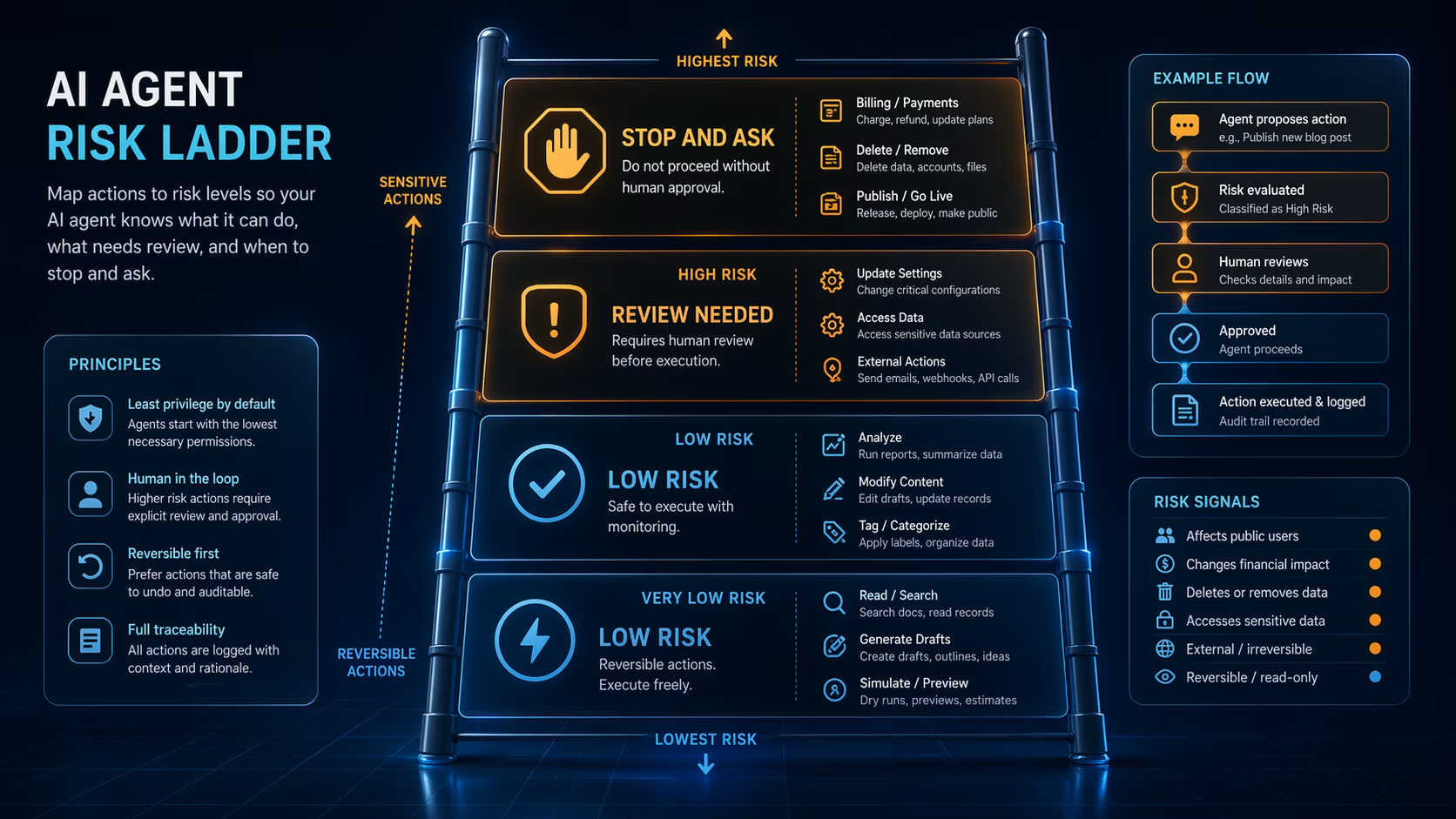
A safe pattern is: inspect first, propose when risk is high, act only when the action is reversible or already approved. That pattern is especially useful for coding and content operations.
- Allow read-only inspection by default.
- Require confirmation for external publishing, deletion, billing, or user-facing messages.
- Log sources and actions so a human reviewer can reconstruct the work.
Evaluate the agent on handoff quality
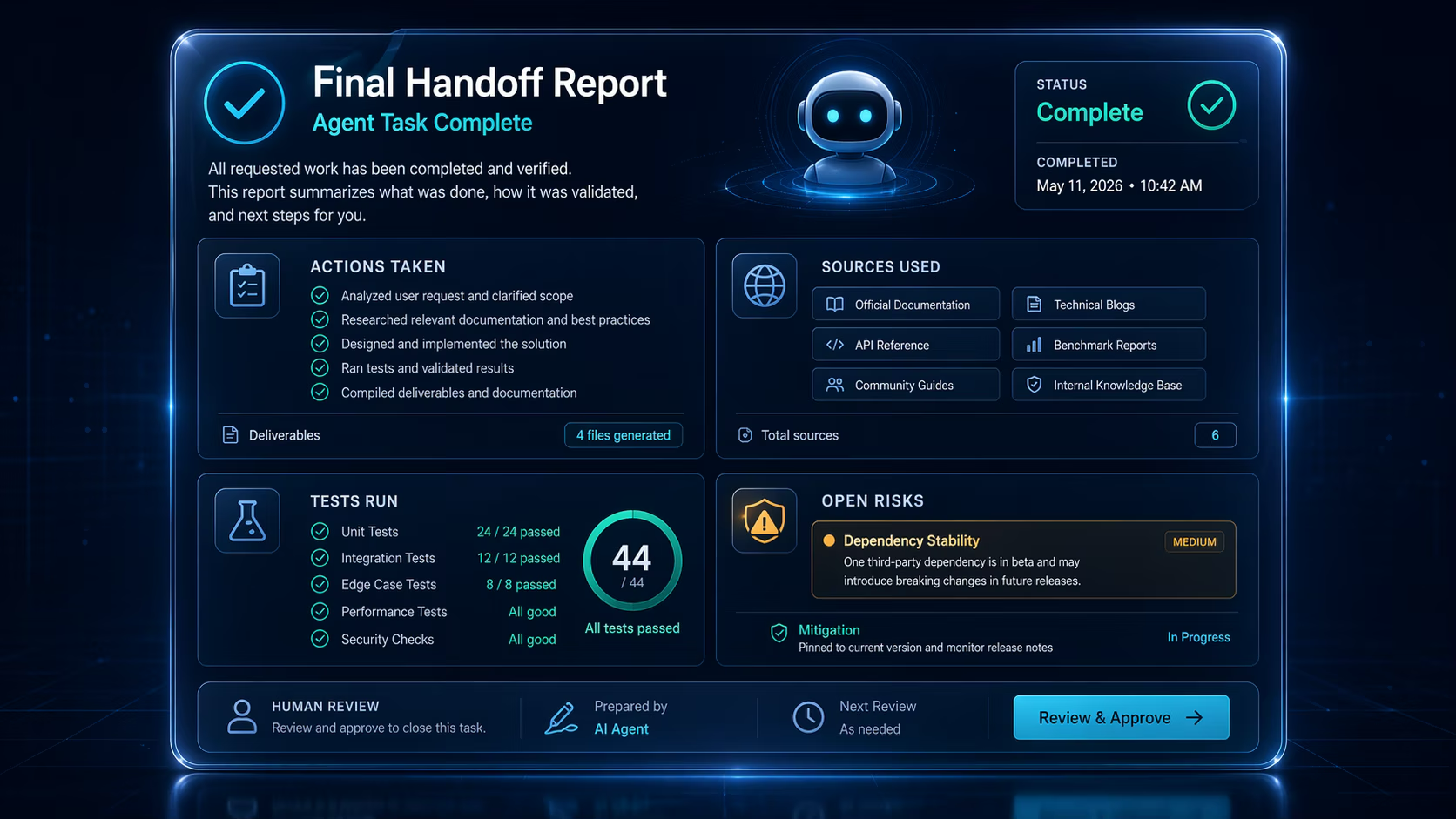
Agent output fails when the handoff is vague. A strong agent should state what it did, what changed, what it could not verify, and what a human should check next.
For editorial agents, that means source links, factual caveats, and internal link suggestions. For developer agents, it means changed files, tests run, and remaining risks.
| Agent type | Best evaluation signal | Reviewer question |
|---|---|---|
| Research agent | Source quality | Can I trace the conclusion to reliable sources? |
| Coding agent | Verification | Did tests or checks prove the change? |
| Content agent | Usefulness | Does this answer the reader without generic filler? |
Implementation checklist
- Name the agent mission as a concrete deliverable.
- List allowed and disallowed tools.
- Tell the agent how to handle missing or conflicting information.
- Add stop conditions for uncertainty, risk, and time budget.
- Require a final handoff with actions taken, sources, and open risks.
E-E-A-T notes for editors
Add one first-hand prompt test before publishing: show the same task with weak vs strong agent instructions. This gives the article experience signals and helps readers trust the framework.
References and further reading
- OpenAI Agents SDK documentation - agent concepts, tools, handoffs, and guardrails
- Anthropic tool use documentation - official guidance on Claude tool use
Where to go next
Use these related pages to move from research into tool selection, comparison, and implementation.
- Agentic AI guides - related agent workflow guides
- Developer tools category - compare tools that support coding and automation workflows
- AI tools FAQ - answer common evaluation questions before adopting agent tools
Final recommendation
Agent prompts are closer to product requirements than chat instructions. The more an agent can do, the more its prompt needs policies, boundaries, and evaluation. That is where good prompting becomes good operations.