Editorial note, reviewed April 17, 2026: Public information around products named Minion can be noisy, so this review focuses on the Minion listing tracked in AI Generator Tools and uses cautious language where official feature or pricing detail is limited.
If you want a Minion AI review, the useful lens is workflow fit. Minion looks most relevant when you need an AI assistant for research, synthesis, and structured task execution. It is less convincing if your main need is deep repo editing, terminal automation, or a fully controlled local coding agent.
Short version: Minion is worth shortlisting for research-heavy agent workflows, but technical buyers should compare it against more developer-native options before committing.
Quick Verdict
- Best fit: competitor research, source collection, trend monitoring, and early product validation.
- Less obvious fit: codebase editing, CI fixes, terminal actions, and deep local automation.
- Closest internal comparison: Gobii for browser-style worker automation, OpenCode for coding-agent evaluation, and Coze for bot/workflow building.
- Main caution: verify current pricing, limits, data handling, and output depth on the official site before treating it as a recurring workflow tool.
Minion AI Compared
| Tool | Best For | Strength | Limitation | Choose It When |
|---|---|---|---|---|
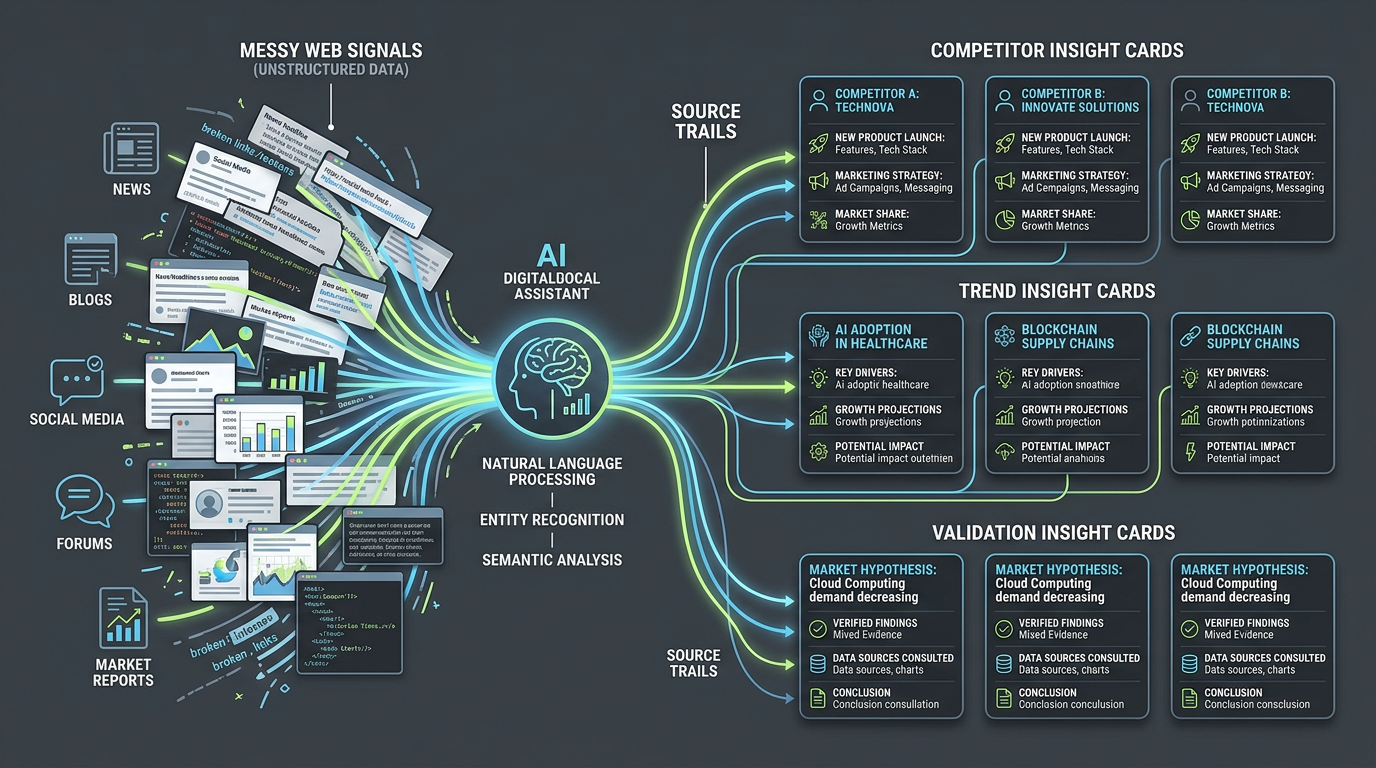
| Minion | Research and structured task support | Turns messy inputs into usable summaries | Public details need verification | You need faster research synthesis |
| OpenCode | Code-centric agent workflows | Better fit for engineering tasks | More technical evaluation | Your work happens in code |
| Coze | Bot and workflow building | Broad automation canvas | Less focused on one research job | You want low-code workflow design |
| Gobii | Browser-based AI workers | Persistent task automation angle | Different product center of gravity | You need web workers or monitoring |
| ChatGPT | General reasoning and drafting | Flexible and familiar | You must build the workflow yourself | You want a general assistant |
What Is Minion AI?
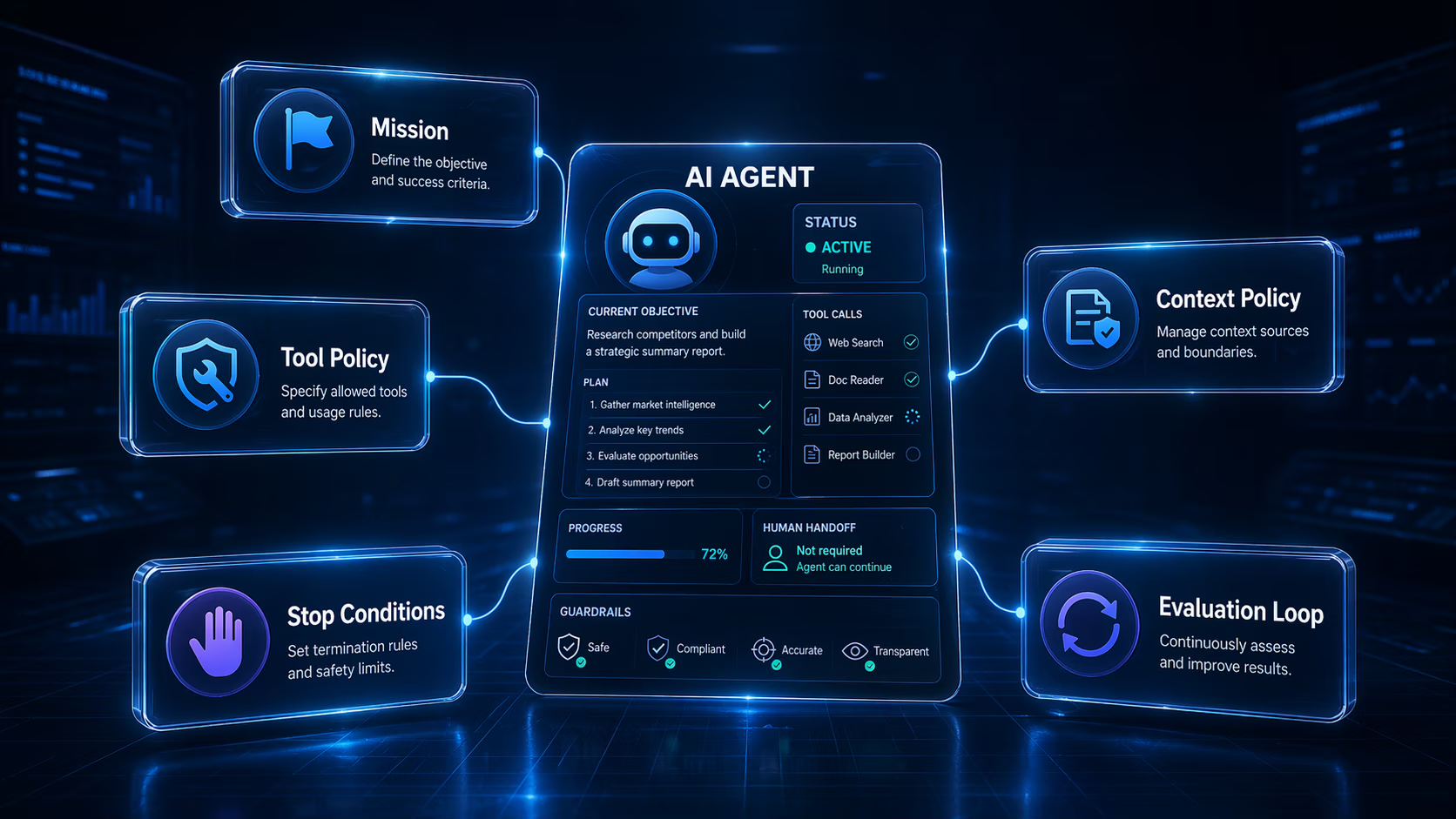
Minion appears to sit in the wider AI-agent category: tools that do more than answer a prompt and instead help complete a task, gather information, or structure a result. For buyers, that category is exciting but slippery. Many tools call themselves agents. Not all of them provide the same level of autonomy, integrations, memory, or reliability.
That is why this review does not treat Minion as magic. The question is narrower: can it reduce research and decision-making time enough to deserve a place in your stack?
If you are still mapping the category, read our explainer on agentic AI vs generative AI before comparing tools.
Best Use Cases
1. Competitor research
Minion makes the most sense when you need a quick first-pass brief: competitors, positioning, pricing signals, feature claims, and gaps. A founder could use it before a deeper manual review.
2. Trend monitoring
For fast-moving categories, an agent-style tool can help collect signals and group them into themes. That is useful for product ideas, content planning, and investor updates.
3. Early validation
If you are deciding whether to build a feature, Minion-style research can help collect market examples and user language before you spend engineering time.
How I Would Test Minion
Use one task that represents real work. For example:
Find five AI tools that help B2B SaaS teams test messaging before launch. Summarize each tool, pricing signal, strongest use case, and one reason not to choose it.
Then score the result on:
- source quality;
- missing obvious competitors;
- hallucinated details;
- usefulness of the summary;
- time saved compared with manual research;
- whether the output is structured enough to reuse.
If the output needs heavy cleanup, Minion may still be useful for idea gathering, but not for decision support.
Minion AI Pricing
Do not buy based on a directory label alone. Check the official site for the current free plan, trial, credit limits, team features, and usage restrictions.
For a research agent, the real pricing question is not only monthly cost. Ask whether it saves enough time on recurring tasks. If you run one research task per month, a paid tool may be overkill. If you run market scans every week, the math changes.
Minion AI Alternatives
Choose OpenCode if your work is code-heavy. Choose Coze if you want to design bot workflows. Choose Gobii if browser-based worker automation is closer to the job. Choose ChatGPT or Claude if you only need flexible thinking and drafting.
For more context, compare Minion against AI developer tools and our Gobii AI review.
Who Should Skip Minion?
Skip Minion if the work you need is mostly inside a repository, terminal, or production deployment pipeline. A research-oriented agent can help you understand a market, summarize sources, or frame a decision, but it should not be confused with an engineering environment that can safely inspect code, run tests, and open pull requests.
I would also skip it if your team has no repeatable research process. One-off curiosity searches are better handled by a general assistant or manual browsing. Minion becomes more interesting when you can name a recurring job: weekly competitor scans, launch research, category monitoring, or structured validation before a build sprint.
Where Minion Fits in an Agent Stack
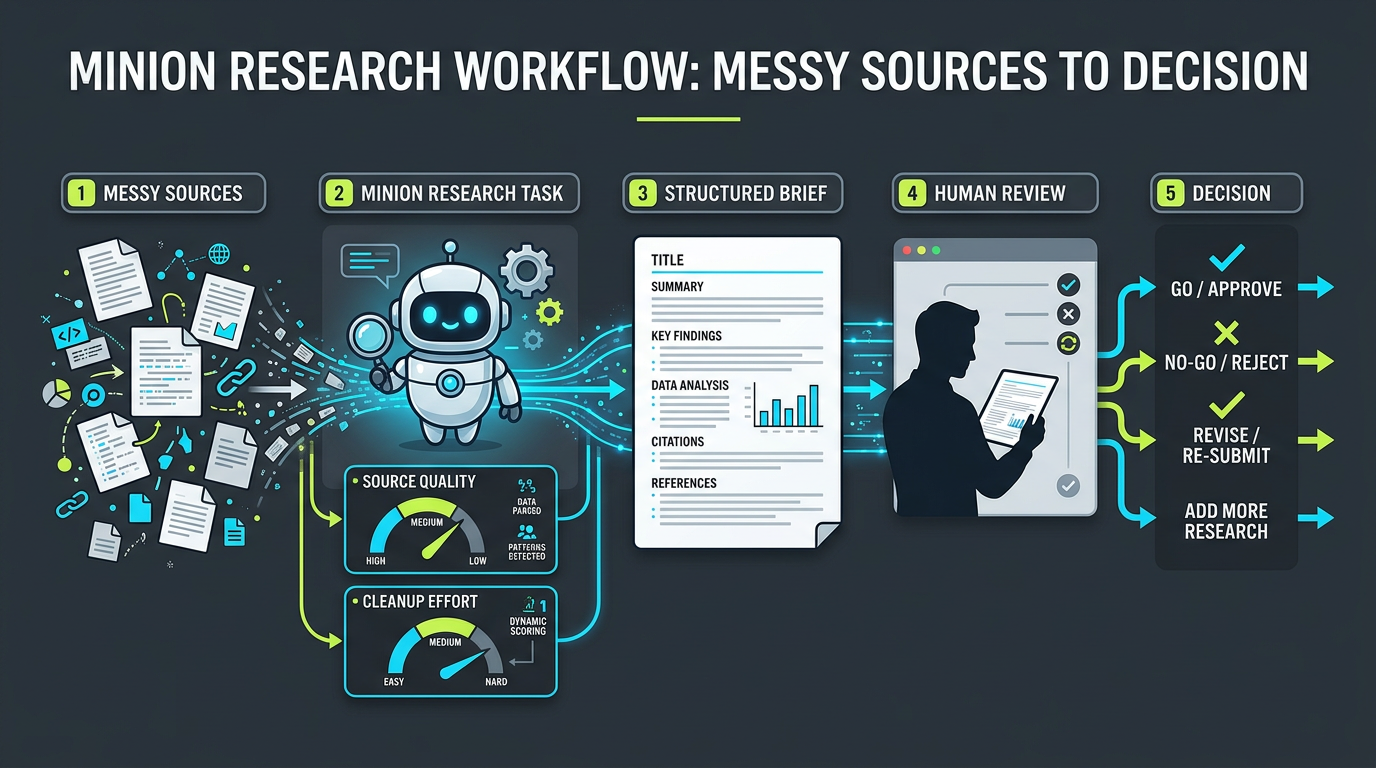
Think of Minion as a possible front-end research layer. It can help collect signal before the work moves into a planning doc, product backlog, or more technical agent system. For that reason, it pairs better with human review than with blind automation. The best output is not a finished decision; it is a cleaner brief that lets a founder, developer, or marketer make the next decision faster.
FAQ
What does Minion AI do?
Minion appears to focus on AI-assisted research, synthesis, and structured task support. Verify current product scope on the official site before adopting it.
Is Minion AI good for developers?
It can be useful for developers who need research and validation. It is less clearly a fit for deep repo editing or local coding automation.
What are the best Minion AI alternatives?
OpenCode, Coze, Gobii, ChatGPT, and Claude are useful comparison points, depending on whether you need code, workflow automation, browser workers, or general reasoning.
Does Minion AI have a free plan?
Check the official site. Free tiers and trial rules change often in agent tools.
How should I evaluate Minion AI pricing?
Compare price against time saved per recurring research workflow, not just the monthly fee.
Related Reading
- Minion profile on AI Generator Tools
- Agentic AI vs Generative AI
- Gobii AI Review
- Best AI Tools 2026 for Beginners