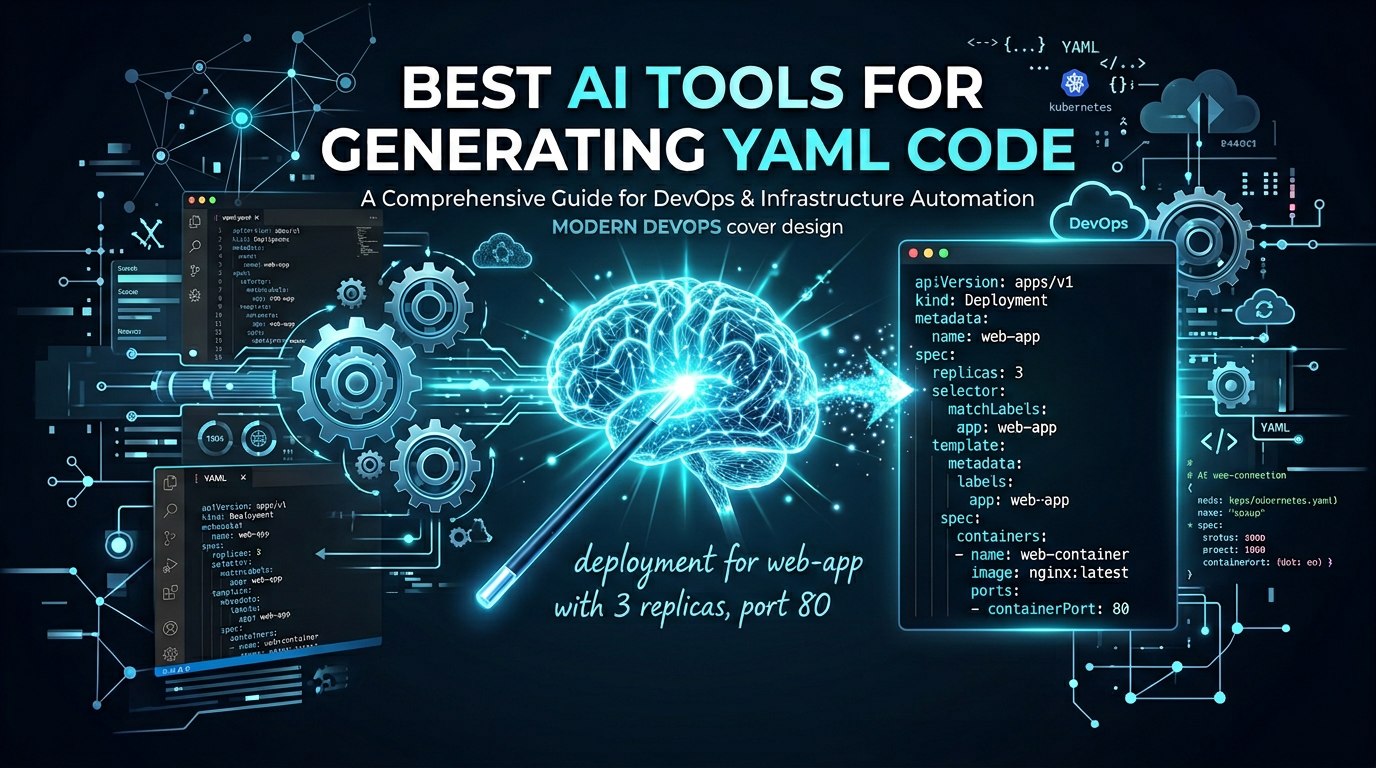
AI tools for generating YAML are useful when the bottleneck is remembering structure, indentation, and syntax details that are easy to get wrong under time pressure. They are much less useful when teams expect them to replace validation, system knowledge, or environment-specific context.
That means the best tool is usually the one that helps you draft, explain, and debug YAML faster while still fitting into a workflow with validation and review.
TL;DR: Use AI for YAML generation when you want faster scaffolding, clearer explanations, and help with troubleshooting. Keep validation and final review inside your actual engineering workflow.
What AI is genuinely good at in YAML workflows
The biggest wins come from repetitive setup work.
- Scaffolding Kubernetes manifests, CI pipelines, and config templates.
- Explaining what an existing YAML file is doing.
- Spotting indentation or structure issues that are easy to miss in a hurry.
Tools worth testing
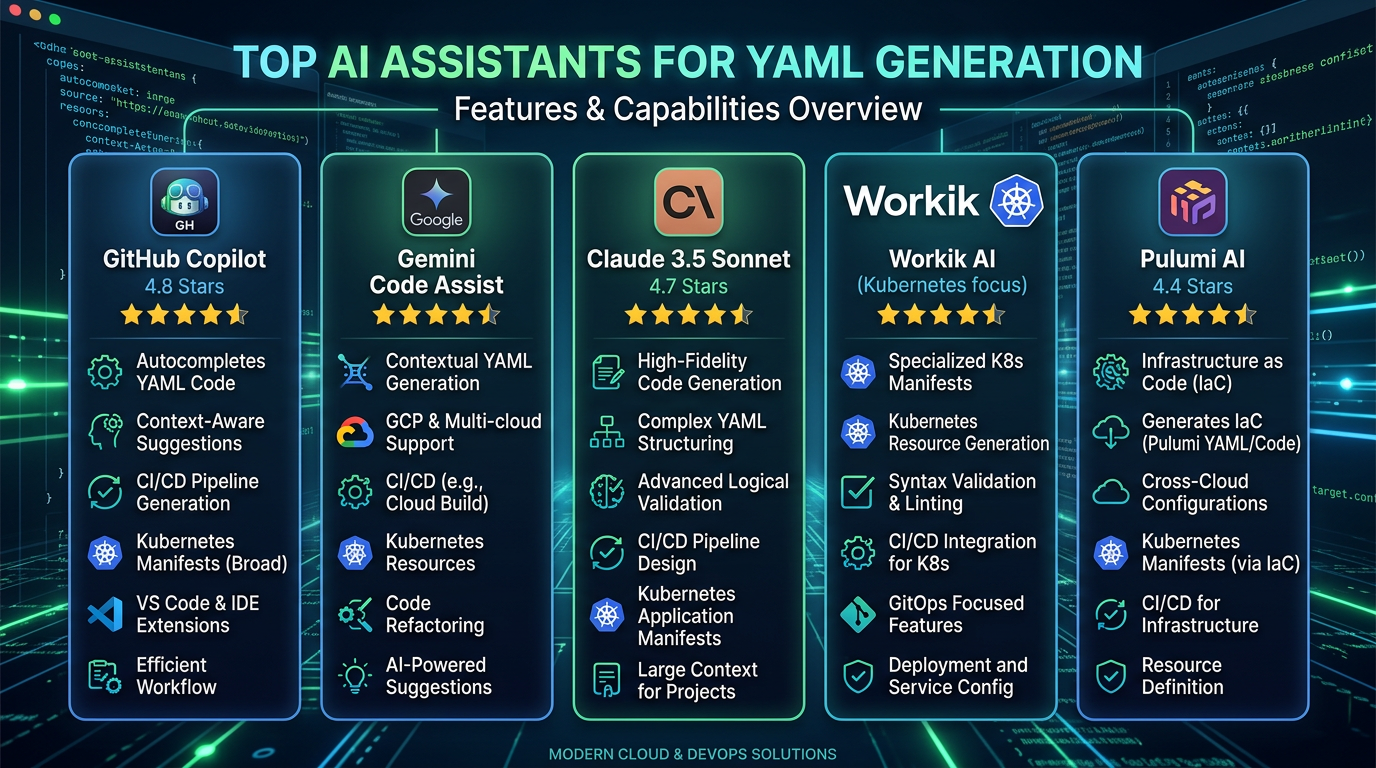
The right tool depends on whether you need chat, IDE help, or repository context.
- ChatGPT is useful for quick generation and explanation of YAML snippets.
- Claude is strong when you want cleaner reasoning across longer config examples.
- GitHub Copilot makes sense inside IDE workflows where you are already editing infrastructure code.
What AI still should not be trusted with blindly
Configuration mistakes can be subtle and expensive.
- Environment-specific values and deployment assumptions still need human review.
- Generated YAML should be validated before deployment.
- Security-sensitive config should never be accepted without inspection.
A workflow that actually works
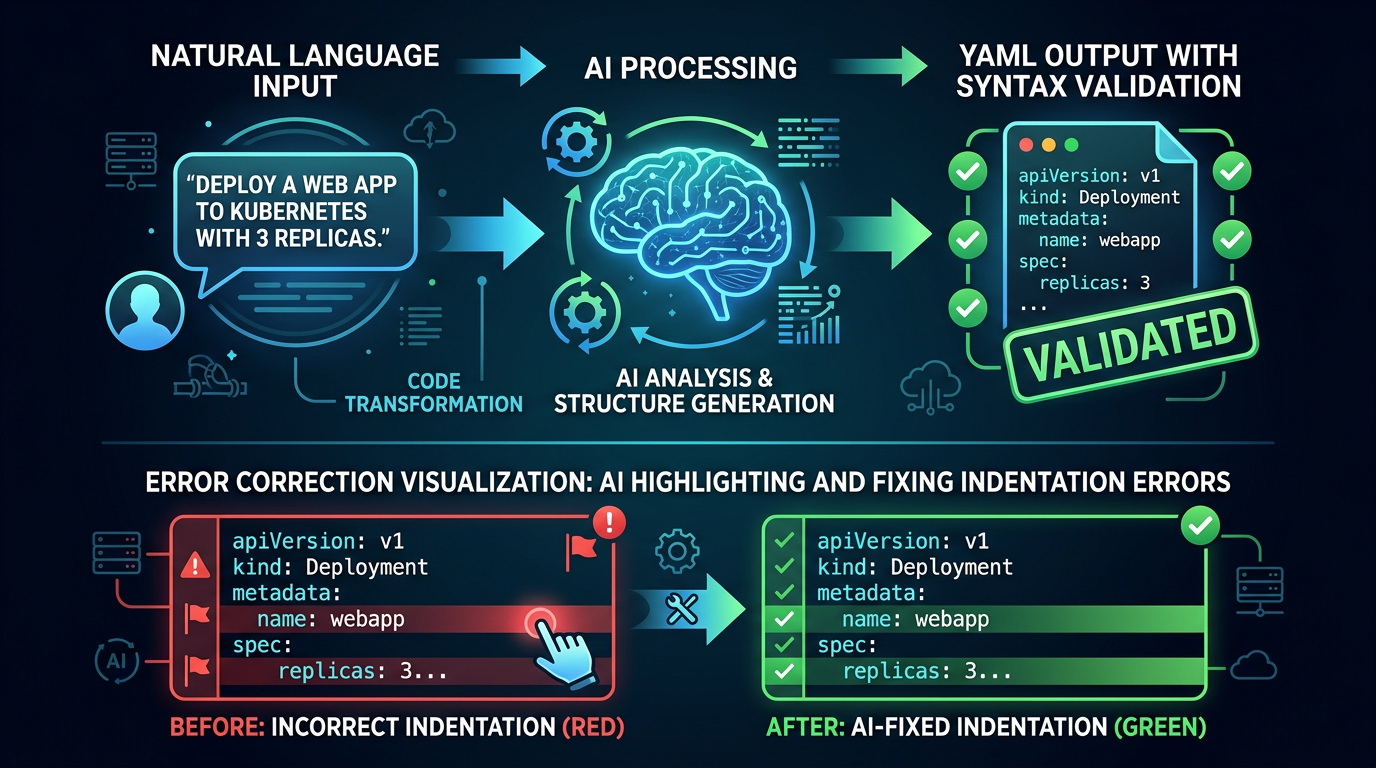
The strongest teams use AI as an assistant, not as a deployment authority.
- Generate or refactor the YAML with AI.
- Run validation and linting immediately.
- Review the file against system context before it ever reaches production.
How we evaluate developer workflows
This guide is attributed to Marcus Johnson, Full-Stack Developer & AI Integration Specialist at Generator AI Tools. For developer content, we judge tools by setup friction, reliability, integration fit, debuggability, and whether the workflow saves time without creating hidden maintenance cost.
- We separate demo-friendly output from code or config that can survive review and repeated use.
- We look at how well a tool fits real developer workflows instead of treating one generated snippet as proof of quality.
- We expect readers to validate AI-generated code, configuration, and deployment advice before using it in production.
What to verify before you choose
- Check integration support for the stack, editor, or deployment workflow you actually use.
- Validate generated code or configuration locally before trusting it in production.
- Review pricing, team features, and security expectations on the official product pages.
Referenced product pages
The products mentioned above are linked to their Generator AI Tools profiles so readers can compare positioning, category fit, and current availability without leaving the research flow too early.
Bottom line
The best AI tool for generating YAML is the one that reduces repetitive config work without weakening review discipline. Use it to move faster, but keep the final decision inside your engineering process.