Last updated May 12, 2026: This draft targets "AI app builder for MVP" and should be verified against current product docs before publishing.
An AI app builder for MVPs can help founders move from idea to working prototype quickly. But speed is only useful if the prototype can survive the next step: user testing, bug fixes, auth, database changes, deploys, analytics, and a clean handoff to engineering.
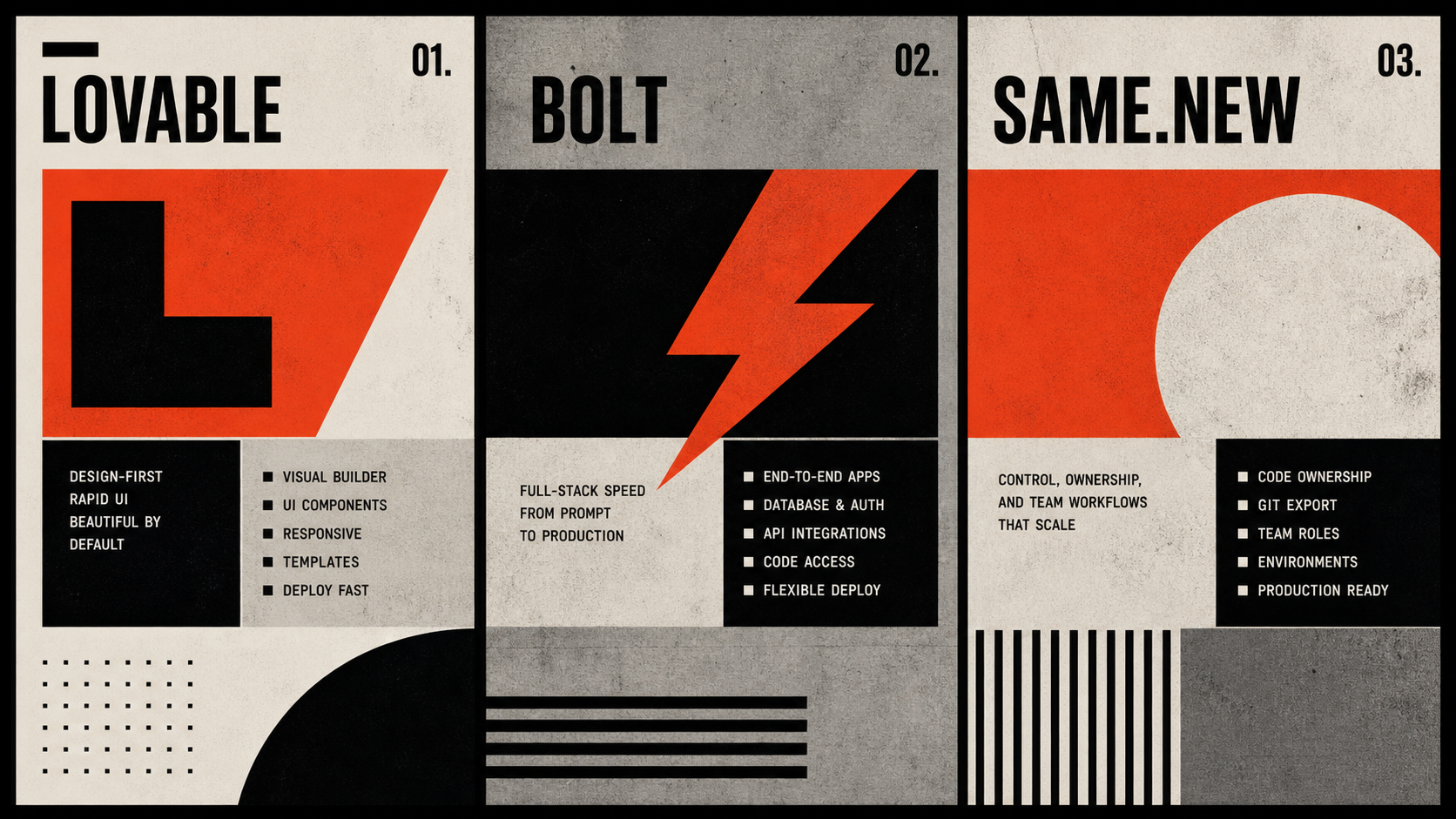
Tools such as Same.new, Lovable, Bolt, Replit, v0, Cursor, and Claude can all fit different parts of the MVP workflow. The founder question is not which tool is most impressive in a demo. It is which tool helps you learn from users without trapping the project in a fragile build.
Key takeaways
- Use AI app builders to validate a narrow MVP, not to skip product thinking.
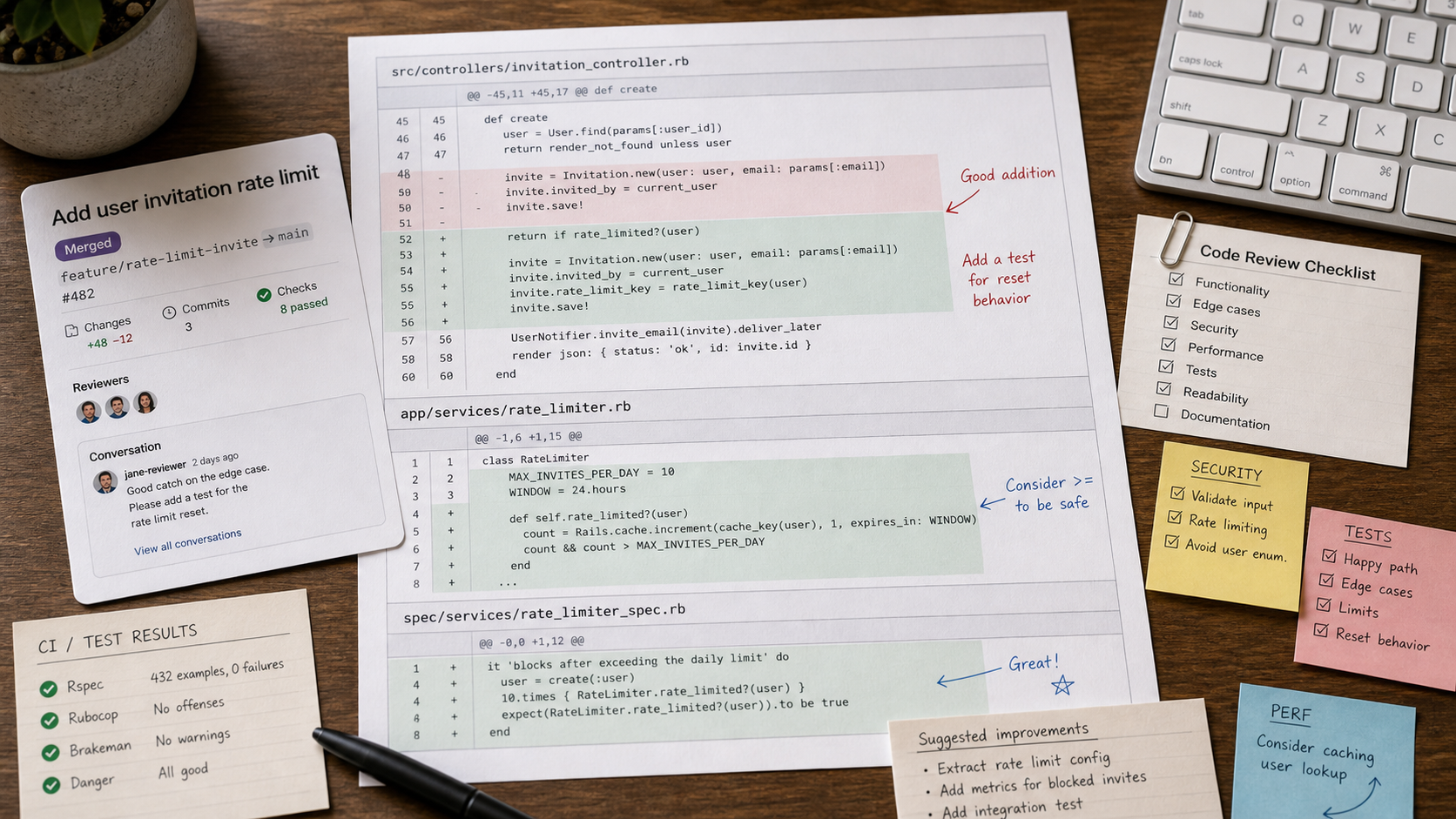
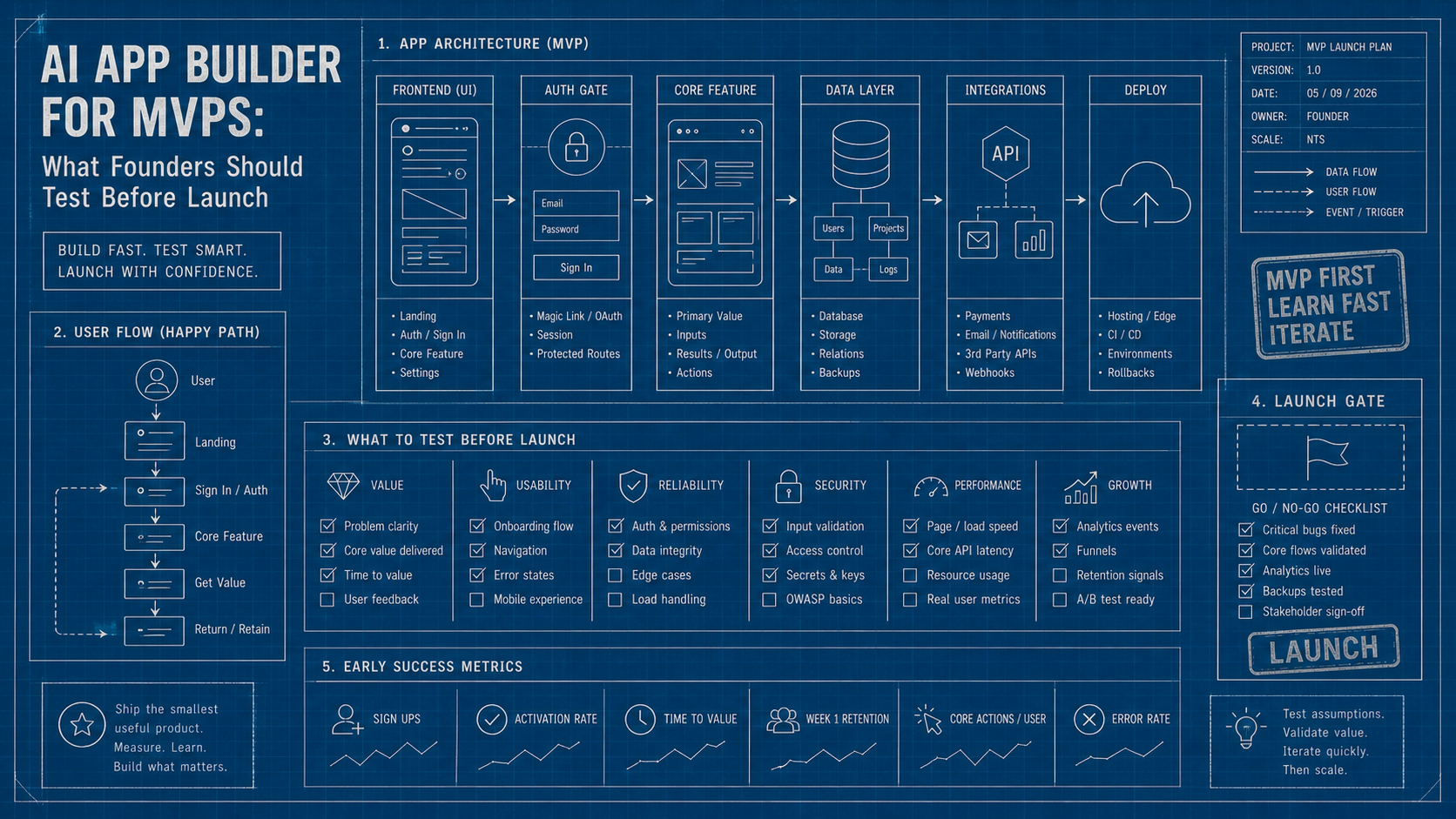
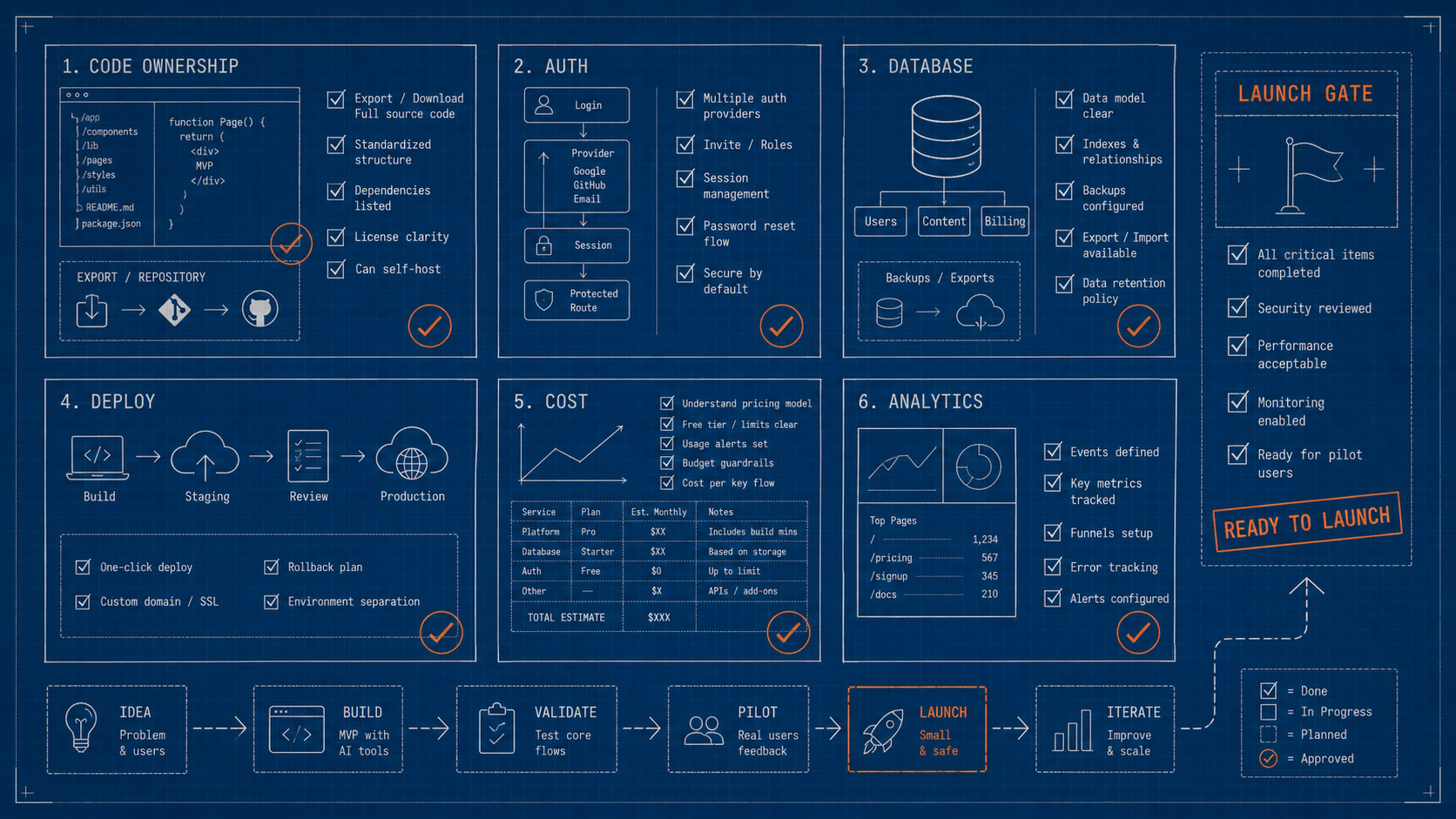
- Check code ownership, GitHub export, auth, database, deployment, and cost before launch.
- Lovable and Replit have internal tool pages you can compare from the directory.
- Same.new and Bolt are useful prototype options, but production handoff still matters.
- Move real customer data into the app only after security, backups, and access controls are reviewed.
What should founders test before launch?
| Test | Why it matters | Launch gate |
|---|---|---|
| Code ownership | You need to fix, export, or migrate the app later. | GitHub sync or project download works. |
| Auth | Real users need secure login and access control. | Roles, password resets, and protected routes work. |
| Database | MVPs become fragile when data structure is unclear. | Tables, backups, migrations, and ownership are documented. |
| Deploy | A prototype is not a launch until deploys are repeatable. | Preview and production environments are separate. |
| Cost | AI builder credits and hosting can surprise founders. | Monthly usage assumptions are written down. |
| Analytics | The MVP must answer learning questions. | Events, conversions, and feedback capture are in place. |
Which AI app builder should you start with?
Start with the builder that matches the MVP risk. If the risk is interface clarity, v0 or an AI editor may be enough. If the risk is full-stack behavior, compare Same.new, Lovable, Bolt, and Replit. If the risk is maintainability, bring the project into Cursor, Claude, or a normal repository workflow.
For directory context, review Lovable, Replit, Cursor, and Claude. Use the tool pages to move from a blog-level comparison into product-level evaluation.
MVP launch checklist
- The app has one primary user action and one clear success metric.
- Generated code is committed to a repository or otherwise exportable.
- Authentication and database rules are reviewed before adding real users.
- Payment, email, and analytics are tested in staging first.
- The founder knows what happens if the AI builder account is canceled.
- There is a migration path from prototype to production engineering.
Final recommendation
Use an AI app builder to learn faster, not to hide product risk. The best MVP workflow creates something users can try, keeps the code and data movable, and gives the team a clear path from prototype to production.
E-E-A-T review notes
Experience: Before publishing, add one hands-on MVP test: build a small CRUD app and record where the tool handles auth, data, deploy, and export well or poorly.
Expertise: Noah Williams should keep this article focused on AI app builder evaluation, MVP risk, code ownership, auth, database, deploy, and production handoff, with examples that a small team can repeat before buying a tool.
Trust: Pricing, plan limits, and export behavior change often. Verify current official docs before publishing.
References
- Same.new pricing docs - token tiers and project download/remix context
- Bolt pricing - official pricing and token usage context
- Lovable pricing - official plan and credit context
- Replit pricing - official Core, Pro, credits, and deployment context
Where to go next
Use these internal links to continue from the article into tool comparison, production checks, and related workflows.
- Lovable - review the AI app builder tool page
- Replit - compare AI agent and cloud IDE workflow
- Same.new Alternatives for Production Teams - compare app builder handoff and production controls
- AI coding tools - browse coding and developer tools