Last updated May 12, 2026: This comparison should be refreshed whenever Lovable, Bolt, or Same.new pricing or export behavior changes.
Lovable vs Bolt vs Same.new is really a workflow question. All three can help teams move faster, but they do not solve the same problem. One team may need collaborative product building, another may need browser-based full-stack prototyping, and another may need fast AI app generation with a simple handoff.
For a new site, this is a strong long-tail comparison because the searcher is already comparing tools. The article should help them decide what to test first, then send them into the right internal tool pages and related app builder content.
Key takeaways
- Lovable is a strong fit for collaborative app building and product teams that want approachable full-stack workflows.
- Bolt is a strong fit for browser-based prototyping where file context, quick previews, and deployable apps matter.
- Same.new is useful for fast AI app generation, remixing, and early product shape exploration.
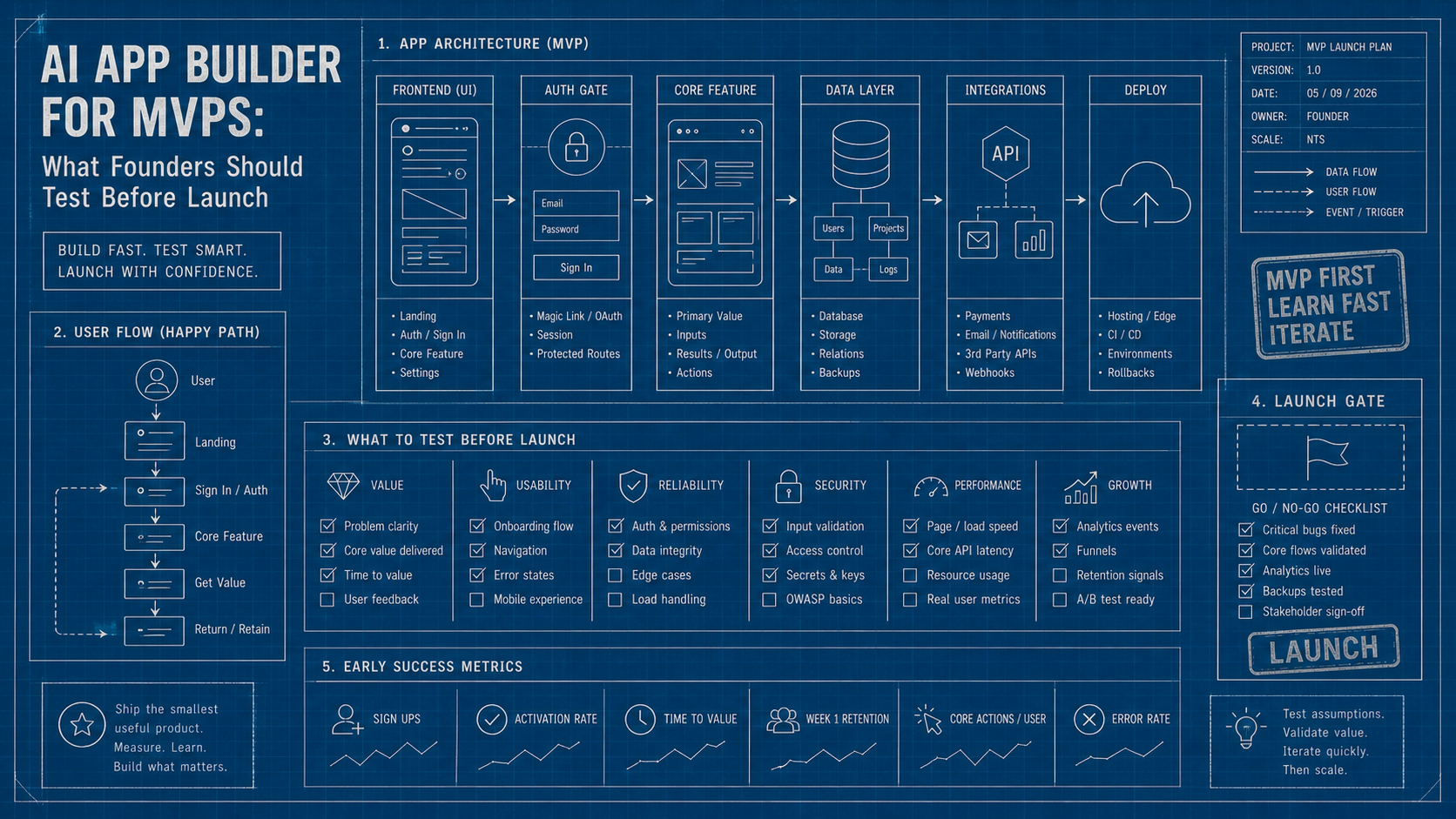
- Production teams should compare code ownership, database control, auth, deploy, team controls, and usage cost.
- If maintainability is the risk, move the project into a repository workflow with Cursor, Claude, or engineering review.
Quick comparison
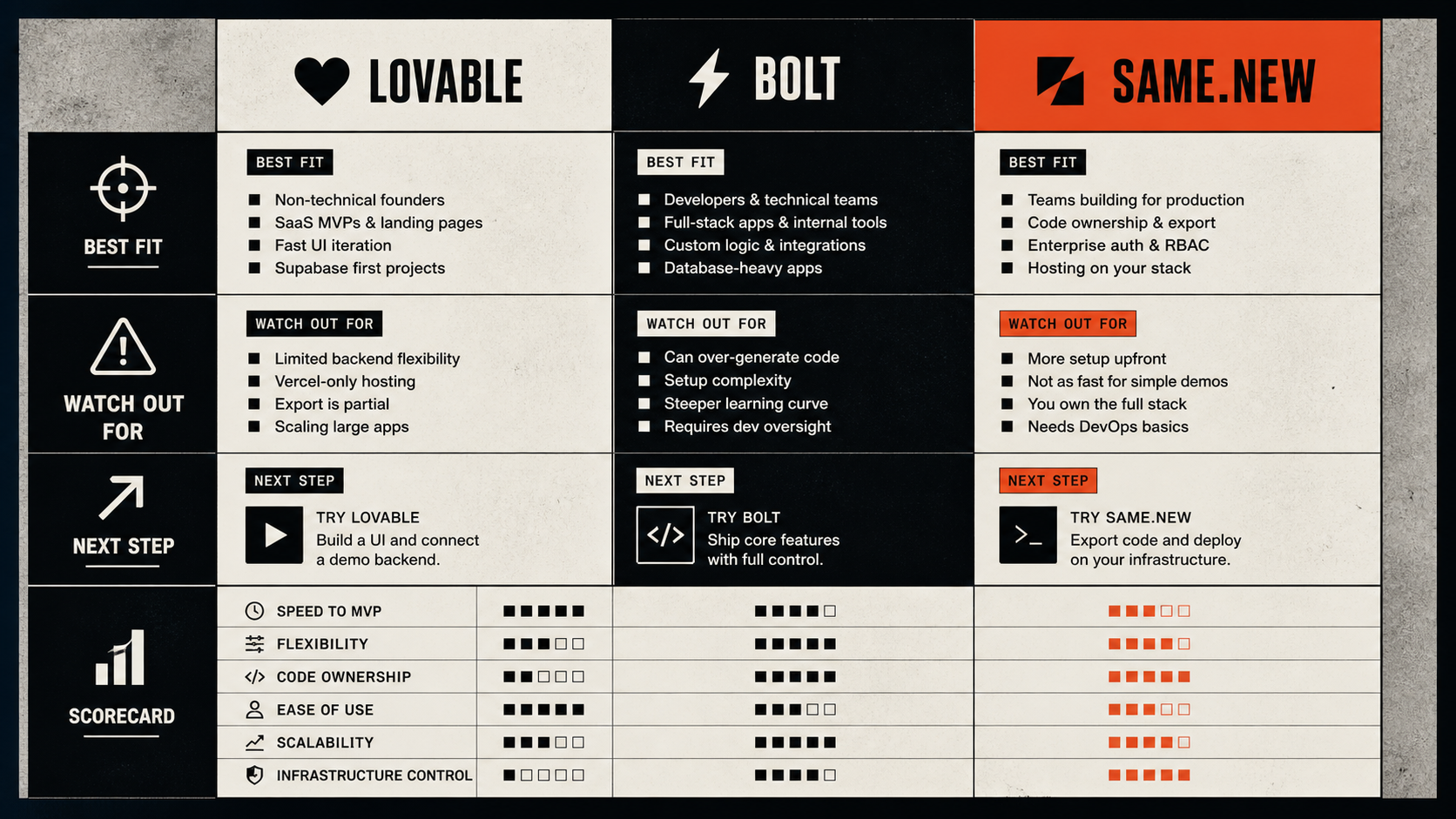
| Tool | Best fit | Watch out for | Next step |
|---|---|---|---|
| Lovable | Product teams, founders, collaborative full-stack app building. | Plan limits, backend ownership, GitHub/Supabase handoff, and team controls. | Review Lovable and test a small real app. |
| Bolt | Browser-based full-stack prototypes and fast demos. | Token usage can grow with project size and file context. | Check official pricing and build one scoped prototype. |
| Same.new | Fast app generation, remixing, early UI/product exploration. | Production readiness still depends on auth, database, deploy, and code review. | Compare against existing Same.new production-readiness articles. |
When should you choose Lovable?
Choose Lovable when the team needs an approachable app-building surface and collaboration matters. It can be useful for founders, PMs, designers, and non-specialist builders who need to make the app shape visible quickly. The production question is how cleanly the project moves into GitHub, Supabase, deployment, and engineering review.
When should you choose Bolt?
Choose Bolt when you want in-browser app generation and fast iteration around a working project. Bolt pricing highlights token usage, and the official pricing page notes that much of the usage is tied to syncing project file-system context. That makes scope control important: smaller, clearer prompts tend to be easier to budget.
When should you choose Same.new?
Choose Same.new when the fastest path to a prototype matters and the team is still exploring product shape. Same.new pricing documentation describes free and paid token tiers, premium models, project downloads, and remixing. Treat it as a prototype accelerator, then review production readiness before using it with real users.
Final recommendation
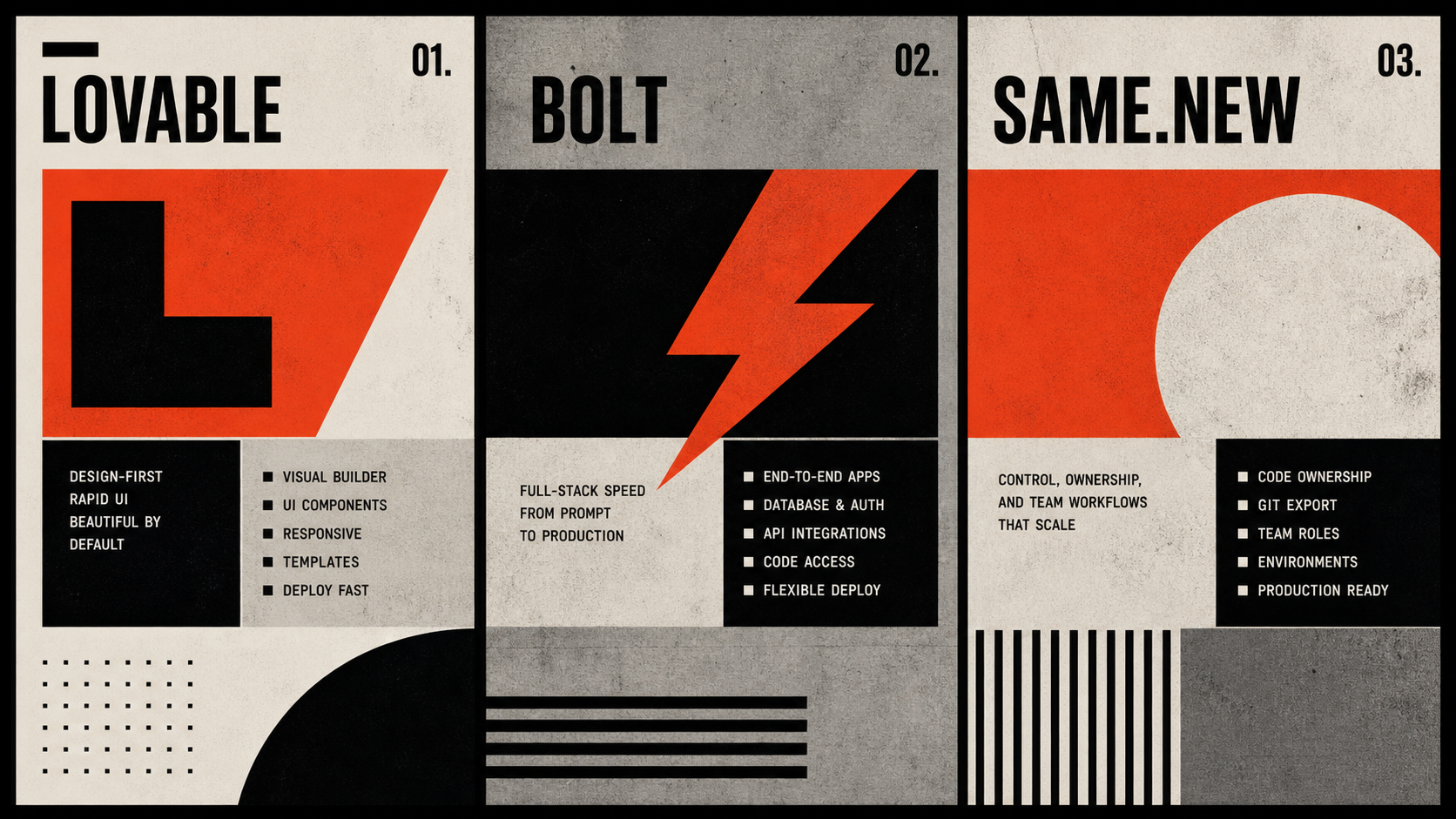
Pick Lovable for collaborative product building, Bolt for browser-first full-stack prototyping, and Same.new for fast generation and remixing. Then apply the same production checklist to all three: repo, auth, database, deploy, cost, monitoring, and migration path.
E-E-A-T review notes
Experience: Before publishing, run the same small MVP prompt through each tool and add notes about setup time, quality, export, and cleanup burden.
Expertise: Noah Williams should keep this article focused on AI app builder comparison, founder workflows, production readiness, GitHub handoff, database control, and deploy risk, with examples that a small team can repeat before buying a tool.
Trust: Use official pricing and docs links. Avoid declaring a permanent winner because features and pricing change quickly.
References
- Lovable pricing - official pricing and credit context
- Bolt pricing - official token and plan context
- Same.new pricing docs - official pricing and token tier context
- Supabase Lovable backend troubleshooting - backend ownership context for Lovable projects
Where to go next
Use these internal links to continue from the article into tool comparison, production checks, and related workflows.
- Lovable - review the Lovable tool page
- Replit - compare a cloud IDE and agentic build workflow
- AI App Builder for MVPs - use the founder launch checklist
- Same.new Alternatives for Production Teams - compare production-team criteria