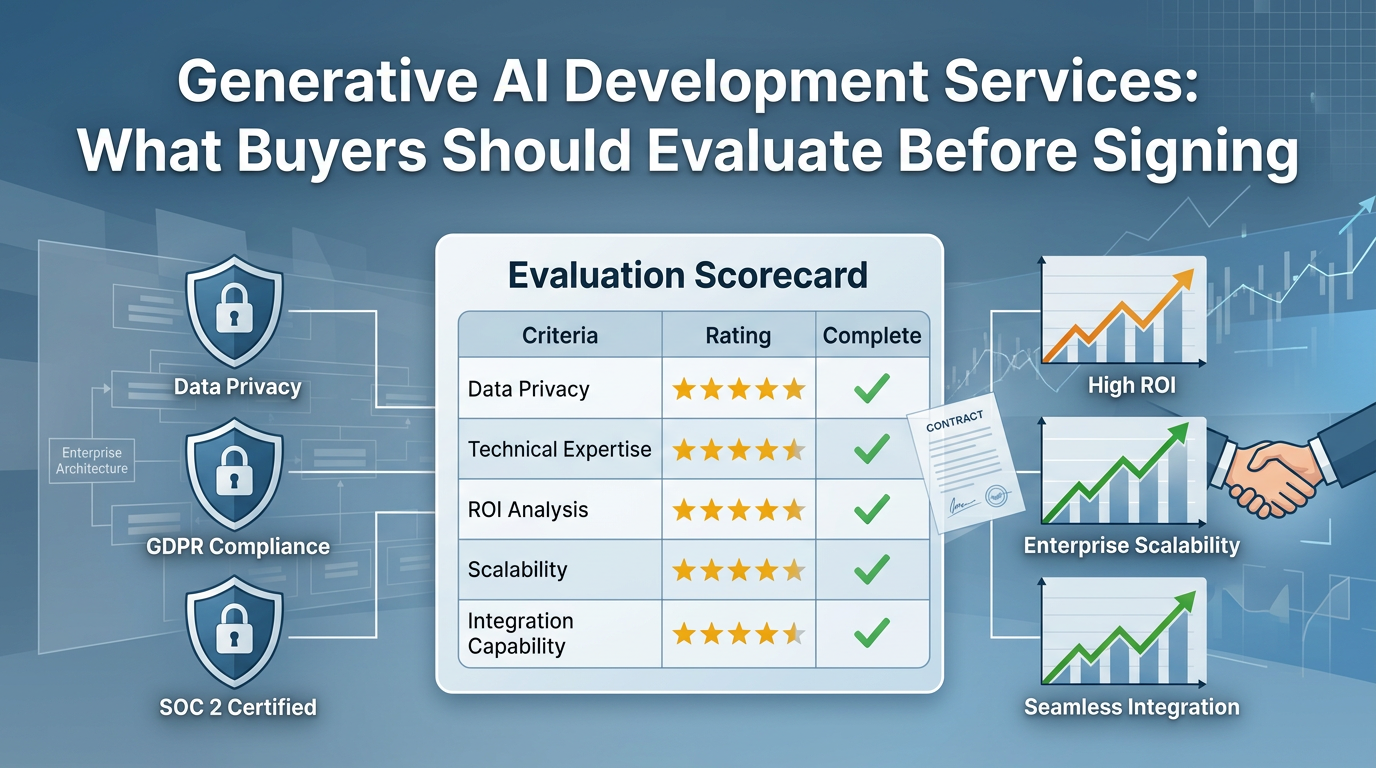
Buying generative AI development services is difficult because many proposals sound strong before the project starts and vague once delivery begins. The safest buyers are the ones who define evaluation criteria before the sales process gets impressive.
A good vendor is not just someone who can build with an LLM. It is someone who can define the problem clearly, manage risk, and ship a workflow that is reliable in the environment where your team actually operates.
TL;DR: Before signing any generative AI services contract, check use-case clarity, data handling, evaluation method, operational ownership, and how the vendor defines a successful deployment.
Start with the business problem, not the model
The cleanest proposals usually begin with workflow impact.
- Ask what task is being improved, accelerated, or automated.
- Push for a measurable definition of success rather than a vague innovation narrative.
- Make sure the proposed AI layer solves a real operational bottleneck.
Audit data, privacy, and operational boundaries
This is where weak proposals often become risky.
- Clarify what data the vendor needs and where that data will be processed.
- Ask how sensitive information, retention, and access are handled.
- Make sure responsibility for monitoring and fallback behavior is explicit.
Check how they evaluate quality
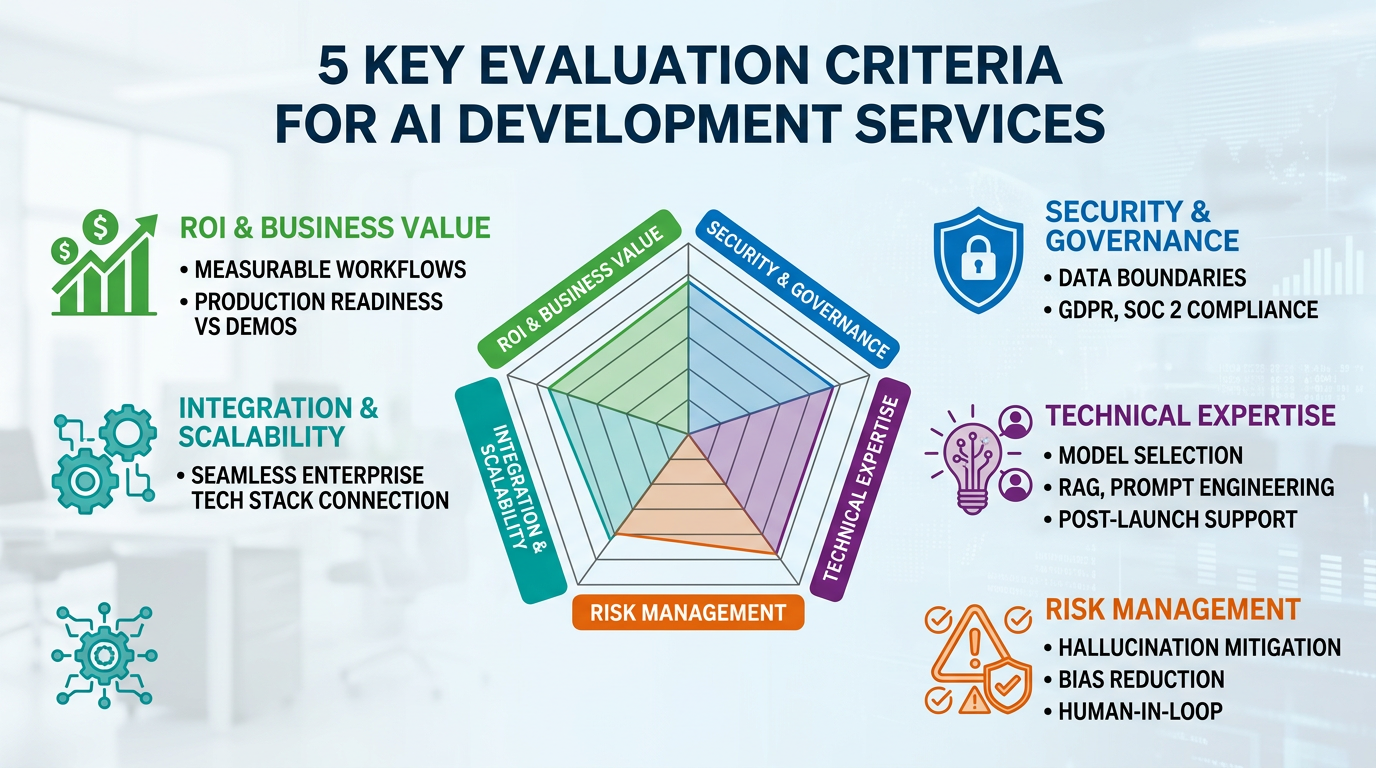
A serious vendor should explain how they will measure performance.
- Ask what test set, review process, or benchmark they will use.
- Find out how hallucinations, failure cases, and policy boundaries are handled.
- Look for evidence that they can evaluate the system beyond a demo environment.
Know what happens after launch
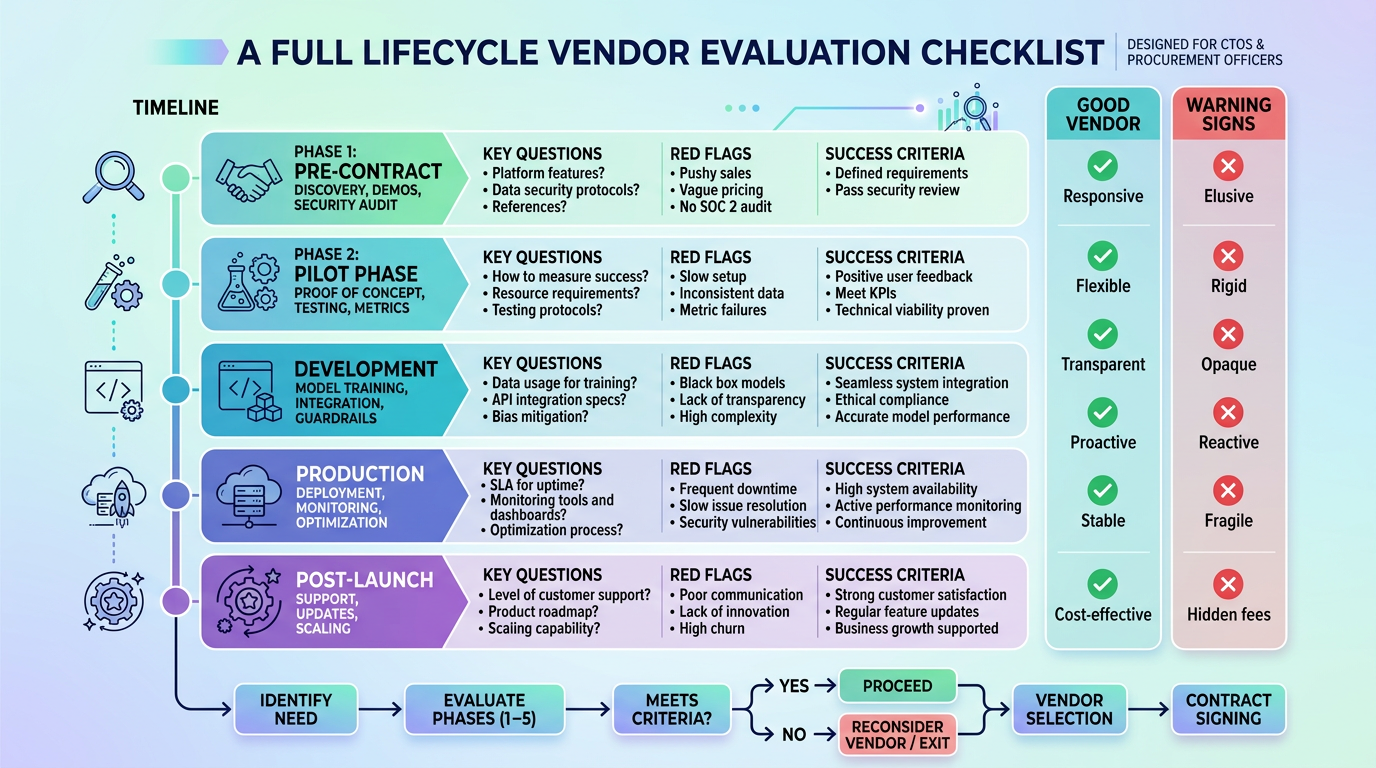
The project is not done the moment the prototype works.
- Ask who owns prompt updates, model changes, and ongoing optimization.
- Clarify what observability and support look like after deployment.
- Make sure your internal team knows what is maintainable and what is vendor-dependent.
How we evaluate developer workflows
This guide is attributed to Marcus Johnson, Full-Stack Developer & AI Integration Specialist at Generator AI Tools. For developer content, we judge tools by setup friction, reliability, integration fit, debuggability, and whether the workflow saves time without creating hidden maintenance cost.
- We separate demo-friendly output from code or config that can survive review and repeated use.
- We look at how well a tool fits real developer workflows instead of treating one generated snippet as proof of quality.
- We expect readers to validate AI-generated code, configuration, and deployment advice before using it in production.
What to verify before you choose
- Check integration support for the stack, editor, or deployment workflow you actually use.
- Validate generated code or configuration locally before trusting it in production.
- Review pricing, team features, and security expectations on the official product pages.
Bottom line
The best buyer checklist for generative AI services is simple: start from business value, interrogate risk, and demand operational clarity. That is how you avoid paying for a demo that never becomes a dependable workflow.