
Meta Introduces Muse Spark and Pushes Meta AI Toward Apps, Glasses, and Multimodal Search
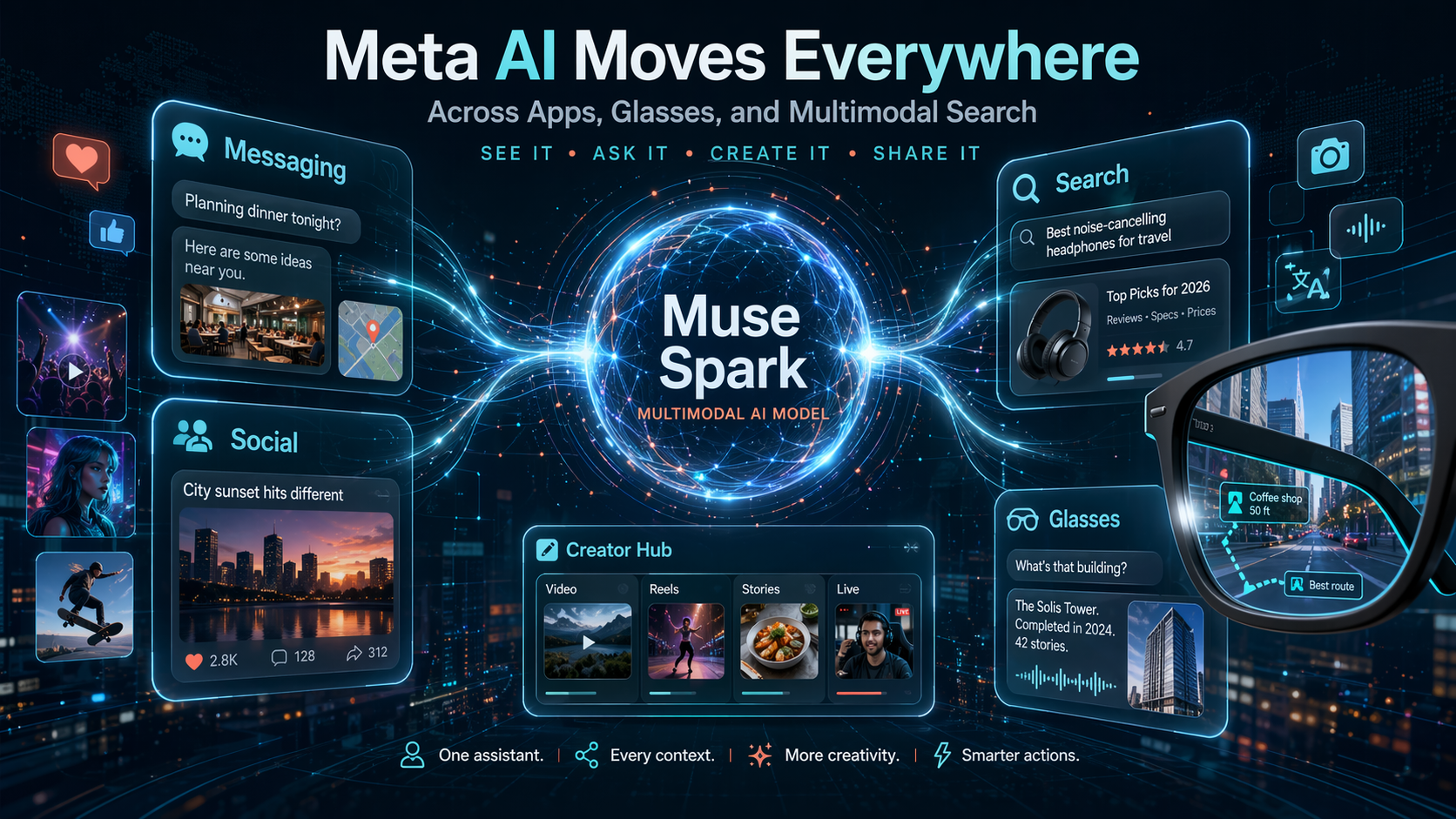
Updated April 23, 2026. Meta has introduced Muse Spark, the first model in a new Muse series from Meta Superintelligence Labs, and says it now powers Meta AI in the Meta AI app and website.
The company says Muse Spark will roll out to WhatsApp, Instagram, Facebook, Messenger, and AI glasses, with private API preview access planned for selected partners.
What Meta announced
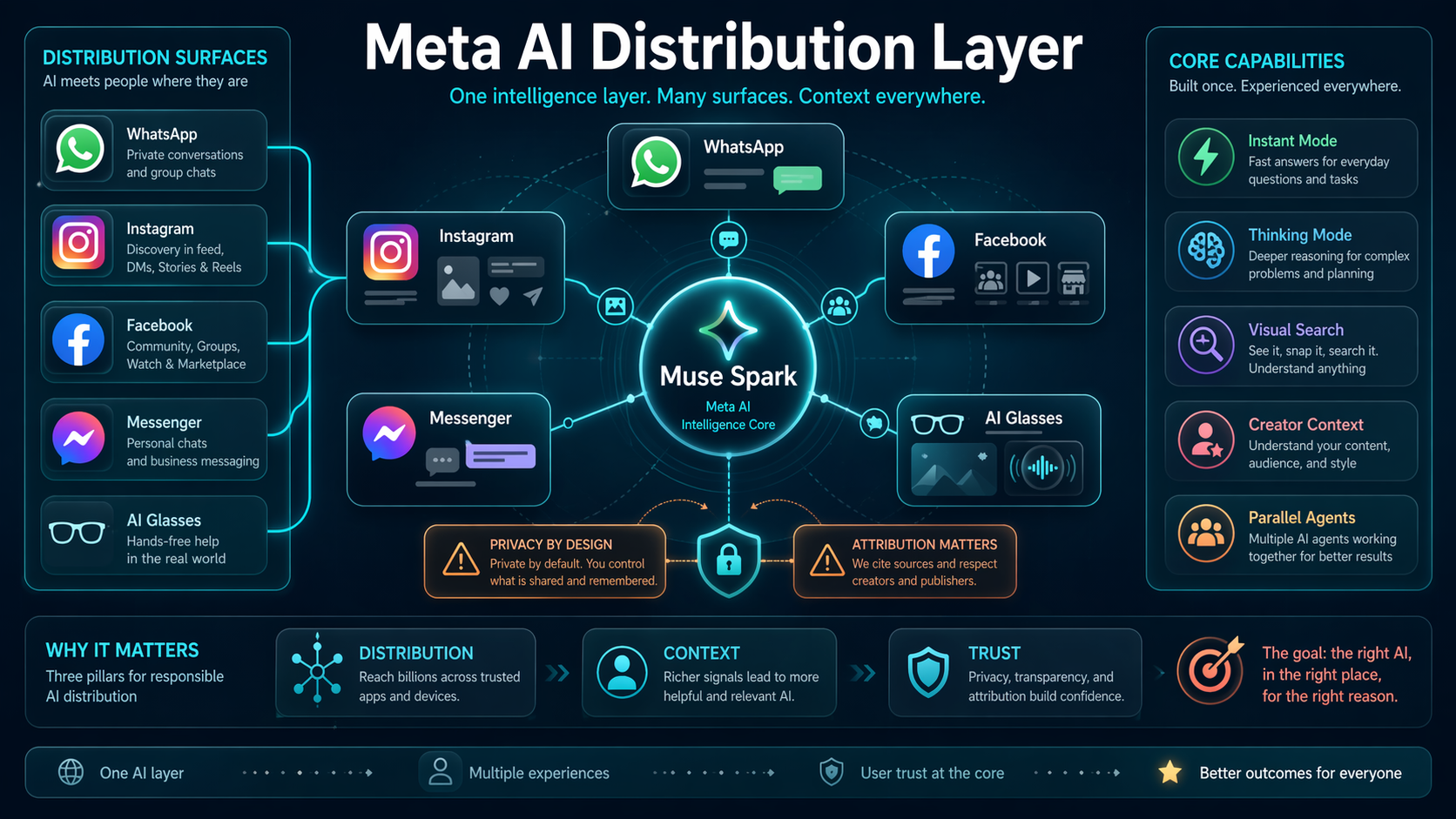
Meta describes Muse Spark as small and fast by design while still capable of reasoning across complex questions. The upgraded Meta AI experience includes Instant and Thinking modes, multimodal perception, and the ability to run multiple subagents in parallel for more complex requests.
Meta also points to shopping, visual understanding, health-related information, coding, and richer contextual search as areas where the model will show up in product experiences.
The real strategic shift
The most important part is distribution. Meta AI can appear inside messaging apps, social feeds, search-like experiences, and eventually glasses. That gives Meta a different path from standalone chatbot products: the assistant can meet users inside the apps where their photos, posts, conversations, creators, and shopping intent already exist.
This creates both opportunity and trust questions. More context can make answers useful, but it also raises expectations around attribution, privacy, content credit, and user control.
What to watch
| Signal | Why it matters |
|---|---|
| Rollout across WhatsApp and Instagram | This will show whether Meta AI becomes a daily assistant or remains a novelty. |
| Creator attribution | Meta says richer results may connect back to Reels, photos, posts, and creators. |
| Private API preview | Partner access could turn Muse Spark into a platform, not just an app feature. |
| AI glasses integration | Visual perception is most valuable when the assistant can understand the physical world in context. |
Editorial takeaway
Muse Spark should be read as Meta's distribution play in AI. OpenAI has ChatGPT, Google has Gemini across search and Android, and Meta has social surfaces at global scale.
For tool buyers, that means assistant quality may soon depend not only on the model but on where the assistant lives. Compare product fit in the AI tools directory, then check whether the assistant has the context and channels your workflow actually needs.
Sources
Related Coverage
Related AI news
AI News
GPT Image 2 and the Same New AI Shift: When AI Images Start Looking Trustworthy
OpenAI's ChatGPT Images 2.0 release pushes AI image generation toward believable screenshots, readable text, UI mockups, and commercial visuals. The upside is faster creative work; the risk is synthetic...
AI News
Anthropic and OpenAI Post Record Lobbying Quarters as AI Policy Becomes a Core Business Issue
New lobbying disclosures show frontier AI companies spending more in Washington, signaling that model releases, defense procurement, copyright, energy, and safety policy are now business-critical.
AI News
OpenAI Expands Trusted Access for Cyber With GPT-5.4-Cyber
OpenAI is expanding its Trusted Access for Cyber program and introducing GPT-5.4-Cyber for vetted security teams, signaling a shift from blanket model restrictions to identity-based access controls.