Editorial note, prepared May 7, 2026: This is a production-team draft, not a generic alternatives list. Before publishing, confirm current pricing, token limits, export behavior, deployment limits, and team controls for Same.new, Bolt, Lovable, Replit, v0, Cursor, and any tools added during editorial review.
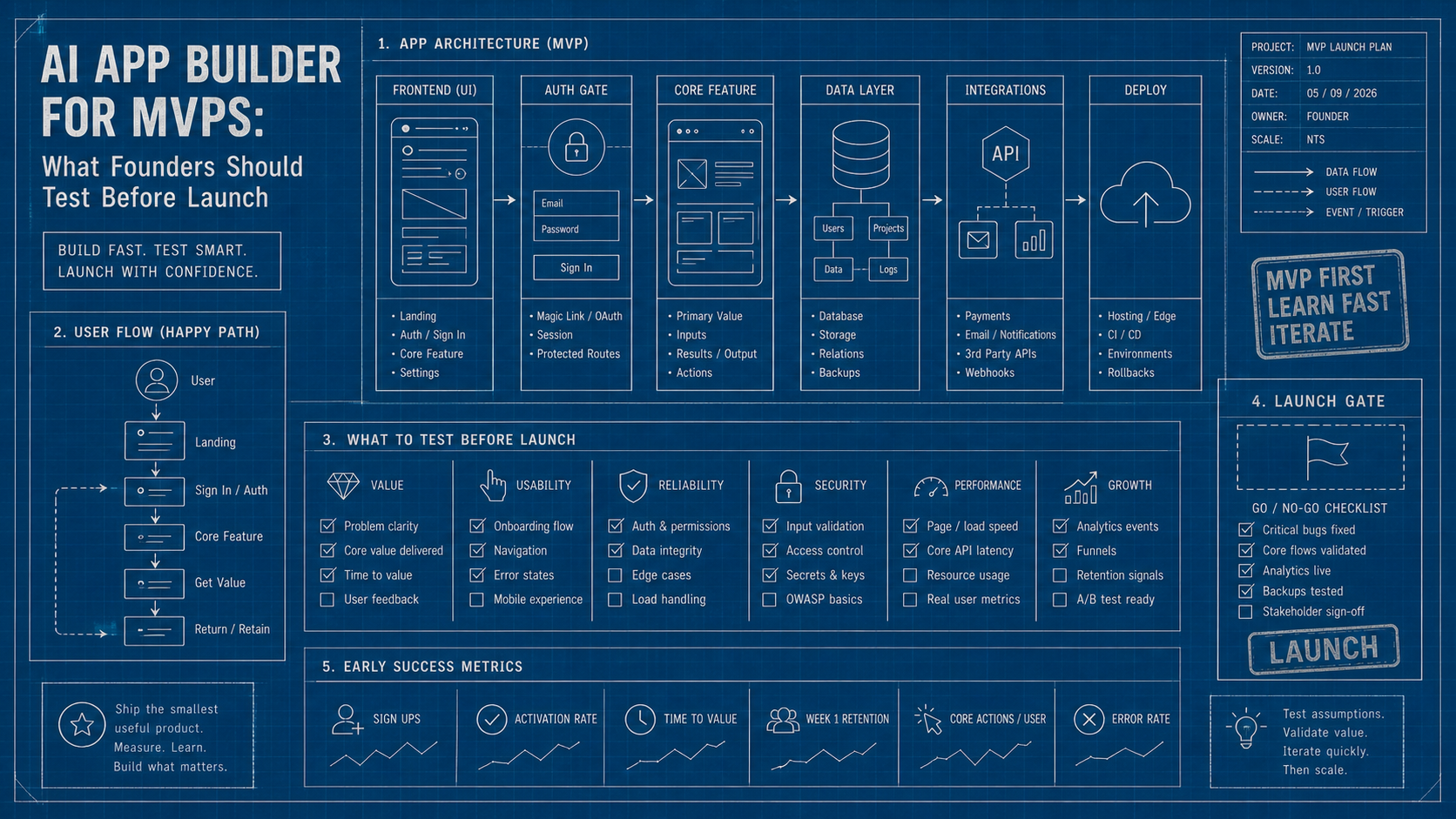
Most searches for same new alternatives start with the wrong question. Production teams do not only need a tool that can generate a slick demo. They need to know what happens after the demo works: who owns the code, how auth is handled, where the database lives, how deploys are reviewed, and whether the team can debug the app next month.
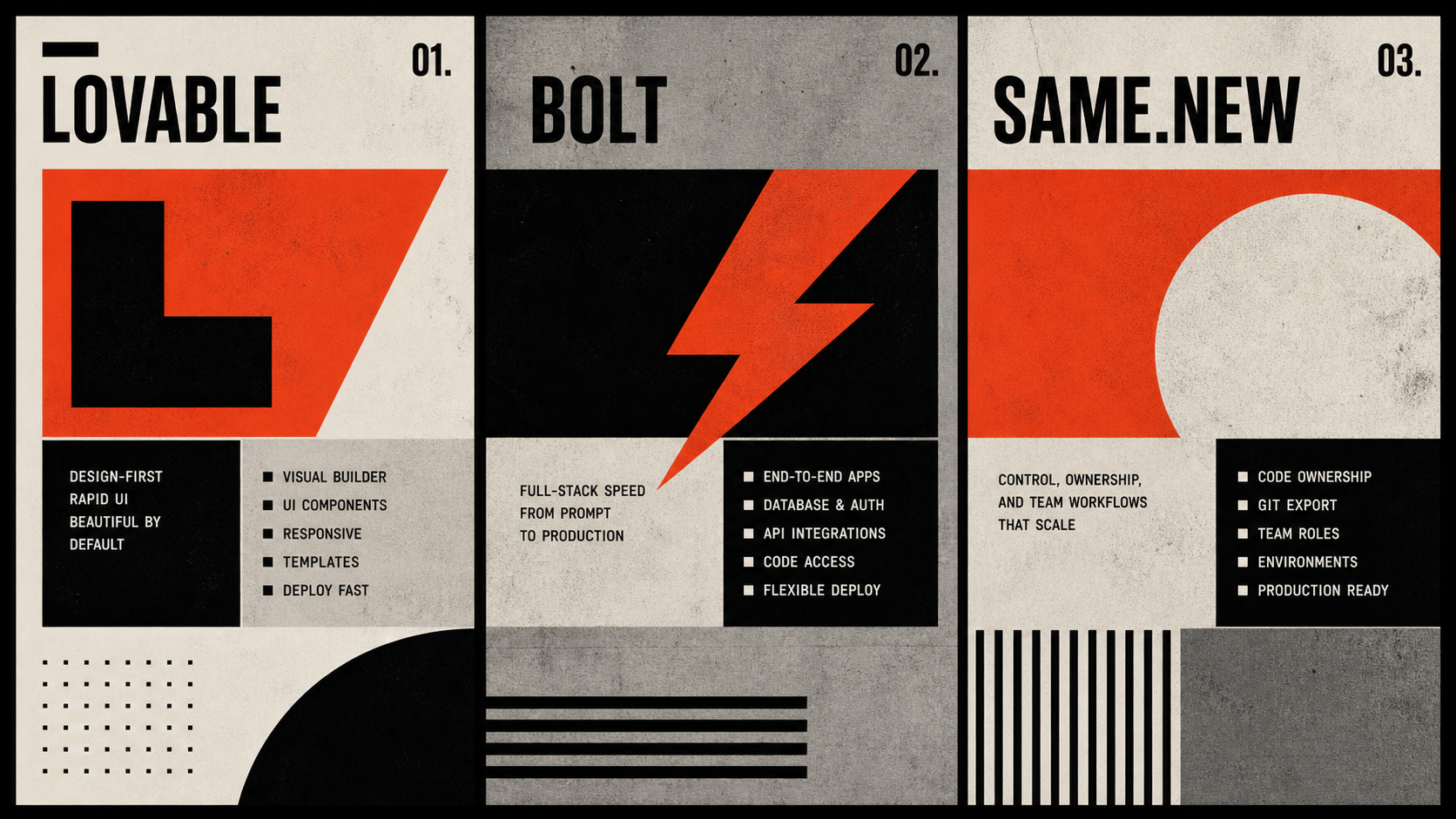
Same.new is useful when you want fast AI app building and remixable projects. But if your team is evaluating it for production work, compare alternatives around the operating model, not just the landing-page promise. The right replacement depends on whether you need a full-stack builder, an IDE with an agent, a UI generator, or a codebase-hardening workflow.
Key takeaways
- Use Same.new or Bolt for fast browser-based prototypes when speed matters more than deep engineering control.
- Use Lovable when product teams need an approachable full-stack builder with collaboration, custom domains, and role controls on paid tiers.
- Use Replit when the app should live close to an IDE, hosting, databases, and team build controls.
- Use v0 when the hard part is UI and Next.js/Vercel integration, not full backend architecture.
- Use Cursor, Claude Code, or a normal IDE workflow when a prototype needs security review, tests, migrations, and long-term maintainability.
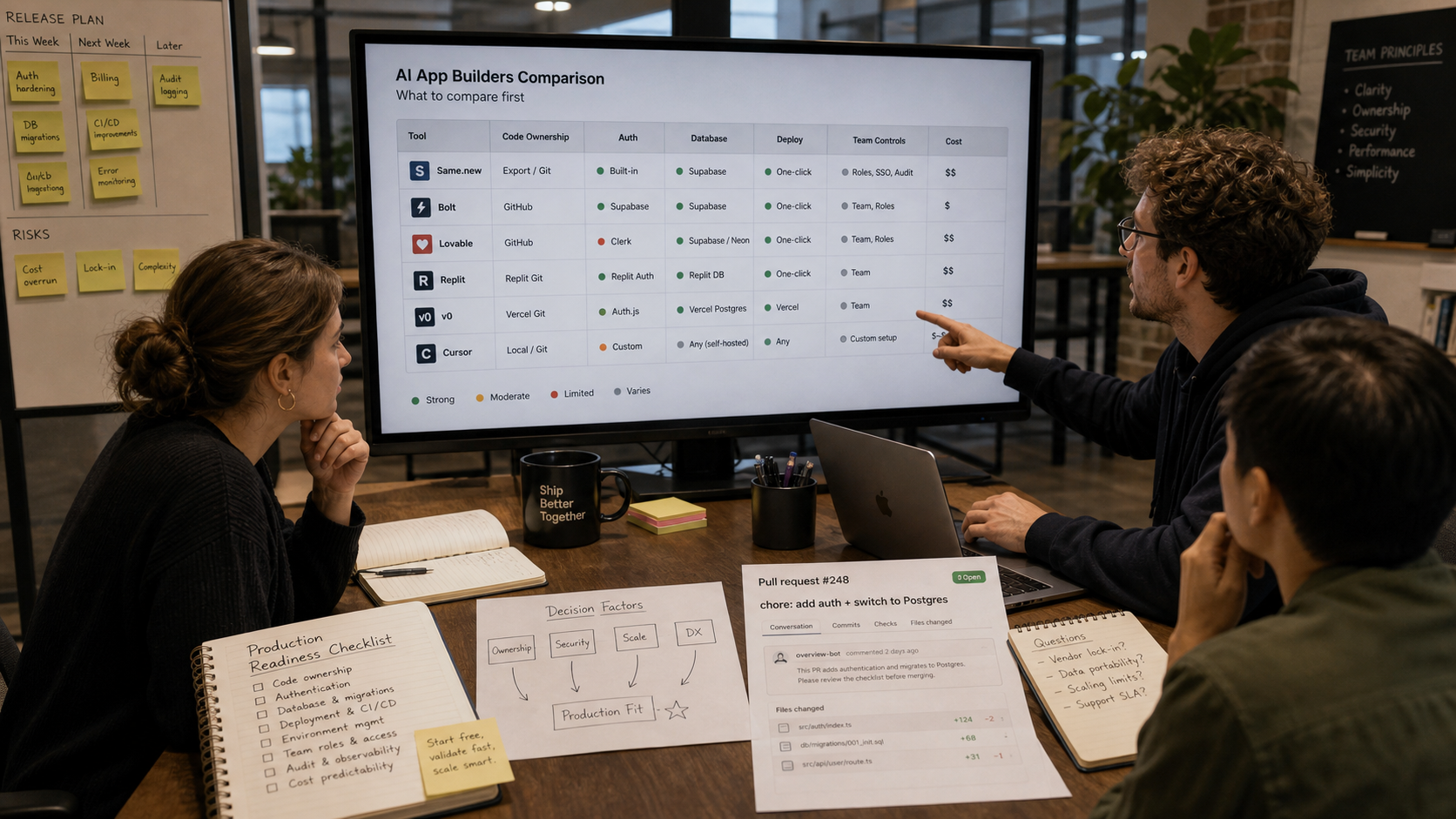
What should production teams compare first?
Compare control before speed. A tool that ships a prototype in twenty minutes can still create production debt if the team cannot review the code, move the app to a normal repository, secure the database, or reproduce deploys. For a production team, "can it build?" is only the first gate. "Can we own, operate, and repair it?" is the real gate.
| Evaluation area | Why it matters in production | What to ask before choosing |
|---|---|---|
| Code ownership | Generated code needs review, refactoring, and version control. | Can we export, sync to GitHub, and continue development outside the builder? |
| Auth and data | Most failed prototypes break when real users and data arrive. | Does the tool scaffold auth, permissions, migrations, backups, and environment variables clearly? |
| Deploy flow | Production requires previews, rollbacks, logs, domains, and environment separation. | Can we run preview/staging/prod without pointing the AI at live data? |
| Team controls | More builders means more risk without roles, permissions, billing controls, and auditability. | Can admins control access, spending, collaboration, and publishing? |
| Cost model | AI app builders can burn credits quickly during debugging. | Are limits token-based, credit-based, agent-effort-based, or usage-based after hosting starts? |
| Maintenance path | The first generated version is rarely the final product. | Can engineers inspect tests, add monitoring, fix dependencies, and migrate away if needed? |
Same.new vs alternatives: quick decision matrix
| Tool | Best for | Production-team caution | Use when |
|---|---|---|---|
| Same.new | Fast AI app generation, remixing, and quick iteration. | Production fit depends on whether the exported project can pass your normal review, security, and deploy process. | You want a fast builder and a straightforward token-tier model. |
| Bolt.new | Full-stack app generation in the browser with hosting and database options. | Large projects can consume many tokens because the AI needs project context and file sync. | You want a browser-first build loop and quick deployable prototypes. |
| Lovable | Product teams and non-developers building collaborative full-stack web apps. | Free projects are public; advanced team/security controls live on paid tiers. | You want collaboration, custom domains, role controls, and approachable app building. |
| Replit | Teams that want agentic building inside an IDE-plus-cloud environment. | Agent and cloud usage are credit-based; production data needs careful backup and environment discipline. | You want code, agent work, hosting, database, and team controls in one place. |
| v0 | UI generation, React components, Next.js flows, and Vercel-native product surfaces. | It is strongest for interface generation; backend, auth, and data architecture still need engineering ownership. | You already build on Vercel or need fast UI iteration. |
| Cursor / Claude Code | Hardening, refactoring, tests, migrations, code review, and real repository work. | Less magical for non-technical users; stronger when engineers own the repo. | You have a generated prototype that now needs to become durable software. |
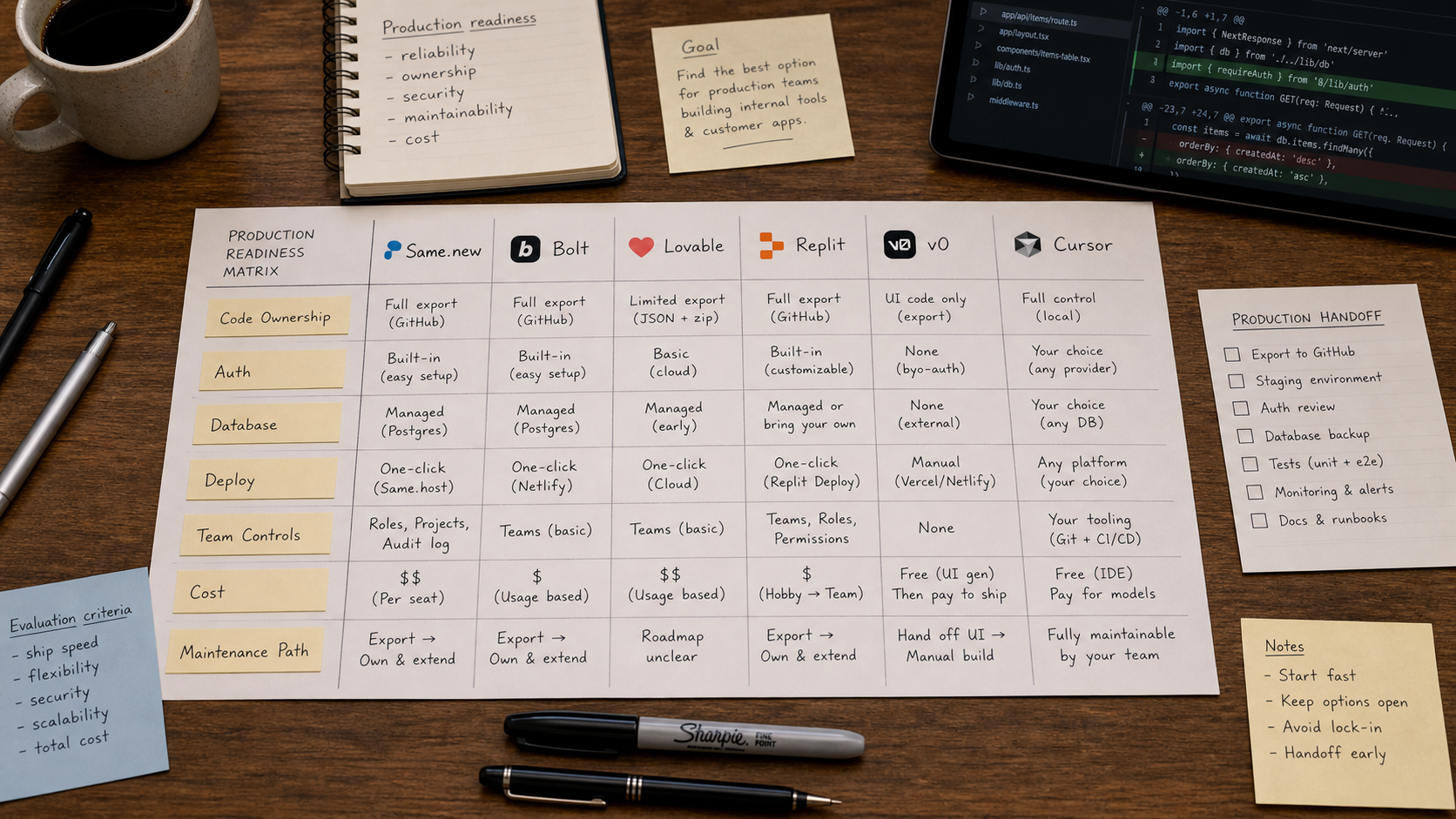
When is Same.new still the right choice?
Same.new remains a good fit when the team wants to move from idea to a live app quickly and the scope is still fluid. Its pricing documentation frames the product around token tiers, project downloading, remixing, and higher tiers for live production apps. That can be useful when the team wants predictable tiers instead of only pay-as-you-go surprises.
The caution is simple: do not equate "live app" with "production-ready organization." A live app can still need auth review, database backup, monitoring, dependency cleanup, accessibility checks, security headers, and a deployment process your engineers understand.
When should you choose Bolt.new instead?
Choose Bolt when your team wants the fastest browser-based full-stack loop: prompt, inspect files, run the app, and deploy. Bolt official pricing emphasizes public and private projects, token limits, website hosting, web requests, databases, custom domains on paid tiers, and team access management.
The production question is token and context control. As the project grows, file-system context can make each AI message more expensive. Teams should set a rule: use Bolt to generate and iterate the first working version, then move complex refactors, tests, and architecture decisions into a repository workflow.
When should you choose Lovable?
Lovable is a strong Same.new alternative when product managers, founders, designers, and engineers need to collaborate in a more approachable app builder. Its pricing page highlights a free tier, public projects, collaborators, Lovable domains, paid credits, custom domains, badge removal, user roles, SSO, and business controls on higher tiers.
That makes Lovable attractive for internal tools, landing-app hybrids, quick CRUD products, and product teams that want to see working software before writing a formal engineering ticket. For production, check GitHub handoff, backend ownership, Supabase or external service configuration, and how much direct control engineers have after the app is published.
When should you choose Replit?
Choose Replit when the team wants an agentic app builder inside a broader development environment. Replit combines coding, Agent workflows, published apps, databases, object storage, credits, collaboration seats, and plan-level controls. Its docs also distinguish plan capabilities, Agent modes, and effort-based billing.
For production teams, Replit is less of a "Same.new clone" and more of an AI cloud IDE. That can be powerful, but it also means the team should create stricter rules around staging data, rollback, database retention, spend controls, and who is allowed to run autonomous build tasks.
Where do v0, Cursor, and Claude Code fit?
v0 is the better comparison when the output you need is UI: a Next.js page, a component set, a dashboard surface, or a Vercel-ready front end. It can help teams move fast on interface work, but it should not be treated as the whole backend architecture plan.
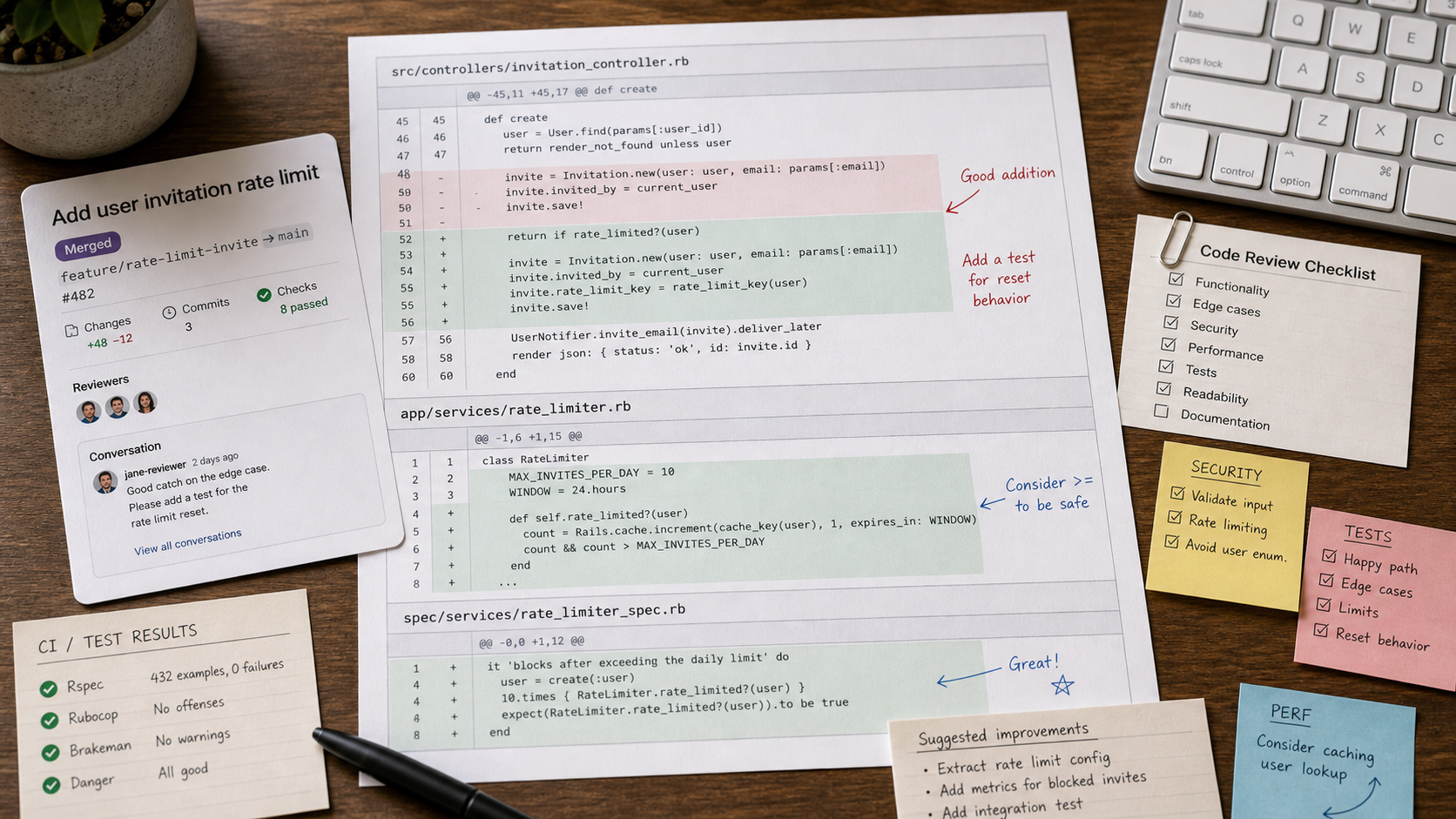
Cursor and Claude Code sit later in the production path. They are often the right tools after Same.new, Bolt, or Lovable has created something useful enough to preserve. Use them for repository-aware refactors, tests, code review, dependency cleanup, security hardening, migrations, and documentation.
A practical production-team workflow
- Use Same.new, Bolt, or Lovable to create the first working product shape.
- Export or sync the project into Git before real users or production data enter the system.
- Create a staging environment and seed it with fake data, not production credentials.
- Ask an engineer to review auth, database rules, API boundaries, secrets, package health, and deploy settings.
- Move ongoing maintenance into Cursor, Claude Code, Replit, or a standard repository workflow.
- Only then connect payment, customer data, production email, analytics, and public launch traffic.
Final recommendation
The best Same.new alternative is not the tool with the longest feature list. It is the tool that matches your next bottleneck. Choose Same.new or Bolt for speed, Lovable for collaborative product building, Replit for cloud IDE plus agent work, v0 for UI generation, and Cursor or Claude Code when the generated app needs to become maintainable software.
References
- Same.new pricing documentation - token tiers and plan positioning
- Same.new getting started documentation - product positioning and build workflow
- Bolt.new pricing - tokens, hosting, databases, custom domains, and team controls
- Lovable pricing - credits, collaborators, domains, roles, and business controls
- Lovable publishing documentation - live URL publishing and project visibility controls
- Replit pricing - Starter, Core, Pro, credits, and deployment features
- Replit AI billing docs - Agent billing and effort-based pricing
- Vercel v0 documentation - v0 as a pair programmer for code and UI
- Cursor pricing documentation - agent usage, model costs, and plan limits
Where to go next
Use these internal links to keep readers moving from the article into tool selection, deeper comparisons, and current AI news.
- AI tools directory - browse the full tool catalog
- AI leaderboard - compare market momentum before shortlisting
- AI coding tools category - find coding assistants and developer agents
- Same.new Review 2026 - read the existing Same.new review before comparing alternatives
- Claude Code vs Cursor vs GitHub Copilot - compare repository-first coding workflows